



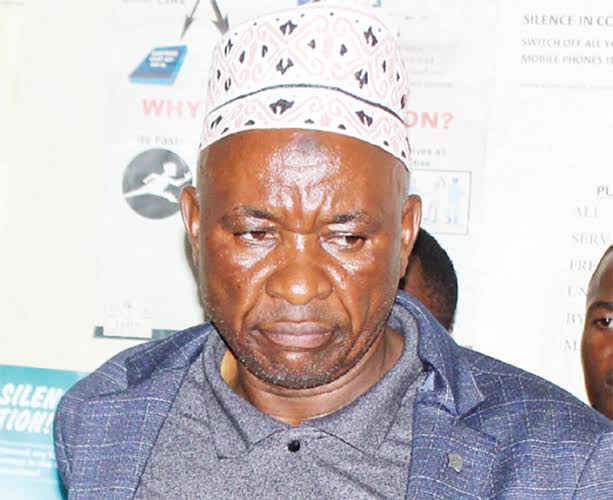
Hajji Abdul Kiyimba has challenged the Electoral Commission to explain discrepancies in the Declaration of Results (DR) forms he submitted in his election petition against Busiro East MP Emmanuel Matovu Magoola, saying the documents were certified copies obtained directly from the Commission.
Kiyimba submitted on Monday during further cross-examination by Magoola’s lawyers at Wakiso High Court, where he is challenging Magoola’s victory in the January parliamentary elections. Magoola’s lawyer, Robert Bautu, took Kiyimba through several DR forms containing conflicting figures, raising questions about their authenticity and accuracy.
At Mivule Primary School, for instance, Kiyimba’s form showed that he obtained 323 votes, but the figure was written in words as “three twenty three” instead of “three hundred twenty three”. Bautu argued that the word “three” had been added before “23”, while “hundred” was missing from the written version. The total voter turnout recorded on Kiyimba’s form was also more than 233 votes higher than the figure on Magoola’s form. However, Magoola’s turnout matched the figure recorded on the District Woman Representative’s DR form for the same polling station.
At Sumbwe Primary School, the discrepancies were even more pronounced. Kiyimba’s form credited him with 463 votes and Magoola with 12, while Magoola’s form showed Kiyimba with 28 votes and Magoola with 153. The differences also extended to the accounting of ballot papers. Calculations conducted in court showed that more than 108 of the 600 ballot papers issued by the Electoral Commission could not be accounted for based on the figures presented.
Justice George Okello questioned the authenticity of Kiyimba’s DR form, observing that the figures raised serious concerns. “With these numbers, the DR form of Mr Kiyimba can’t be authentic. Whoever was trying to cook up this data didn’t do a good job. That is the impression being created here,” the judge remarked.
However, when pressed to explain the discrepancies identified by Bautu, Kiyimba said the responsibility rested with the Electoral Commission because he had not generated the documents. “The document was certified by the Electoral Commission. They should be the ones to explain the inconsistencies, not me,” he told the court.
Kiyimba explained that he had written to the Electoral Commission on February 24, requesting certified copies of the DR forms. The Commission received the request the following day and conducted an assessment on February 26, requiring him to pay Shs1.104 million, which he paid the same day before receiving the documents. He maintained that he did not submit DR forms collected by his polling agents but instead received duplicates of the documents held in the Commission’s official records.
He argued that any discrepancies in the certified copies should therefore be explained by the institution that issued them. Following the clarification, Bautu informed the court that he would not continue with Kiyimba’s cross-examination for the time being. Instead, he intends to seek permission to cross-examine Electoral Commission officials who issued the disputed documents.
Bautu noted that the Commission had issued certified copies to Kiyimba and the District Woman Representative, whose forms were being used for comparison, yet the figures differed. Copies of the DR forms obtained by Magoola’s polling agents also contained different figures. Justice Okello said he would also want the Electoral Commission to explain the discrepancies, particularly which documents it relied on when declaring Magoola the winner of the election.
The judge, however, questioned how Magoola’s lawyers, despite being on the same side as the respondents, would be permitted to cross-examine witnesses from the Electoral Commission, which is also a respondent in the petition. Bautu said there were legal authorities supporting such an arrangement and cited previous experience handling similar situations involving the Commission’s lawyer, Eric Sabiiti, who was also present in court. Sabiiti, however, put the court on notice that he would oppose any such application.
He argued that the Electoral Commission, as the second respondent, shared interests with Magoola and would not allow its co-respondent to cross-examine its officials. In a lighter moment, Justice Okello observed that although the Commission claimed to have interests similar to Magoola’s, its response to the petition, which he described as lukewarm, appeared to suggest otherwise. The judge said he would determine the matter if and when the application was formally presented before him.
He subsequently directed Magoola’s legal team to prepare a matrix detailing all the contested DR forms and the specific discrepancies identified in each. Magoola is contesting results from 130 polling stations where he alleges that Kiyimba’s forms inflated the vote figures. The case was adjourned to November 3, 2026, for the Electoral Commission to cross-examine Kiyimba. Kiyimba is challenging the Electoral Commission’s declaration of Magoola as the winner of the Busiro East parliamentary seat with 45,625 votes against his 28,499.
The petition primarily questions the authenticity and accuracy of the DR forms, which, under the Parliamentary Elections Act, constitute primary evidence of votes cast at individual polling stations.