



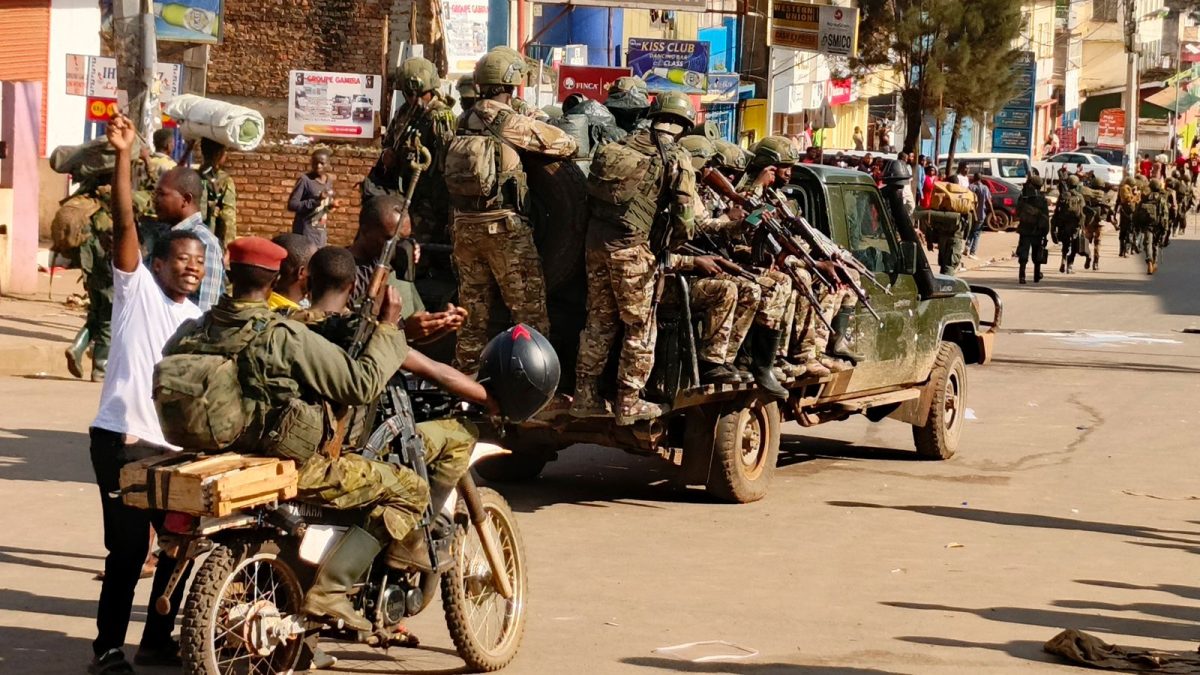
Overview:
According to the March 23 Movement/Alliance of the River Congo (M23/AFC), forces of the Congolese army (FARDC) and its coalition launched coordinated attacks on Monday, targeting civilians in Minembwe in Hauts Plateaux, Katoyi in Masisi Territory, and Mulumemunene in Kabare Territory.
Fresh clashes and alleged attacks on civilians in eastern Democratic Republic of Congo (DRC) have raised concerns over the fragile ceasefire between the government and M23/AFC rebels. According to the March 23 Movement/Alliance of the River Congo (M23/AFC), forces of the Congolese army (FARDC) and its coalition launched coordinated attacks on Monday, targeting civilians in Minembwe in Hauts Plateaux, Katoyi in Masisi Territory, and Mulumemunene in Kabare Territory.
In a statement, M23/AFC spokesperson Lawrence Kanyuka said: “On Monday, February 16, 2026, the coalition forces of the Kinshasa regime launched coordinated and aggressive attacks against the civilian populations of Minembwe, Katoyi, and Mulumemunene. The Kinshasa regime persists in a blatant and deliberate violation of the ceasefire, once again demonstrating its contempt for the commitments made and for peace. These irresponsible and criminal acts constitute a grave provocation and undermine all efforts toward de-escalation and a peaceful solution.”
The rebels’ accusations come amid ongoing international efforts to enforce a ceasefire and prepare for inter-Congolese dialogue. On February 12, 2025, Vivian van de Perre, acting head of the United Nations Organization Stabilization Mission in the DRC (MONUSCO), visited Goma to support monitoring and verification of the ceasefire in line with Security Council Resolution 2808 (2025). MONUSCO provides technical and logistical assistance to the International Conference on the Great Lakes Region (ICGLR) through the EJVM framework.
Additionally, a meeting in Angola on February 9, 2026, chaired by Angolan President João Lourenço and attended by Togolese President Faure Gnassingbé, Congolese President Félix Tshisekedi, and former Nigerian President Olusegun Obasanjo, recommended a total ceasefire to facilitate the preparatory phase of inter-Congolese dialogue in Luanda. While President Tshisekedi expressed willingness to implement the ceasefire, M23/AFC stated it would not participate in the Luanda dialogue, recognizing only ongoing peace talks in Qatar.
Between Sunday and Monday, clashes between M23/AFC rebels and pro-government militias — including Wazalendo and the Democratic Forces for the Liberation of Rwanda (FDLR) — in Kibirizi and Bambo in Bwito Chiefdom, Rutshuru Territory, left one civilian dead, three others injured, and a truck destroyed by fire.M23/AFC and the Congolese government have repeatedly traded accusations over ceasefire violations since the group’s resurgence in 2022 under leaders Bertrand Bisimwa and Emmanuel Sultan Makenga.
The Congolese government has consistently accused Rwanda of supporting the rebels, claims denied by both Kigali and M23/AFC. The rebels say their objective is to fight corruption, xenophobia, and discrimination within the DRC’s political leadership. In early 2025, M23 launched a rapid offensive across eastern Congo, capturing several towns and heightening fears of a broader regional conflict. As of now, the DR Congo government has not responded to the latest allegations from M23/AFC.
***URN***