



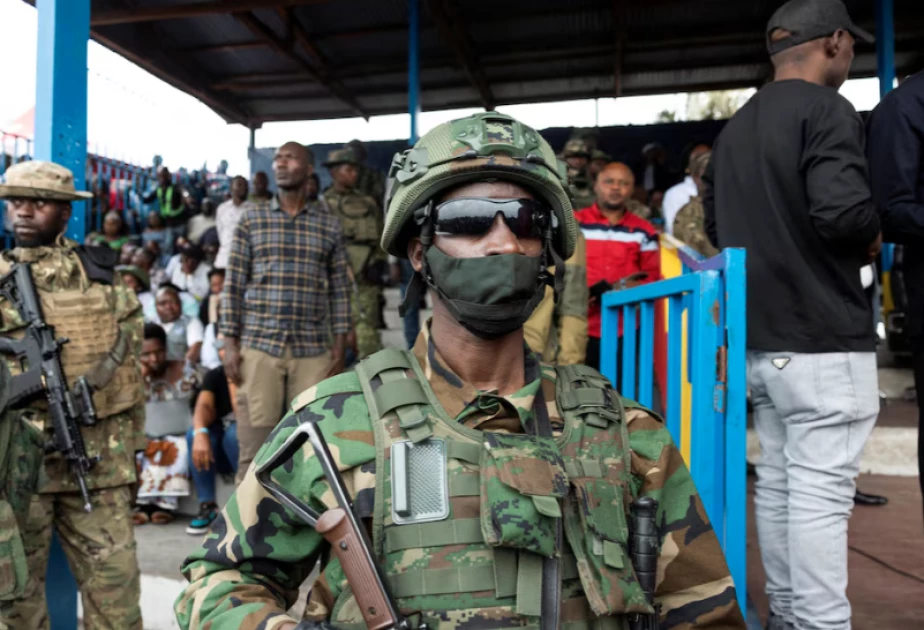
The March 23 Movement, operating under the Alliance Fleuve Congo (AFC/M23), has announced that it will unilaterally withdraw its fighters from Uvira city in South Kivu Province, eastern Democratic Republic of Congo (DRC), but only under clearly defined conditions.
Uvira and its surrounding areas fell under rebel control on December 10, 2025, following more than a week of intense fighting. The violence triggered a mass displacement, with thousands of civilians and some government soldiers fleeing across the border into neighbouring Burundi.
Since the takeover, international actors including the United Nations, the United States, and France have repeatedly called for the immediate withdrawal of AFC/M23 forces from Uvira and other occupied areas.
In a statement issued in the early hours of Tuesday, AFC/M23 Coordinator Corneille Nangaa Yoberu said the group’s decision to withdraw followed a request from a United States mediator. However, Nangaa cautioned that previous withdrawal arrangements had been undermined by what he described as bad-faith actions by the Armed Forces of the Democratic Republic of Congo (FARDC), allied Wazalendo militias, and other forces.
He alleged that in past instances, trust-building measures were used to reclaim territory from the rebels, followed by reprisals against civilians perceived to be sympathetic to the Alliance. As a result, Nangaa said the AFC/M23 is demanding that guarantors of the peace process establish strong and effective safeguards to oversee the administration of Uvira once the rebels pull out.
Among the key conditions outlined by the group are the demilitarisation of Uvira, the protection of civilians and critical infrastructure, and independent monitoring of the ceasefire through the deployment of a neutral force.
Nangaa also said the AFC/M23 would not tolerate the presence of any armed group hostile to the Government of Burundi on Congolese territory. He added that areas under AFC/M23 control would not be used as rear bases for cross-border attacks, stressing the group’s stated commitment to preserving good neighbourly relations between the two countries.
Between 2022 and 2023, the M23 withdrew from several strategic positions, including Rutshuru, Kiwanja, Mabenga, Rumangabo, and Kibumba, handing them over to troops from the East African Community (EAC) regional force to facilitate peace talks. However, fighting later resumed after the DRC government expelled the EAC mission, allowing FARDC and allied militias to take over the vacated positions. The M23 subsequently recaptured all those areas.
Since its resurgence in 2022 under leaders Bertrand Bisimwa and Emmanuel Sultan Makenga, the Congolese government has repeatedly accused Rwanda of backing the rebels, claims denied by both Kigali and the M23. The group maintains that its rebellion is driven by a desire to confront corruption, xenophobia, and systemic discrimination within the Congolese political leadership.
Earlier this year, the M23 launched a swift offensive across eastern Congo, seizing the region’s two largest cities and heightening fears of a wider regional conflict in the Great Lakes region.
***URN***