



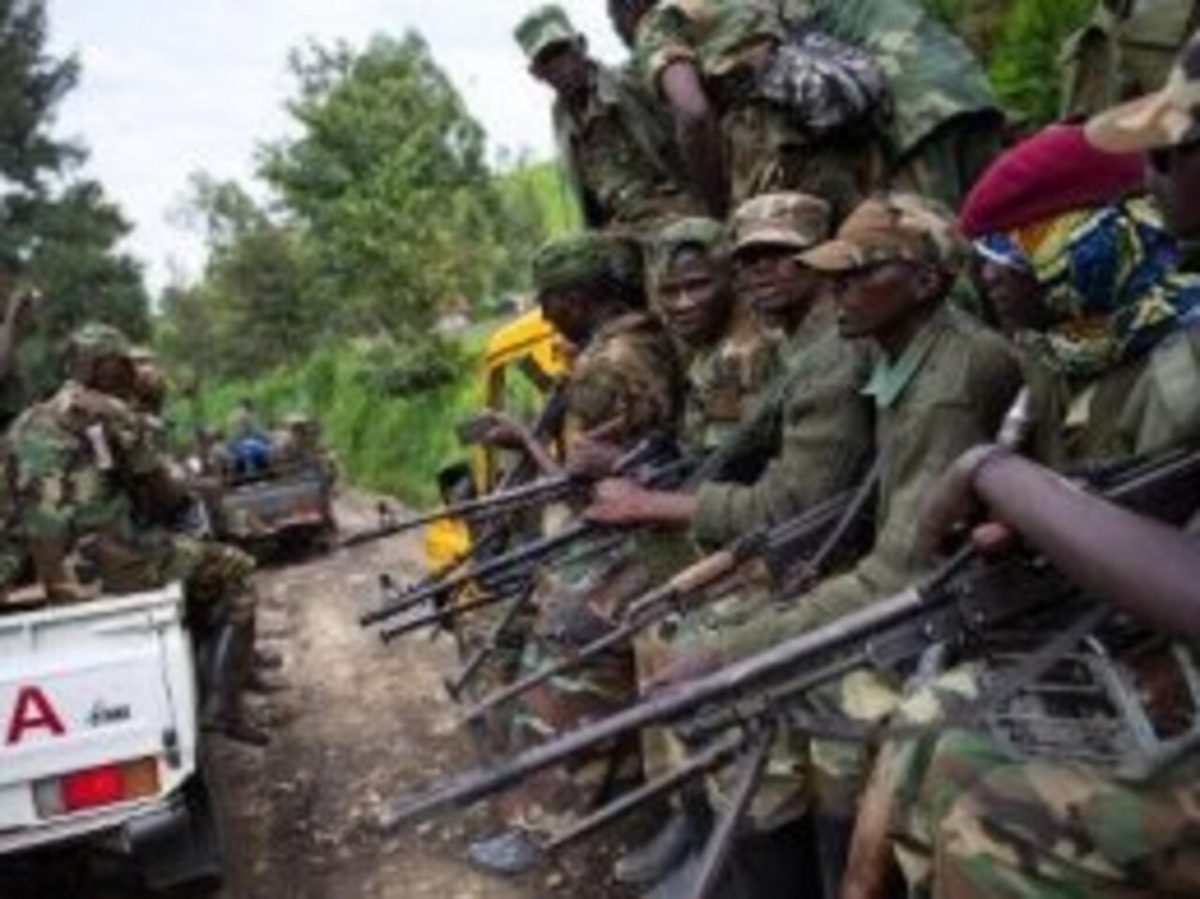
The March 23 Movement/Alliance Fleuve Congo (M23/AFC) has criticized recent United States sanctions targeting gold mining and the trade of mineral resources linked to eastern Democratic Republic of Congo (DRC).
Last week, the U.S. Department of the Treasury imposed sanctions on Rwanda-based Gasabo Gold Refinery Limited and a network of Rwandan mining companies over allegations that they facilitated the illicit trafficking of minerals from areas controlled by M23/AFC rebels.
According to the U.S. government, gold extracted from mines under M23/AFC control in South Kivu Province was transported under the escort of the Rwanda Defence Force (RDF) to Rusizi before being shipped to Gasabo Gold Refinery in Kigali.
The Treasury Department said that by early 2026, at least 60 kilograms of gold worth several million dollars had passed through the route.
The sanctions also target Gasabo Gold Refinery Chairman Jean Malic Kalima, Managing Director Bosco Kayobotsi, and three mining companies allegedly controlled by Kalima—Bugambira Mines Limited, Wolfram Mining and Processing Limited, and Rwinkwavu Mining Corporation Limited. According to the Treasury Department, all assets belonging to the sanctioned individuals and entities within U.S. jurisdiction have been frozen, and they are prohibited from conducting transactions with U.S. persons.
Rwanda had not publicly commented on the sanctions at the time of publication. However, M23/AFC spokesperson Lawrence Kanyuka issued a statement on Thursday criticizing the measures.
Kanyuka said the DRC’s mineral wealth should primarily benefit the Congolese people, describing M23/AFC as a Congolese movement formed by citizens who, he claimed, took up arms in response to violence, discrimination, exclusion, ethnic persecution, poor governance, and decades of systemic corruption.
He argued that despite the country’s vast mineral wealth, the benefits continue to accrue to a small political elite in Kinshasa while millions of Congolese remain in poverty, insecurity, and deprivation.
Kanyuka further argued that the sanctions, which he described as selective, had been imposed at a critical stage in ongoing peace negotiations and would not contribute to a sustainable resolution of the conflict.
He questioned why similar sanctions had not been imposed on the Kinshasa government, which M23/AFC accuses of triggering the conflict, or on the Armed Forces of the Democratic Republic of Congo (FARDC), which the rebel movement alleges collaborates with the Democratic Forces for the Liberation of Rwanda (FDLR).
Kanyuka also questioned why sanctions had not targeted the Wazalendo militias, Burundian forces, and foreign mercenaries, whom M23/AFC accuses of committing abuses against Congolese civilians.
He further alleged that government forces continue to carry out frequent attacks and bombardments against Banyamulenge villages in Minembwe, arguing that the United States has remained silent on those incidents.
According to Kanyuka, the sanctions risk encouraging what he described as the Kinshasa government’s lack of good faith while overlooking those responsible for repeated ceasefire violations and for obstructing political dialogue under the Doha Process and the Washington Agreements.
He added that a lasting solution to the conflict cannot be achieved through selective pressure but requires a credible, inclusive, and genuine political process that addresses the root causes of the crisis, which he said have deprived millions of Congolese of security, dignity, and opportunities for development.
Meanwhile, the security situation in eastern DRC remains fragile. On Wednesday, M23/AFC fighters regained control of Mikenge and Bilalo-Mbili in Itombwe Sector, Mwenga Territory, South Kivu Province, following intense fighting.
Control of Mikenge is considered strategically significant and could allow the rebels to advance toward Point-Zero, Baraka Town, and the direction of Tanganyika Territory.
The Congolese government has consistently accused Rwanda of supporting the M23 rebellion, allegations that have been repeatedly denied by both the Rwandan government and M23/AFC.
M23/AFC says its armed campaign seeks to address corruption, discrimination, xenophobia, and the marginalization of certain communities in the DRC.
In early 2025, the movement launched a rapid offensive across eastern Congo, capturing several strategic towns and raising concerns about a broader regional conflict.