



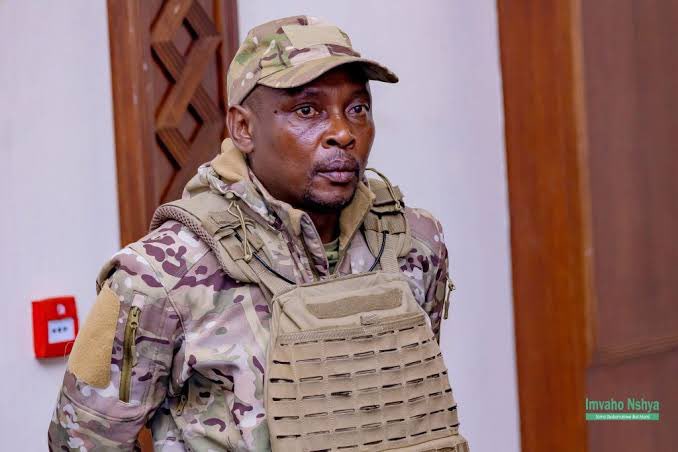
Willy Ngoma, the military spokesperson for the rebel alliance known as Alliance Fleuve Congo/M23, was killed early Tuesday in eastern Congo in what officials say was a drone strike by the Congolese army, multiple sources reported.
According to military and diplomatic sources cited by Reuters, the strike occurred around 3:00 a.m. on February 24, 2026, near Rubaya, a strategic mining town in North Kivu province where fighting between the rebels and government forces has escalated in recent months.
The Alliance Fleuve Congo (AFC/M23) issued a formal obituary communiqué condemning what it described as “grave acts” by the Kinshasa government.
“It is with pain and deep dismay that the Alliance Fleuve Congo (AFC/M23) announces the death of Comrade Willy Ngoma… Military Spokesperson, was killed in tragic circumstances that occurred … near Rubaya.”
The communiqué accused the national government of showing “blatant disregard for its commitments,” specifically referring to international agreements such as the Qatar-mediated Doha Framework, which was meant to support a ceasefire and political dialogue.
It continued:
“The AFC/M23 extends its sincere condolences to the entire revolutionary community of the DRC and to the biological family of the one who devoted his life to the struggle for social justice and peaceful coexistence among all Congolese.”
The statement was signed in Goma on February 24, 2026, by Alumba Lukamba Omokoko, the group’s chief of staff.
Multiple security sources said the Congolese army used an unmanned aerial vehicle — a drone — to carry out the strike that killed Ngoma. While the national government has not formally confirmed responsibility, officials with knowledge of the operation said the target was specifically chosen because of Ngoma’s role in the rebel command.
The eastern Congo region has seen intensifying clashes since M23 resurfaced as a major armed group in late 2024. The militia, made up largely of members from the Tutsi-linked community, challenged the Congolese army for control of territory in North and South Kivu — including key towns like Goma, the provincial capital.
Ngoma’s death comes at a sensitive moment. Ceasefire talks — facilitated by Qatari mediators and involving representatives from the United States and African Union — were progressing toward mechanisms for monitoring and enforcing peace. There are fears that high-profile killings could derail those efforts.
The conflict has drawn global attention due to its humanitarian impact. Thousands of civilians have been displaced, and the region’s rich mineral resources, including gold and coltan, remain a key source of funding for armed groups.
Donors and peace advocates have urged both sides to respect ceasefire agreements and protect civilians caught in the crossfire.
International diplomats are expected to meet with Congolese government officials later this week to discuss next steps in the ceasefire process.
M23 leaders have not yet publicly announced how they will respond militarily, but their official statement condemning the strike suggests growing mistrust between the parties.
For now, Ngoma’s death — and the controversy surrounding the circumstances of the strike — has become the latest flashpoint in one of Africa’s longest-running conflicts.