



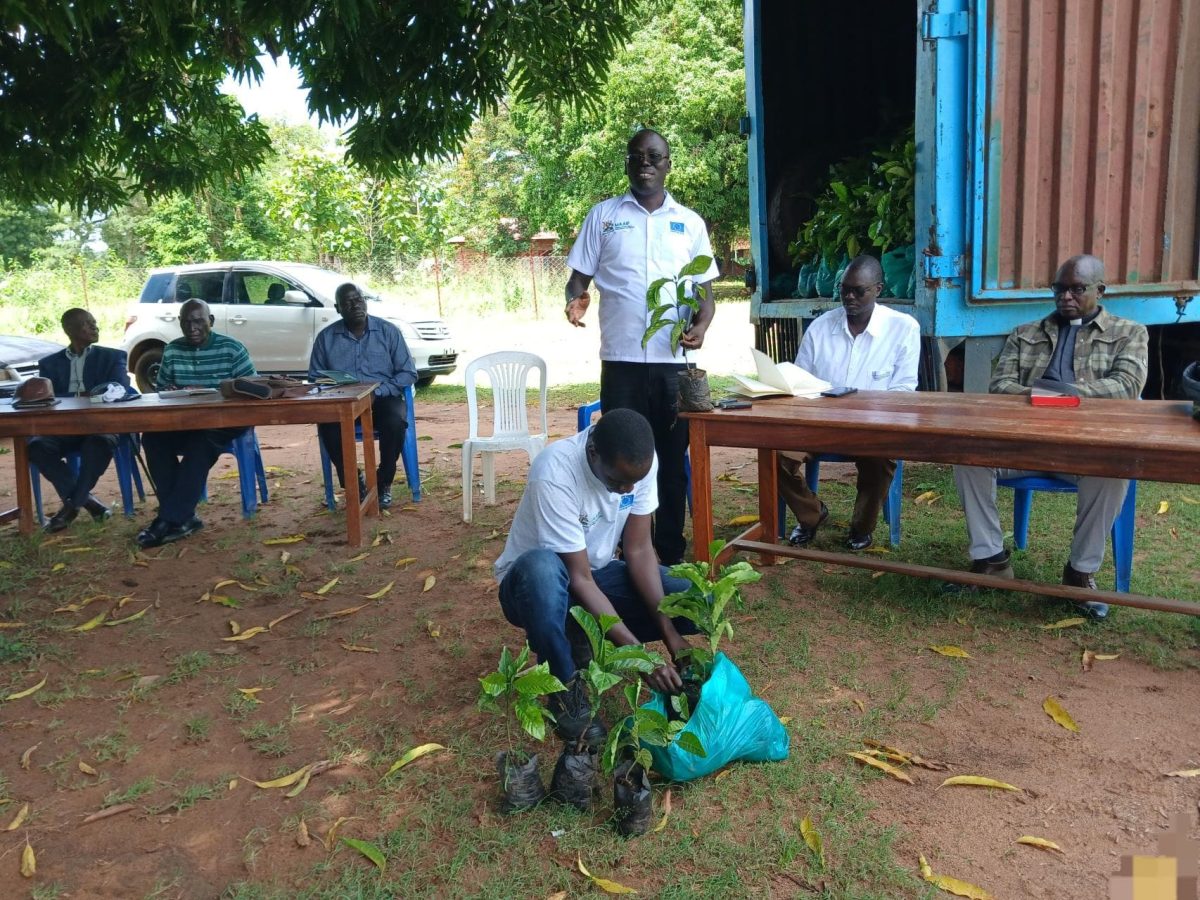
The Ministry of Agriculture, Animal Industry and Fisheries (MAAIF) has introduced unconventional coffee-growing methods aimed at improving the crop’s survival rates in Northern Uganda’s harsh, dry conditions.
The techniques include planting coffee in the same pit with bananas and intercropping with pigeon peas and cassava. These approaches are part of a broader government strategy to expand coffee production and boost household incomes across the region.
Julius Twiine, the officer in charge of Mid-Northern Uganda in the Coffee Department at MAAIF, said the methods, currently unique to the region, are designed to help young coffee plants withstand prolonged dry spells common in districts such as Kitgum and the wider Acholi sub-region
Twiine explained that banana plants naturally spread away from the main stem as they grow, reducing competition with coffee while still offering early-stage protection to the young crop. Farmers are also advised to plant pigeon peas, locally known as lapena, about one metre from each coffee plant. These provide shade and help maintain soil moisture during dry seasons.
He added that pigeon peas are particularly suitable for coffee farming because they provide optimal shade, enrich the soil, protect against land degradation, and offer an additional source of food or income, making them valuable in sustainable farming systems. Cassava is another recommended intercrop, planted between coffee rows to shield the plants from excessive heat.
Its broad leaves help suppress weeds, reducing competition for nutrients and moisture.
Additionally, cassava is easy to remove once the coffee plants mature.“Cassava is a short-term crop. Once coffee plants are well established and require less shade, cassava can be harvested and removed without disturbing the coffee,” Twiine said.
These methods form part of climate-smart agricultural practices being promoted in Northern Uganda, where long dry seasons between November and March have historically affected coffee survival rates. Twiine noted that many farmers in the region are new to coffee cultivation and require specialised training in agronomic practices.
This includes preparing planting pits measuring two feet deep and two feet wide to support proper root development. More than 30,000 farmers across East Acholi have already been trained through extension workers under a Train-of-Trainers model, with knowledge being passed on to communities.
MAAIF is also working with partners such as Operation Wealth Creation and faith-based institutions to mobilise farmers and encourage adoption of the new methods.
The ministry expects these unconventional techniques to significantly improve coffee survival rates and productivity, supporting efforts to establish coffee as a sustainable cash crop in Northern Uganda.
Coffee has been identified as a key driver of rural incomes, with officials projecting that well-managed gardens could substantially improve household earnings once the crop matures.
Prisca Aleng, a farmer in Okidi Parish, Labongo Akwang Sub-county, welcomed the initiative, noting that it reduces the cost of investing in shade trees. Aleng, who plans to plant coffee on half an acre this year, said financial constraints had previously discouraged her from venturing into coffee farming.
“The requirement for shade trees is one of the reasons I was hesitant to start coffee growing. I am glad cheaper alternatives are being recommended,” she said.Uthant Okot, the Kitgum District Agricultural Officer, urged farmers to embrace coffee cultivation.
He noted that although the Acholi sub-region is new to the crop, it has the potential to catch up with established coffee-growing areas due to its vast, relatively pest- and disease-free land. URN