



Overview:
Responding to these concerns, Electoral Commission Spokesperson Julius Mucunguzi confirmed that the Commission is prepared to move forward with the LC1 and LC2 polls within the guidelines set by the Cabinet.
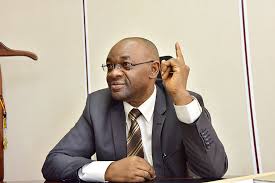
The Minister of Local Government, Raphael Magyezi, has announced that elections for Village (LC1) and Parish (LC2) administrative units will take place between March and April 2026.
Addressing the media at the Uganda Media Centre yesterday, Minister Magyezi emphasized that these elections are critical to filling a governance vacuum that has persisted at the grassroots level. The exercise will cover approximately 71,230 villages and 10,717 parishes across the country.
“Without the LC1 and LC2 in place, the governance structure has a vacuum,” Magyezi stated. “His Excellency the President guided that this time we should have all the elections in one electoral cycle.”
The Minister confirmed that the elections will be conducted through the lining-up system, as stipulated under Section 123, Subsection 2 of the Local Government Act.
While higher elective positions, such as the Presidency and Parliament, have seen regular five-year renewals, the village and parish councils have historically faced long periods of “stagnation.” Between 2001 and 2018, for instance, Uganda went nearly 17 years without formal LC1 elections.
The primary reason cited for past delays is the cost of administration. Unlike higher-level elections that use secret ballots, the logistical and financial requirements for conducting elections across over 70,000 villages are immense. In previous years, the Ministry of Finance often lacked the budget to fund these grassroots exercises separately from the general election cycle.
However, Magyezi revealed that the Ministry of Finance has allocated UGX 56.9 billion to the Electoral Commission (EC) to ensure the polls are conducted across the country.
Besides the financial constraints, there have been long-standing debates over the voting method. While secret ballots are the standard for national elections, the government transitioned to “lining up” for local councils to reduce costs (eliminating the need for ballot papers, boxes, and complex tallying). Legal challenges and debates over the transparency and safety of this method often caused delays in the legislative process.
Previously, the five-year term for administrative units often fell mid-term relative to the national government. This created a disjointed system where the country was in a “perpetual state of electioneering.”
Minister Magyezi noted that President Museveni insisted on aligning all terms. “Previously, although the term of office… was also five years, we would have their elections mid-term. This time, the President insisted we must have it in one cycle.”
By holding these polls now, the government aims to synchronize the mandate of local leaders with that of the President, Parliament, and District Chairpersons, ensuring a unified five-year administrative window starting in May 2026.
Despite the government’s push for new elections, the announcement comes amidst rising tension over unpaid dues from the recently concluded general elections.
Reports indicate that thousands of polling officials recruited by the EC are yet to receive their wages. In the Serere district, some officials have reportedly confiscated voting materials, including ballot boxes and biometric kits, as leverage to demand their pay.
According to affected staff in Serere, they were recruited without formal written contracts but were verbally promised UGX 100,000 for Presiding Officers and UGX 70,000 for Polling Assistants.
Responding to these concerns, Electoral Commission Spokesperson Julius Mucunguzi confirmed that the Commission is prepared to move forward with the LC1 and LC2 polls within the guidelines set by the Cabinet.
Mucunguzi acknowledged the delayed payments for previous election officials, though he did not provide specific reasons for the bottleneck. He assured stakeholders that the Commission is working to resolve outstanding administrative issues even as they transition into the next phase of the electoral roadmap.
****URN****