



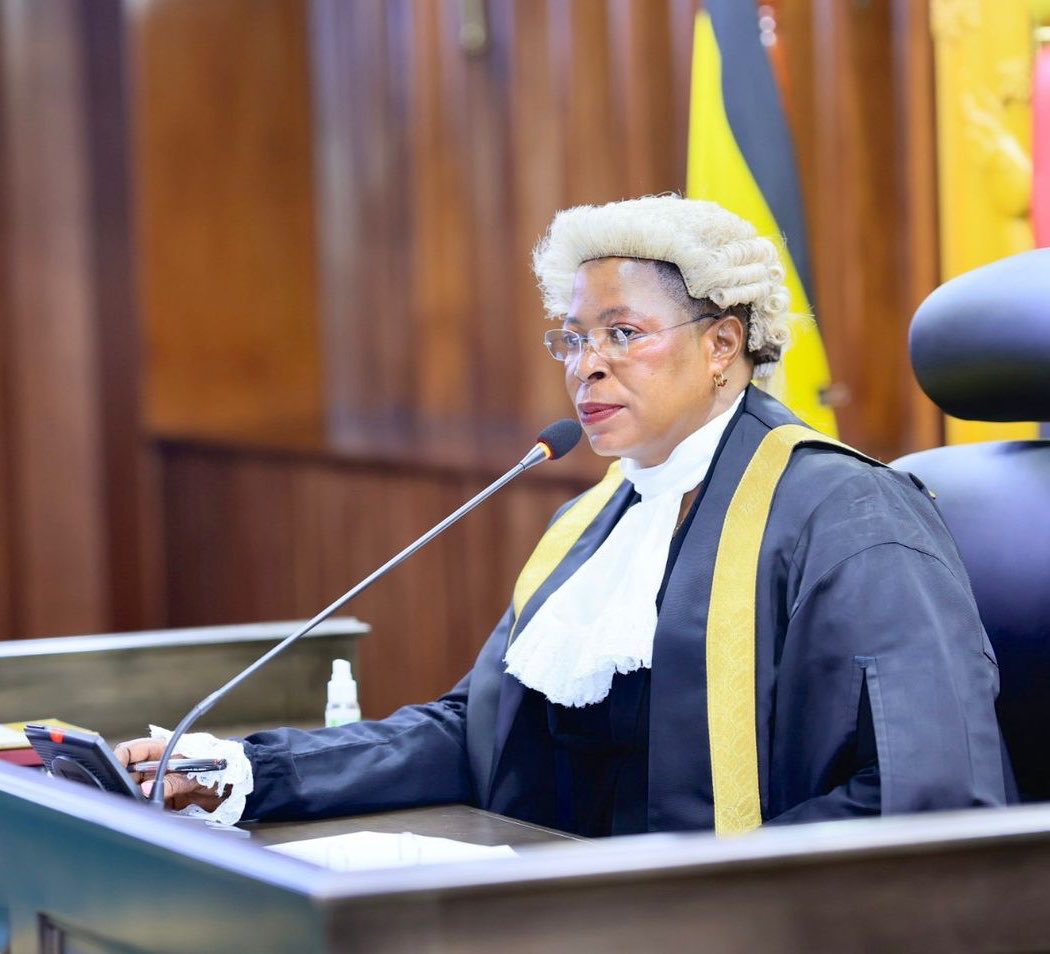
Speaker Anita Among this week dismissed speculation that she intends to contest for the presidency in 2031, describing the claims as “rubbish” and insisting she will retire from active politics by that time.
Speaking at the Patriotic League of Uganda headquarters, she instead positioned herself as a committed supporter of the current leadership structure, pledging allegiance to whoever is endorsed by Yoweri Kaguta Museveni.
In a statement that has drawn political attention, Among said she has “overachieved” in her career and did not originally expect to rise to her current position as Speaker of Parliament.
She further downplayed any presidential capability, arguing that even serving as a Member of Parliament is demanding, and stating she lacks both the “urge” and “wish” to lead the country at that level.
She also signaled political alignment with emerging succession dynamics, specifically mentioning Muhoozi Kainerugaba as a figure she would support if he is chosen, reinforcing the central role of presidential discretion in determining Uganda’s future leadership direction.
Plus News has broken her speech into distinct segments, each revealing a different layer of Uganda’s unfolding succession conversation.
- Dismissing presidential ambition outright
“I’ve heard a section of people out there speaking… it is rubbish… that the Honourable Anita, in 2031, is going to stand for the presidency.”
This is not just denial. It is emphatic political distancing. In Uganda’s system, where ambition is often signaled subtly, such a forceful rejection is deliberate. By shutting down speculation early, Among removes herself from the shortlist of potential successors within the ruling elite. - Framing her career as ‘overachievement’
“Even where I am now, I have overachieved… I did not expect to be here.”
Here, she adopts a humility narrative, but politically, it does more. It lowers expectations of upward ambition and reinforces her current role as an endpoint rather than a stepping stone. Leaders positioning for higher office rarely speak this way. - Declaring retirement—and redirecting support
“By 2031, I am retiring from active politics. If my brother (Gen Muhoozi Kainerugaba) is standing, or anybody that the President supports, that is the person I will support…”
This is the core political signal. She does two things at once: exits the race and immediately points to a preferred direction. By naming Muhoozi Kainerugaba and tying her support to Yoweri Kaguta Museveni’s choice, she aligns herself with what increasingly looks like an internally managed transition pathway. - Reinforcing her rejection with self-doubt
“This nonsense… I am not for that. I don’t go for what I cannot handle… Even being a Speaker - of Parliament is too much, how will you run this country?”
This is unusual rhetoric for a sitting Speaker. It serves a strategic purpose: making her non-candidacy believable. By downplaying her own capacity, she removes any lingering perception that she could be a compromise or alternative candidate within the system. - Linking leadership to military capability
“I don’t even know how to cock a gun… I don’t have the patience to be President.”
This line is more revealing than it appears. It subtly reinforces a long-standing political narrative in Uganda, that ultimate leadership is tied to security credentials. Without naming it directly, this framing elevates figures with military backgrounds, again aligning with Muhoozi’s profile. - Recasting her rise as accidental
“I did not expect to be Speaker… I only thought, ‘let me try’… and when I tried, I got it.”
Among portrays her ascent as unplanned, almost reluctant. Politically, this strips her trajectory of any long-term presidential intent and reinforces the idea that her journey is complete, not evolving. - Referencing the transition after Jacob Oulanyah
“The Right Honourable Olanya passed on… I ended up becoming Speaker… I did not even want to stand… the Honourable Kabandas pushed me…”
This portion anchors her legitimacy in circumstance rather than ambition. It also subtly reminds listeners that leadership transitions, even within Parliament, have been reactive and internally managed, not openly contested. - Declaring personal loyalty to Museveni
“I am what I am because of President Yoweri Kaguta Museveni’s service… I would have been nobody in that village of Bukedea.”
This is a classic loyalty statement, but in a transition context, it carries weight. It signals that her political decisions including succession support, are anchored in allegiance to the President. - Final submission to presidential choice
“I will always do what President Museveni says… I will support whoever he chooses.”
This is the clearest structural insight into Uganda’s transition politics. It reaffirms that the process is centralized: the decisive factor is not open competition, but presidential endorsement.