



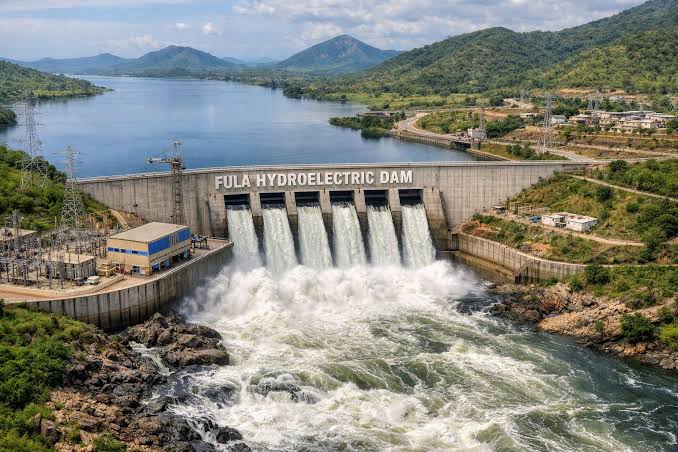
South Sudan has announced plans to advance the long-planned Grand Fula hydropower project on the White Nile near Nimule, with Energy and Dams Minister Agok Makur Kur saying the country is not afraid of possible opposition from Egypt.
Speaking to journalists in Juba on September 18, Makur said South Sudan has a sovereign right to develop its water and energy resources and that the proposed Fula project is among 34 projects approved through resolutions of the Nile Basin Council of Ministers. Egypt is part of the council.
“There is no fear,” Makur said, adding that the Ministry of Energy and Dams was “ready for building our dams.”
The minister said he had already briefed President Salva Kiir Mayardit on preparations to develop the country’s hydropower resources. He also disclosed that investors and foreign ambassadors had begun approaching the ministry but said details on financing and implementation would be released later.
Grand Fula project
The Grand Fula project is planned on the White Nile in Eastern Equatoria State, about 34 kilometres downstream of Nimule and roughly 137 kilometres upstream of Juba.
Government and regional planning documents have placed its potential generation capacity at about 1,080 megawatts.
The project has been under consideration for years and remains in the pre-construction stage. The Nile Basin Initiative says Grand Fula is part of South Sudan’s long-term energy strategy and has identified opportunities to mobilise resources for further project studies.
The project is particularly significant for a country struggling with severe electricity shortages. South Sudan’s wider energy plans include Grand Fula alongside other proposed hydropower projects and regional electricity interconnection initiatives.
Nile politics
Makur’s comments come amid longstanding tensions over Nile water development, particularly between Egypt and Ethiopia over the Grand Ethiopian Renaissance Dam on the Blue Nile.
Unlike Ethiopia’s GERD, Grand Fula is located on the White Nile. The White Nile and Blue Nile meet at Khartoum in Sudan before the combined river flows northwards through Sudan and Egypt.
South Sudan is a member of the Nile Basin Initiative, which provides a framework for cooperation among Nile Basin countries on the development and management of shared water resources.
South Sudan’s position is that it should be able to develop its own water and energy resources while maintaining cooperation with other Nile Basin states.
Egypt has historically stressed the importance of protecting its water security while also supporting development projects in Nile Basin countries. Cairo has, for example, maintained extensive water-resource cooperation with South Sudan, including projects involving water supply, monitoring stations and other infrastructure.
The latest South Sudanese announcement therefore adds another dimension to the wider debate over how Nile Basin countries balance national development, hydropower generation and downstream water concerns.