

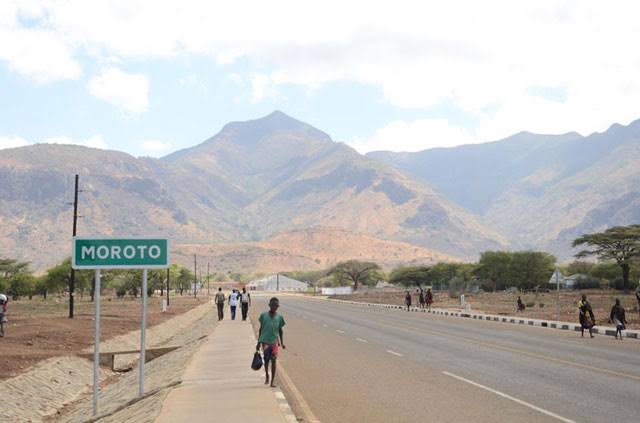
The deepening drought in Rupa and Lotisan sub-counties in Moroto district has compelled at least 500 households to leave their homes in search of food. The entire population of Moroto district is facing starvation due to crop failures this year.
A significant number of people from villages like Naput in Rupa Sub-County, Kidepo, and Atedeoi in Lotisan Sub-County are migrating to urban areas and mining sites to work as casual laborers to make a living. As a result, only the elderly and children are left in their houses, suffering from hunger as they are unable to seek food elsewhere.
Martha Lokim, a mother of five in Naput village, Rupa sub-county, explained that the prolonged dry spell had devastated their crops, forcing people to abandon their homes due to hunger. Lokim said they now survive by making charcoal and working in mining sites to earn money for food.
She also reported instances of women being sexually abused in exchange for food, and those working in mining sites receiving monetary rewards. Lokim appealed to the government and well-wishers to intervene before the situation deteriorated further. Sylvia Nasike, another mother, expressed concern that her children were falling sick due to inadequate food.
She mentioned that two of her siblings were suffering from malnutrition, and her efforts to treat them were hampered by the lack of health facilities and food in the area. Nasike feared that more children might suffer from malnutrition due to the scarcity of food.
Lucy Ogole, an elderly woman in Naput village, stated that those with energy had migrated to mining areas to work as casual laborers, leaving the elderly and children starving at home. Some days, they go without a single meal or rely on the remnants of local brew from alcohol dealers in the trading center. She pleaded for government intervention, as no one was caring for the elderly in this dire situation.
Samuel Olinga, the LC1 secretary of Naput village, noted that unreliable rainfall for the past three years had severely impacted crop production. Out of 1000 people in his village, approximately 300 households had migrated in search of food.
He also highlighted the exploitation of those working in mining areas, earning just 3000 shillings per day, which was insufficient to feed their families. Olinga appealed for government support with food relief and quick-maturing seeds for the next farming season.
David Koryang, the LC5 chairperson of Moroto district, expressed concerns about the worsening hunger situation, which could affect the Parish Development Model (PDM). He mentioned that some communities had started diverting PDM funds due to hunger’s impact, leading to early marriages, burglary, and malnutrition, affecting both the elderly and children.
George William Wopuwa, the Moroto Resident District Commissioner, acknowledged the food scarcity and reported it to the Office of the President for intervention. He expressed concerns that the hunger crisis was affecting education, as parents couldn’t provide scholastic materials for their children. Wopuwa feared an increase in hunger-related deaths compared to the previous year if the government did not respond promptly.
The Moroto district Production department estimated that approximately 10,000 acres of crops, including maize, sorghum, beans, sunflowers, and groundnuts, were destroyed by the drought that began in mid-June and July this year.”