

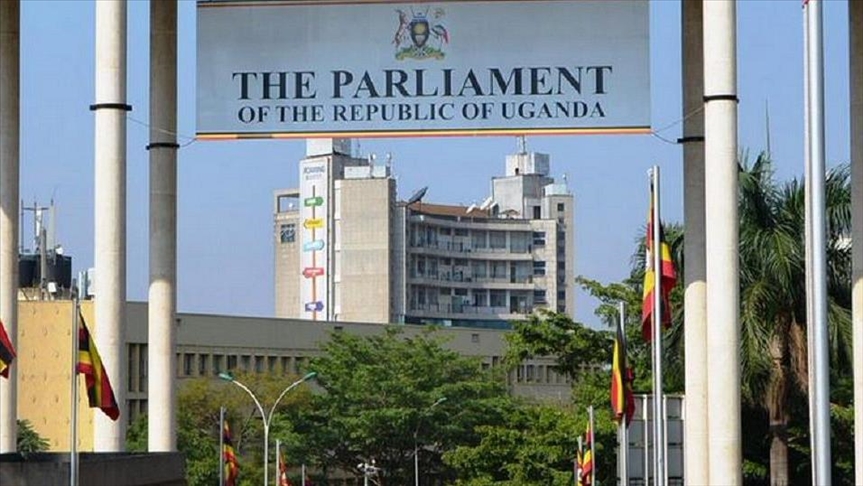
Members of Parliament have been cautioned against confrontational engagements with security agencies and using personal grievances to influence their oversight work, with military officials saying such actions could undermine Uganda’s national security.
The warning was issued during a two-day induction workshop for the Parliamentary Committee on Defence and Internal Affairs at Speke Resort Munyonyo, where MPs were briefed on regional security threats, Uganda’s military deployments and their oversight responsibilities.
Maj Gen Joseph Musoke Ssemwanga, the UPDF representative on the committee and Commander of the Reserve Force, said the training was intended to help legislators understand how to engage security agencies and other government institutions without compromising their work.
“Members of Parliament can interact with or ask members of security in principle without necessarily being confrontational. Members have learnt that they should not bring their personal problems to the security personnel,” Ssemwanga said.
He added that the actions of individual legislators could affect national security, making it important for them to understand the security sector and their responsibilities when dealing with military and other security agencies.
The workshop was chaired by Gomba West MP Robinah Rwakoojo, the committee chairperson, who said the training had strengthened members’ understanding of their mandate, investigative responsibilities and Uganda’s regional peace and security obligations.
“This induction is going to help the Committee in terms of mandate, oversight and committee work. It is going to help us in our investigative work. It has helped us to know how we have cooperation in the region, and it has helped us to know how security is handled very well,” Rwakoojo said. Representing the Permanent Secretary of the Ministry of Defence and Veteran Affairs, Brig Gen Nicholas Humble Nyesiga briefed MPs on the security situation in the Great Lakes and Eastern African regions, highlighting armed conflicts, terrorism, cross-border crime and political instability.
He said conflicts in the Democratic Republic of Congo (DRC), Sudan, South Sudan and Somalia continued to disrupt livelihoods, trigger humanitarian crises and create ungoverned spaces that armed groups could exploit.
Nyesiga also cited refugee movements, the proliferation of small arms, competition for natural resources, external geopolitical rivalries and border disputes among the threats affecting regional stability.
He said Uganda’s geographical position and porous borders exposed the country to security threats originating beyond its territory, requiring cooperation with neighbouring countries and participation in regional security operations.
“As a landlocked country reliant on regional stability for trade, Uganda’s participation in African Union-led frameworks reinforces collective security, thus ensuring peace, stability and fulfilment of its international obligations,” Nyesiga said.
He added that the UPDF was involved in several regional security initiatives, including the African Union Support and Stabilisation Mission in Somalia (AUSSOM), Operation Shujaa in eastern DRC and Operation Mlinzi Wa Kimya in South Sudan.
Operation Shujaa, launched in November 2021 jointly by the UPDF and the Armed Forces of the Democratic Republic of Congo (FARDC), targets the Allied Democratic Forces (ADF), which operates in eastern DRC.
Nyesiga said the operation continued through ground offensives and targeted strikes intended to weaken the ADF and its Islamic State-linked affiliate, the Islamic State Central Africa Province (ISCAP).
He also highlighted Uganda’s contribution to international and regional security mechanisms, including the East African Standby Force, the International Conference on the Great Lakes Region and the Eastern Africa Fusion and Liaison Unit.
Uganda’s involvement in Somalia began in 2007 under the African Union Mission in Somalia (AMISOM), which later transitioned to the African Union Transition Mission in Somalia (ATMIS) before AUSSOM took over in January 2025.
Nyesiga said the UPDF continued to provide troops and support the training and mentoring of Somali security forces. He also cited Uganda’s military deployment to South Sudan in March 2025, saying the operation was intended to protect vital installations and secure the Juba–Uganda highway.
The brigadier general said regional security interventions faced several challenges, including logistical constraints, limited financial and technological resources, complex political dynamics, language barriers and the difficulties of operating under time-bound legal agreements.
He called for stronger regional diplomacy, intelligence sharing, military coordination and investment in logistics and technology to address evolving security threats.
“The UPDF remains a central instrument in advancing regional peace and security within the Great Lakes and Eastern Africa, operating within a complex web of interdependent threats. Success hinges on strengthening regional diplomacy, harmonising legal frameworks, and enhancing interoperability within mechanisms such as the African Union and IGAD,” Nyesiga said.
He urged strategic leaders to invest in the capacity of partner forces and strengthen cooperation with civilian communities to support sustainable security systems.
The induction workshop was intended to familiarise committee members with their mandate, oversight responsibilities and the relationship between Parliament, the Ministry of Defence and Veteran Affairs, and the country’s security agencies.