



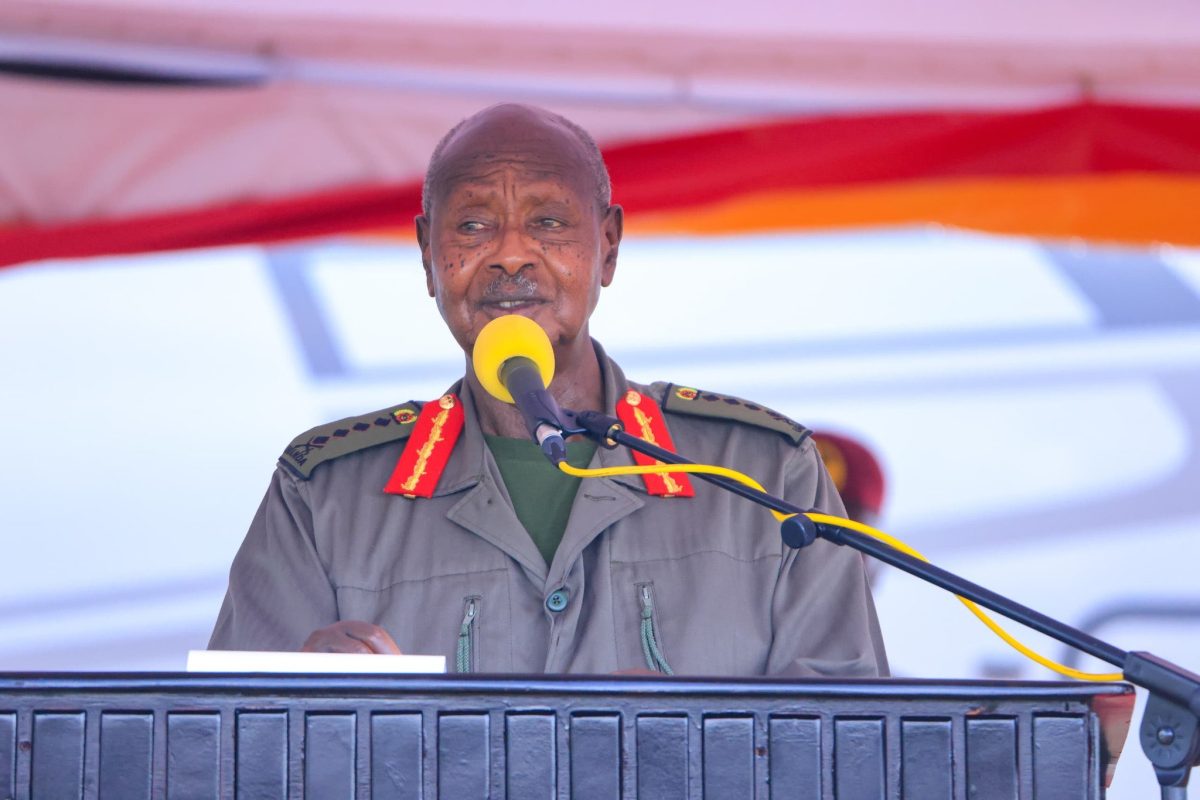
Predent Yoweri Museveni has urged leaders within the National Resistance Movement to strengthen discipline, deepen ideological understanding, and focus on Africa’s long-term transformation as he opened the NRM retreat in Kyankwanzi April 2026.
In his address, Museveni congratulated party members on what he described as a significant electoral victory, while noting that more could have been achieved if certain weaknesses had been addressed.
“I congratulate all of you upon winning the elections… and the NRM and its members across the country for delivering a big victory, although we could have done more if we get rid of some weaknesses.”
He also extended condolences to families of deceased party members, paying tribute to fallen cadres and acknowledging their contribution to the movement.
“I extend condolences to the families of our people who died… May God rest their souls in eternal peace.”
Museveni told the gathering that their election into leadership positions marked a shift in responsibility, requiring a deeper grasp of the movement’s core principles beyond ordinary support.
“You are now not only followers of the NRM but leaders. There is a difference between a follower and a leader.”
Using a religious analogy, he emphasized the need for ideological grounding, likening the retreat to a training space for committed cadres.
“You are therefore now priests of the NRM… this is some sort of small seminary.”
He said understanding the movement requires a firm grasp of its guiding framework.
“If you want to understand the NRM, you have to look at three words—ideology, philosophy, and strategy.”
The President outlined what he described as the historical mission of the current generation, placing economic transformation at the center.
He noted that Africa’s past was marked by slavery and colonial underdevelopment, with only a small proportion of the population participating in the formal economy at independence.
“This generation must create prosperity for the African people.”
He urged leaders to focus on practical pathways to wealth creation, pointing to sectors such as commercial agriculture, manufacturing, and services as key drivers of growth.
“You may say you want to be prosperous, but where do you go? We say the addresses are the following…”
Museveni also warned about Africa’s vulnerability in a rapidly evolving global security environment, noting that advanced nations operate across land, air, sea, and space, while African countries remain limited in capability.
“This is very dangerous… some countries are operating in four dimensions—land, air, sea, and space.”
He renewed his call for regional integration, arguing that unity—particularly through an East African political federation—would strengthen the continent’s capacity to defend itself and utilize shared resources.
“That is why I was saying political federation of East Africa… so that we go into the ocean also in a big way.”
On cultural identity, Museveni stressed the importance of preserving African heritage, crediting it for the continent’s historical resilience.
“The African heritage is very, very strong… that’s why we were able to survive.”
He called for deliberate efforts to protect languages and promote cultural cohesion, including the expansion of Swahili.
The President also addressed the philosophical foundations of the movement, arguing that ownership and personal responsibility are central to productivity.
Drawing from a biblical example, he contrasted the commitment of an owner with that of a hired worker.
“The hired shepherd runs away… but the owner of the sheep will defend them with his own life.”
He said this thinking informed the NRM’s shift toward private sector-led growth, moving away from state-dominated enterprises.
A significant portion of the address focused on discipline, which Museveni described as critical for effective leadership and implementation of policy.
He warned that even correct ideas can fail without proper conduct. “If you don’t have discipline, even if your belief is correct, you may not implement what you are supposed to do.”
He singled out corruption as a major threat, cautioning that it undermines governance and sets a dangerous precedent.
“Corruption is very dangerous… you will become a bad example.”
In a direct appeal to the leaders, Museveni urged them to uphold integrity and avoid misuse of public resources.
“Don’t, please, I beg you—do not involve yourself in corruption.”
He described corruption as a form of weakness, driven by fear of honest effort. “Corruption is cowardice… you fear to confront life yourself.”
Despite these concerns, Museveni said Uganda’s economy continues to grow, attributing progress to the private sector, farmers, and the military’s role in maintaining peace.
“Uganda’s economy has been growing very fast… powered by the private sector and the army.”
He called on leaders to build on these gains by maintaining discipline and leading by example, emphasizing that adherence to the movement’s principles would keep the country on track.
“If we capture this… we can’t go wrong.”
Museveni then officially opened the retreat, setting the stage for a series of discussions aimed at strengthening ideological alignment and policy direction within the ruling party.