



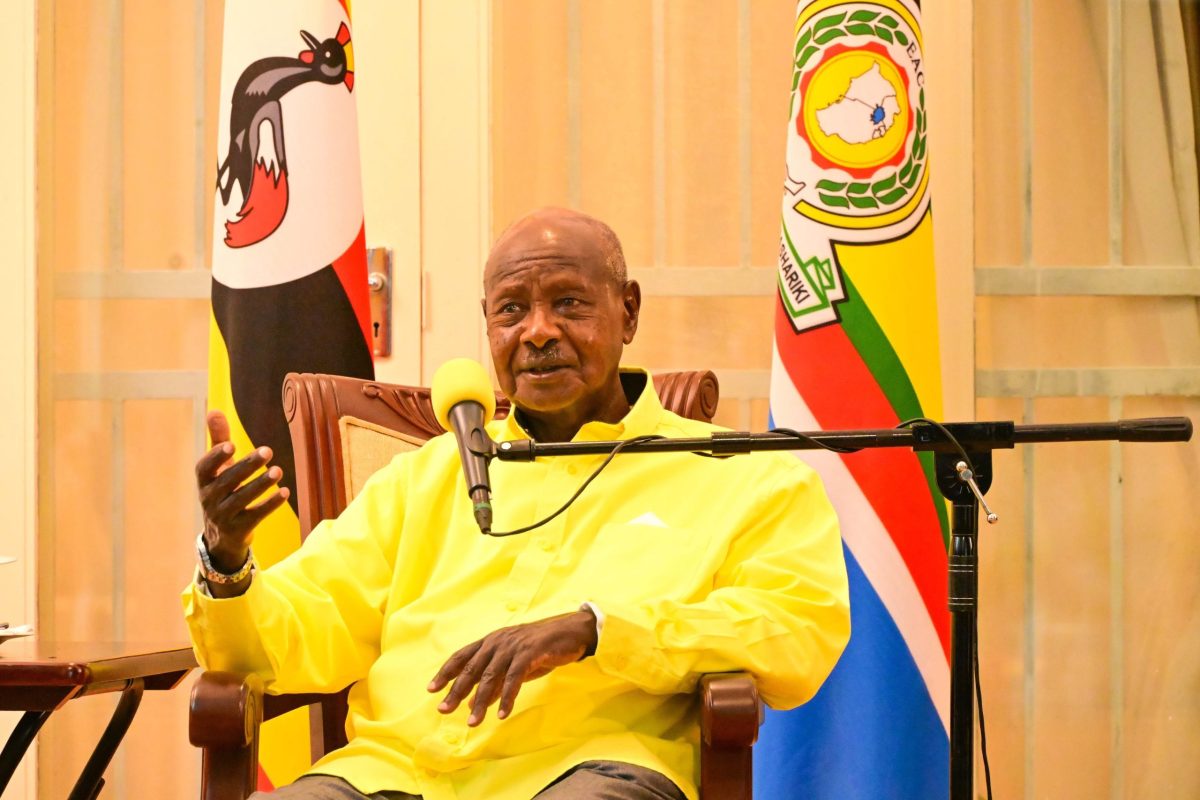
President Yoweri Kaguta Museveni has defended the recent actions of Uganda’s security agencies, insisting they are intended to close long-standing gaps in the country’s justice system, fight corruption, restore accountability and protect national development rather than reverse democratic gains.
In a nationally televised address from State House Entebbe on Saturday, Museveni responded to concerns recently raised by the Inter-Religious Council of Uganda on justice and human rights, trade order, environmental protection and governance.
The President said religious leaders had expressed fears that the National Resistance Movement’s (NRM) historic achievements in restoring peace and respect for human rights risked being undermined by allegations of illegal detentions and disappearances.
“I gave them the history of the NRM contribution to the ‘Wakili, twebakka kutulo’,” Museveni said, referring to the popular phrase meaning that Ugandans could once again sleep peacefully after years of insecurity.
Indigenous justice versus colonial legal system
Museveni devoted a significant portion of his address to explaining what he described as the NRM’s philosophy of justice, contrasting indigenous African justice systems with colonial legal traditions.
“The indigenous communities insist on substantive justice. In the end, what matters is: ‘What was the truth?'” he said, arguing that traditional justice prioritised accountability over legal technicalities.
He recalled the execution of NRA fighters accused of murdering civilians in Semuto during the liberation struggle, saying the punishment established the movement’s reputation for fairness.
“It is that initial act of balanced justice that catapulted the prestige of the NRM in Buganda and Uganda. The Baganda said: ‘Banobalina amazima’ — these are people of truth and justice,” Museveni said.
The President criticised aspects of Uganda’s current legal system, including the granting of bail to suspects who may interfere with investigations.
“Sometimes the accused can refuse to answer. Then there is the issue of granting bail even when the accused can interfere with the case,” he said.
Defending recent security operations
Museveni attributed weaknesses in governance partly to the deaths of many original NRA commanders after 1986, saying this created opportunities for corruption and weakened discipline within state institutions.
He said the UPDF later strengthened ideological and professional training under Gen. Muhoozi Kainerugaba to address those shortcomings.
“The recent limited actions by security forces against some individuals and institutions are really long overdue actions to fill those gaps,” Museveni said.
He added: “No more sleep, no more kukongola, no more corruption and now no more impunity.”
According to the President, Uganda’s progress toward lower-middle-income status has been slowed by corruption, criminality and misinformation.
“Some investors and tourists are scared away from coming to Uganda on account of those false stories,” he said, arguing that security agencies were now correcting that situation.
Counter-offensive against corruption
Museveni highlighted what he described as successful anti-corruption efforts, citing the exposure of a bribery racket operating within State House.
“A year or two back, Hon. Fred Byamukama helped Uganda expose criminals that had turned State House into a mafia centre,” Museveni said, alleging that officials demanded Shs30 million to deliver documents to him.
“There is, therefore, a counter-offensive against corruption, crime and impunity,” he declared.
Besigye case
The President also referred to the case involving opposition figure, questioning why the former presidential candidate had allegedly resisted trial.
“Why would this great democrat and human rights fighter spend so many calories on refusing to come to trial where he has got opportunity to prove his innocence?” Museveni asked.
He further questioned why Uganda’s legal system should allow “an accused person to just refuse to be tried.”
Opposition and public order
Museveni accused sections of the opposition of promoting violence, citing the 2020 riots, attacks on security personnel and slogans threatening to burn Kampala.
“The arrested opposition law-breakers may not get bail because they threaten the security of the witnesses,” he said.
He rejected claims that Uganda was returning to past abuses.
“What the security forces have been doing recently is not a regression in the fight for freedom but a consolidation of our long fight for patriotism, Pan-Africanism, socio-economic transformation and democracy,” Museveni said.
He added that unlike previous regimes, suspects today appear before courts.
“Those who want to know the truth, wait for the trials of the accused people,” he said.
Crackdown on street hawking
Turning to trade, Museveni defended the ongoing removal of street vendors from roadsides and pavements.
“Hawking is an economy and health killer,” he said.
He argued that street vending deprives registered businesses of customers, reduces tax revenue, exposes food to contamination and obstructs pedestrians.
“Selling must be in shops, markets or supermarkets. Everybody must be licensed, identifiable, accountable and paying taxes,” he said.
Museveni, however, directed local governments to identify land where former hawkers could legally operate.
Wetland restoration
The President reaffirmed government’s commitment to restoring degraded wetlands and protecting forests.
“Who has a right to ruin our heritage of this abundance of water and our future?” he asked.
Museveni criticised continued encroachment despite decades of government warnings, noting that wetlands significantly contribute to Uganda’s rainfall.
“It is estimated that 40 per cent of our rain comes from the local wetlands and those in Congo and South Sudan,” he said.
He also questioned reports of charcoal burning in, asking: “Where is NFA? Where are the chiefs?”
The President said government would examine cases where people claim they were authorised to settle in wetlands but stressed that restoration efforts would continue.
“The operation to restore the wetlands and protect our natural forests will continue,” he said.
Call to fight corruption through elections
Museveni concluded by urging Ugandans to participate in upcoming village and women council elections, saying local leadership is critical in combating corruption.
“I am hearing of the corruption in the health centres, in the PDM, etc. The medicines for those problems are two.”
“Report the corruption to a government official or a religious leader… Secondly, use the LC1 elections and the Women Council elections to elect leaders that will fight corruption.”
“Corrupt people are easy to defeat — just report them,” the President said.
The address comes amid heightened national debate over security operations, governance, anti-corruption efforts and environmental conservation, with government maintaining that recent enforcement measures are intended to strengthen the rule of law and accelerate Uganda’s socio-economic transformation.