


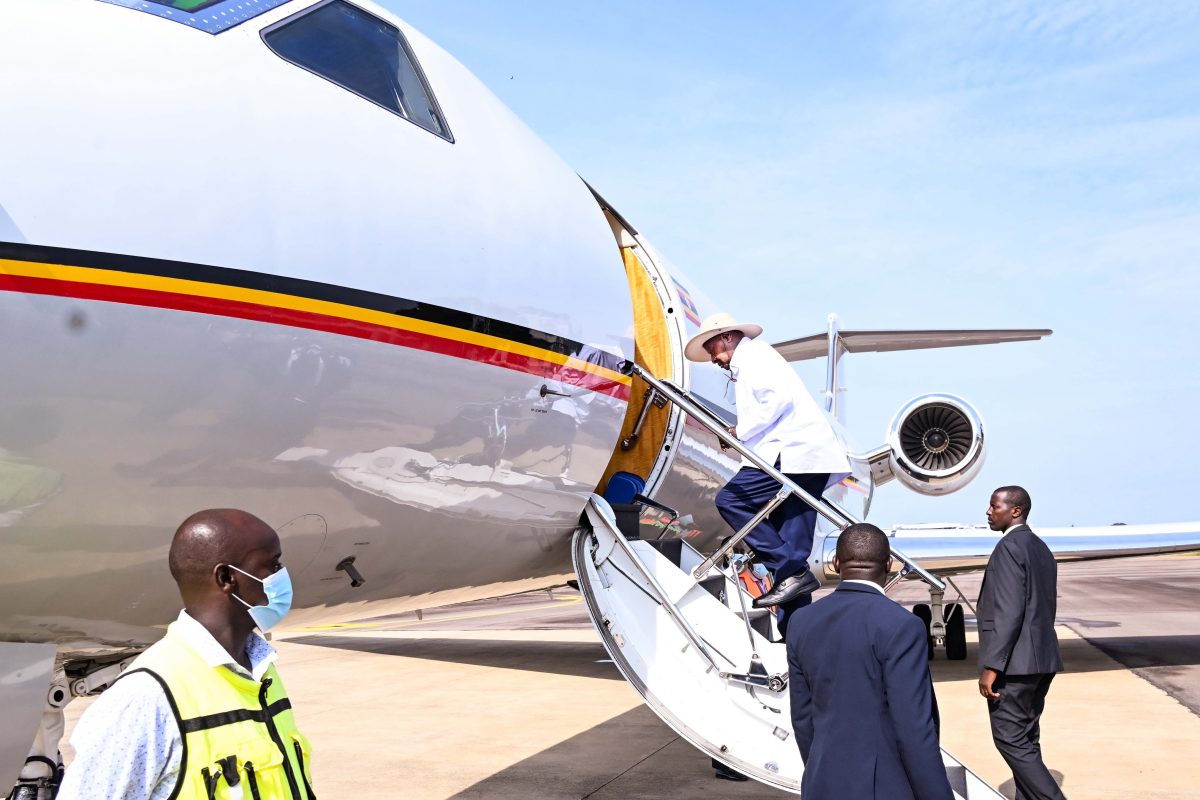
President Yoweri Museveni has departed for Mokowe in Lamu County, Kenya, to attend the groundbreaking ceremony of the proposed $16 billion Dangote East Africa Petroleum Refinery and Petrochemicals Special Economic Zone.
The ceremony is scheduled for today and marks the launch of one of the region’s largest planned energy and industrial projects.
The proposed refinery is expected to process up to 700,000 barrels of crude oil per day and is targeted for completion by 2030.
It is expected to process crude from Kenya’s Turkana oilfields alongside supplies from other parts of Africa, with the broader aim of reducing East Africa’s dependence on imported petroleum products.
Speaking to reporters in Nairobi on Tuesday, Dangote Group President Aliko Dangote said the project forms part of a wider effort to move Africa away from exporting raw materials and importing finished products.
Dangote said he expected most African countries to achieve greater fuel self-sufficiency by 2030, arguing that petroleum products should increasingly be refined on the continent.
“By 2030, the majority of African countries will be self-sufficient. It does not matter where it is refined, but it should be in the African continent, on the soil of Africa,” he said.
The Lamu project has, however, faced opposition, including a land rights case and concerns from Greenpeace and other groups over its potential environmental impact.
Dangote dismissed the concerns, saying opposition was expected around major industrial projects and suggesting that some critics did not want to see Africa develop.
“There’s actually no problem with these sort of cases,” Dangote said. “There are people who don’t want the development of Africa.”
The refinery is also part of Dangote’s wider strategy to expand industrial production and African participation in major businesses.
Dangote said he plans to invest an additional $50 billion across Africa, after committing more than $25 billion to existing businesses.
He said the group’s expansion would combine large-scale industrial investments with greater African ownership through capital markets.
At an investor engagement, Dangote said the ongoing public offer of the Dangote Petroleum Refinery was not primarily aimed at raising funds, but at allowing more Africans to participate in the wealth generated by industrial growth.
“It’s not because we need the money. No. It’s because we want to share this prosperity with everybody,” he said. “The real purpose is for us to democratise wealth-making.”
Dangote said all of the group’s operating companies would eventually be opened to greater public ownership, including a new shipping business under development and its expanding fertiliser operations.
He said the objective was to create millions of African shareholders who could benefit through dividends and growth in the value of the businesses.
Dangote also said that if the Lamu refinery is eventually listed on a stock exchange, he would prefer it to be listed in Kenya rather than automatically in Nigeria.
The project is being positioned as part of a broader effort to strengthen Africa’s capacity to process its own natural resources, reduce reliance on imported petroleum products and retain more value from the continent’s raw materials.