



President Yoweri Museveni has reaffirmed Uganda’s plans to build an oil refinery, saying the country will proceed with the project despite the launch of a much larger Dangote East Africa Refinery in Lamu, Kenya.
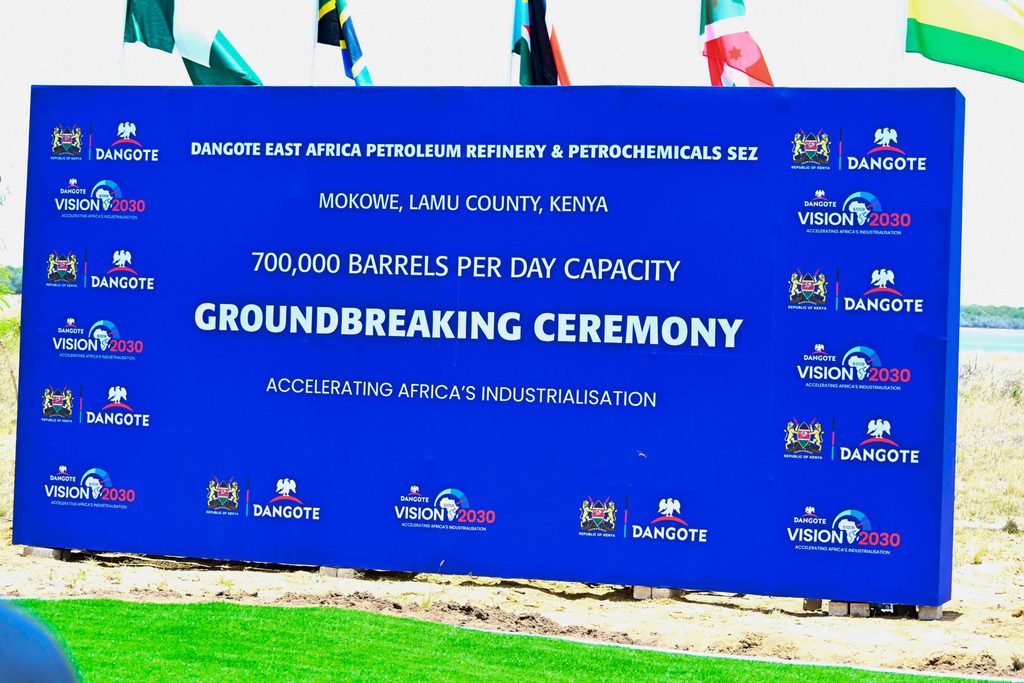
Museveni made the remarks on Wednesday in Lamu during the groundbreaking ceremony for the proposed $16 billion Dangote refinery, which is expected to process up to 700,000 barrels of crude oil per day and supply petroleum products to Kenya and the wider East African market.

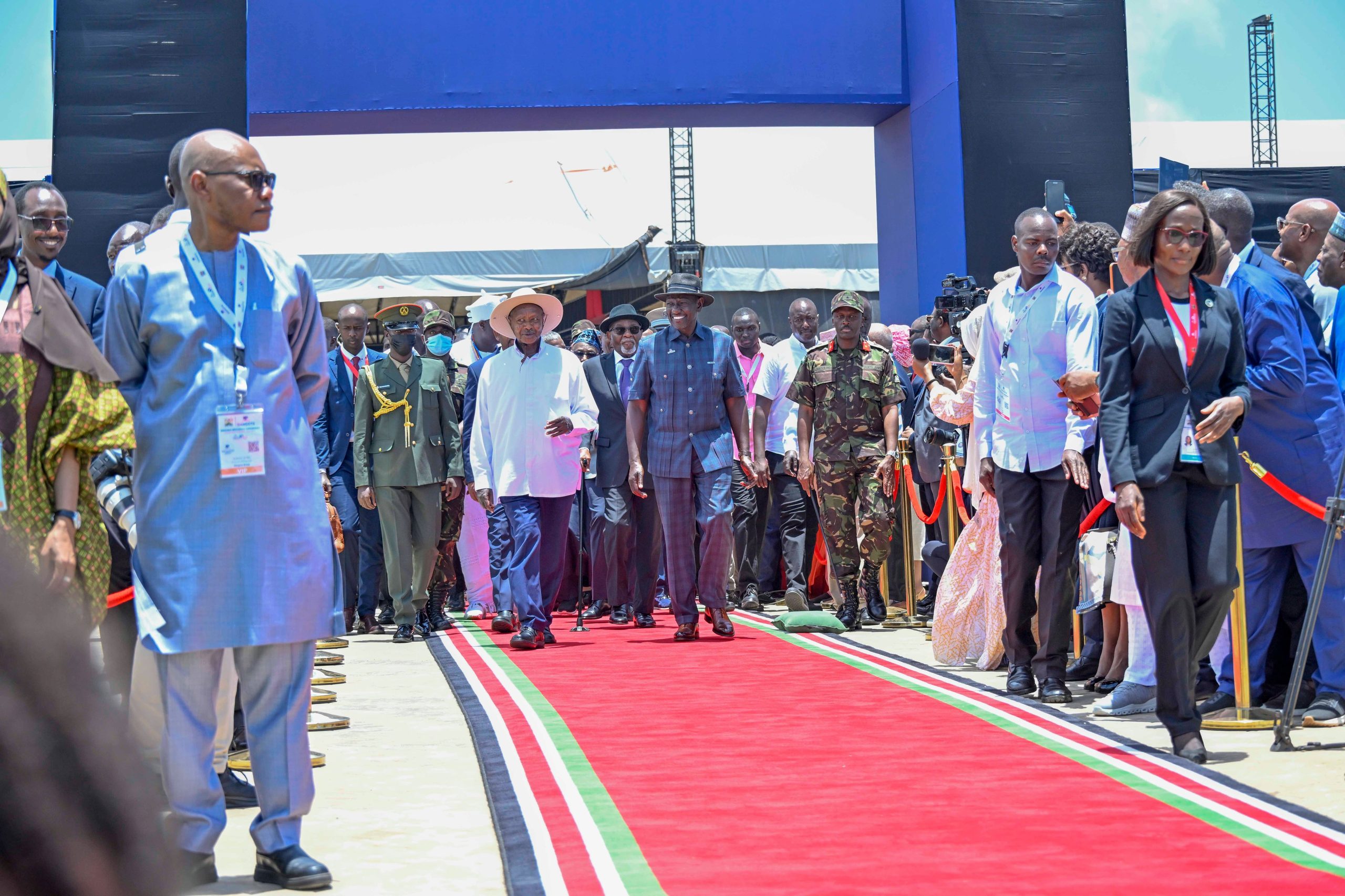
Museveni said he had previously discussed the Ugandan refinery with Nigerian businessman Aliko Dangote, Kenyan President William Ruto and Tanzanian President Samia Suluhu Hassan.
“We’re going to build a small refinery in Uganda. We had planned this long ago. We can’t change that,” Museveni said.
He said the Ugandan refinery would primarily serve Uganda and markets in the interior of Africa.
Museveni, however, said he wanted to first establish what happened to an earlier proposal for a refinery in Tanga, Tanzania, which he said had also been discussed with President Samia.
“We had also discussed with Mama Samir about building a refinery in Tanga, but there were some problems. I don’t know what happened,” Museveni said.
He added that he wanted to discuss the matter with Samia and Ruto before making any further decision.

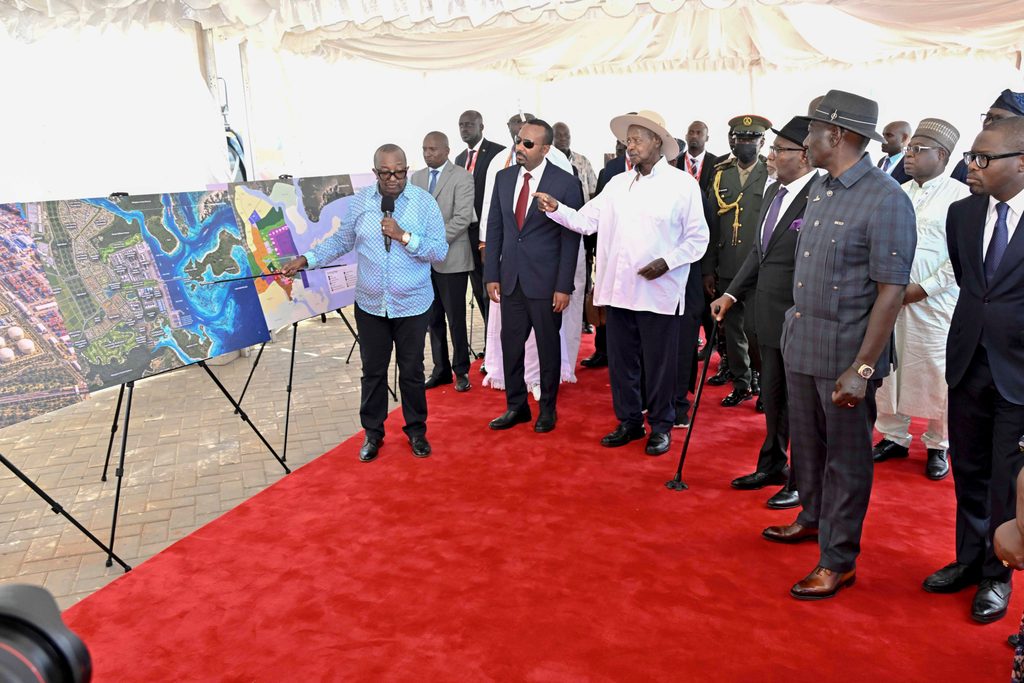
“I support this one, but I will not invest yet,” Museveni said, referring to the Lamu refinery.
Uganda already has plans for a 60,000-barrel-per-day refinery at Kabaale in Hoima, although the project has faced delays, with the final investment decision previously pushed to 2027.
Museveni attacks raw material exports
Museveni used the occasion to renew his criticism of Africa’s long-standing dependence on exporting unprocessed raw materials.
He said Africa had suffered what he described as an economic betrayal for decades because of the continued export of raw materials without sufficient value addition.
“I’m very happy to be alive to see the betrayal of Africa, which has been going on for the last 70 years, coming to an end,” Museveni said.
He argued that African countries must industrialise and process their resources locally rather than exporting them in raw form.
Museveni cited coffee and gold as examples, saying raw coffee can fetch about $2 per kilogram compared with about $40 for processed coffee, while exporting unrefined gold can result in Africa losing significant value that could otherwise be captured through processing.
He attributed Africa’s economic challenges partly to leaders who, in his view, have failed to understand what is required to develop their countries.
“The biggest mistake was continuing to export unprocessed raw materials,” he said.
Museveni also said Uganda had banned the export of petroleum and unprocessed minerals as part of efforts to promote local value addition.
Ruto backs Dangote investment
Kenyan President William Ruto described the Lamu refinery as a major African industrial investment and said Kenya needed to produce more of what it consumes.
“We must produce more of what we consume,” Ruto said.
He described the project as “African ambition backed by African capital, building an African industry for Africa’s prosperity.”
Ruto said the investment would transform Lamu into an important centre of economic activity and noted that Kenya attracted $3.2 billion in foreign investment last year, which he described as the highest in the country’s history.
He also defended Dangote against concerns over the investment environment, telling the Nigerian businessman that the Kenyan government would not allow investors to be extorted or blackmailed.
“I know you have had a different experience in Kenya, but I want to assure you that nobody is going to extort anything from you or blackmail the system,” Ruto said.
He also warned Dangote about the 40-month timeline announced for completion of the refinery, joking that Kenyans would hold him accountable if the deadline was missed.
Ruto said the Kenyan government would take a stake in the refinery and use its assets and the National Infrastructure Fund to invest in the project.
Dangote pledges 40-month completion
Dangote said the refinery would be built with the participation of the Lamu community and would provide training and employment opportunities for young Kenyans and other East Africans.
He said the company would establish a training school for people with engineering degrees and diplomas.
“We will come back to commission the Lamu Oil Refinery in 40 months,” Dangote said.
He said the project was part of a wider effort to make Africa more self-sufficient and reduce its vulnerability to disruptions in international trade.
Dangote recalled the difficulties African countries faced during the COVID-19 pandemic when some vaccine-producing countries restricted exports.
“We want to be self-sufficient in Africa so that no one can threaten us by banning anything,” he said.
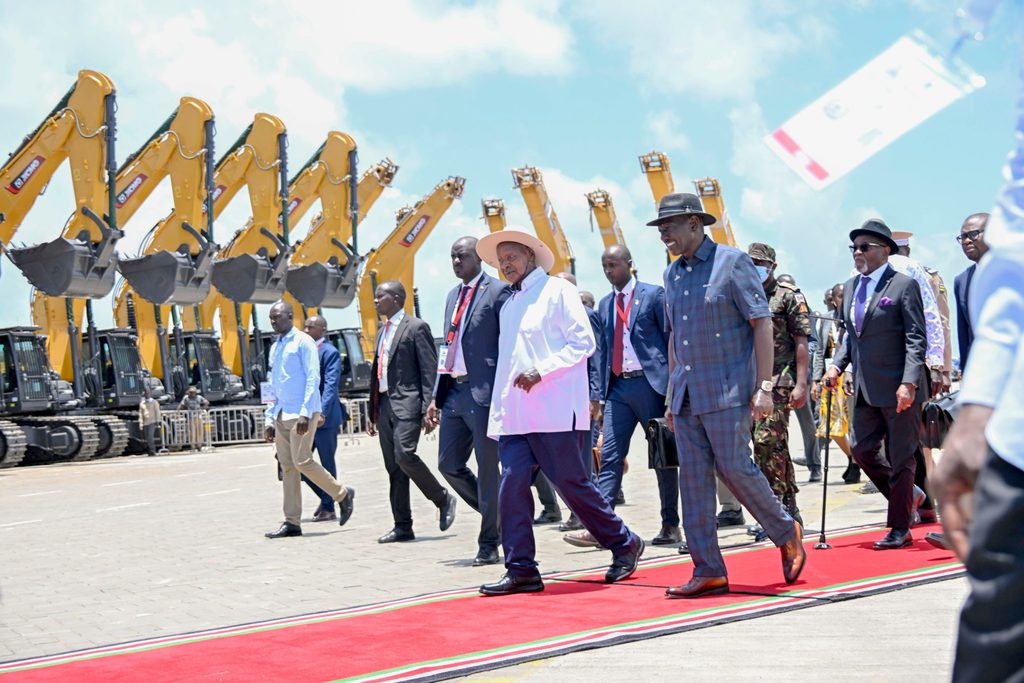
Dangote said the Lamu project represented more than the construction of a refinery, arguing that it was part of a broader push for African industrialisation and value addition.
“Different countries have gathered in Lamu because Africa must industrialize Africa,” he said.
He added that Africa was rich in resources but continued to struggle to create sufficient value from them.
The businessman also said he was not afraid of legal challenges to the project.
“We’re not scared of people taking us to court. Anybody who wants to cause trouble, we’re ready for his trouble,” Dangote said.
The Lamu refinery has faced legal challenges over land rights, although Dangote has maintained that the groundbreaking would proceed.
African leaders call for industrialisation
Former Nigerian President Olusegun Obasanjo welcomed the project as a link between East and West Africa, praising the commitment of African leaders and Dangote.
“I am happy that I see this day where East Africa and West Africa are being brought together,” Obasanjo said.
Ethiopian Prime Minister Abiy Ahmed said East Africa should be viewed not only as a market but also as a place where production, construction and value creation can take place.
The Lamu refinery is designed to serve Kenya and other regional markets, while the broader project is being presented as part of efforts to reduce East Africa’s dependence on imported refined petroleum products.
For Uganda, Museveni’s remarks indicate that Kampala intends to maintain its own refinery plans even as the Lamu project moves forward, while seeking clarity on why the earlier Tanga refinery proposal did not materialise.