



President Yoweri Museveni has reaffirmed Uganda’s ambition to grow its economy to $500 billion by 2040, with the country targeting double-digit economic growth over the next five years.
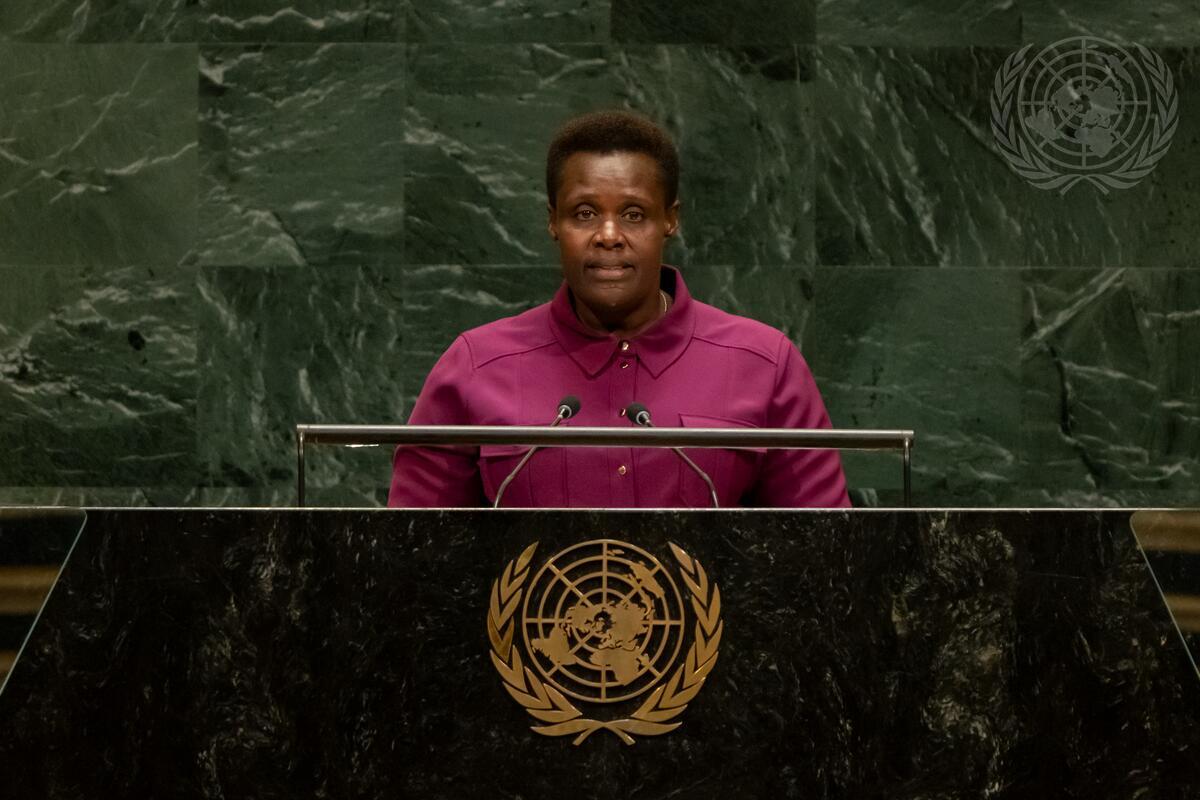
Museveni made the projection in his statement to the 81st United Nations General Assembly, delivered on his behalf by Vice President Jessica Alupo in New York.
He said Uganda has begun implementing the Fourth National Development Plan (NDP IV) for 2025/26 to 2029/30 as part of efforts to accelerate economic transformation and achieve sustainable development.
“Our goal is to drive double-digit growth over the five-year period and ultimately grow our economy tenfold to a GDP of $500 billion by 2040,” Museveni said.
The target is part of Uganda’s Tenfold Growth Strategy, which seeks to expand the economy from about $50 billion to $500 billion by 2040. The strategy is incorporated into NDP IV, according to the National Planning Authority and the United Nations in Uganda.
Four sectors to drive growth
Museveni said Uganda’s economic transformation strategy is anchored on four priority areas known as ATMS — agro-industrialisation, tourism development, minerals exploitation and science, technology and innovation.
The government expects these sectors to drive investment, create jobs, increase household incomes and accelerate industrialisation.
The UN says the Tenfold Growth Strategy will require a shift to double-digit economic growth, increased domestic savings and investment, higher exports and a stronger tax-to-GDP ratio.
NDP IV, which runs from 2025/26 to 2029/30, is the first of three five-year plans intended to deliver the tenfold expansion of the economy. The National Planning Authority says the plan focuses on sustainable industrialisation, inclusive growth, employment and wealth creation.
Museveni presented the economic target alongside his broader call for reforms to the global financial system, arguing that developing countries need greater access to financing and stronger representation in international financial institutions.
He said limited fiscal space and high debt-servicing costs continue to constrain developing countries’ ability to invest in infrastructure and social services.
The President called for reforms of international financial institutions to give developing countries a stronger voice in decision-making, while also supporting greater domestic resource mobilisation and international tax cooperation.