

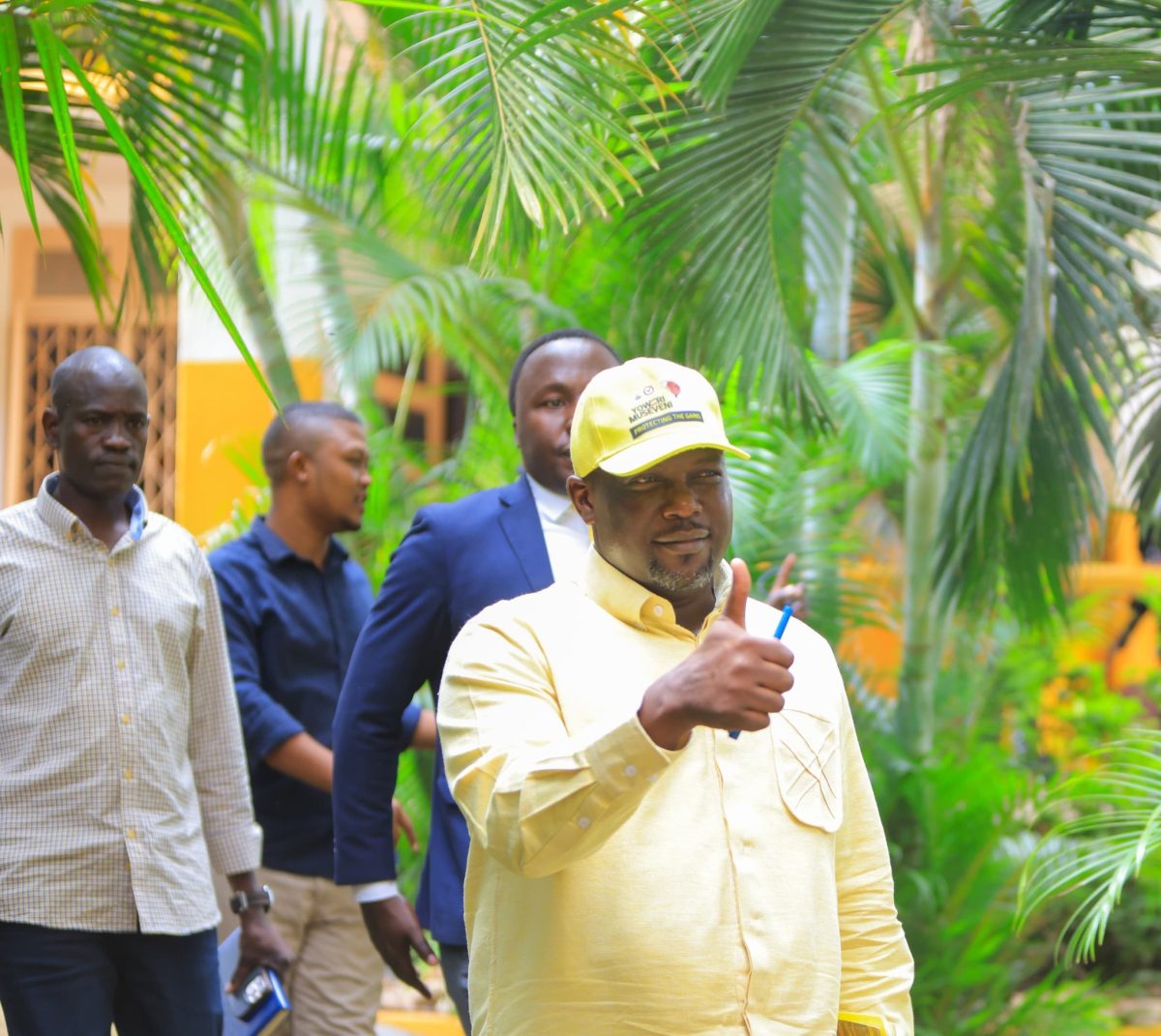
The National Resistance Movement (NRM) has dismissed reports that its Central Executive Committee (CEC) rejected a proposal to position General Muhoozi Kainerugaba as Uganda’s next president, describing the claims as completely false.
In a press statement dated November 12, 2026, NRM Secretary General Richard Todwong said the party had taken note of an online news report concerning a closed-door CEC meeting held on November 10, which allegedly rejected a proposal to position Muhoozi as President Yoweri Museveni’s successor.
“The story is completely false,” Todwong said, rejecting claims that the ruling party’s top decision-making organ had turned down Muhoozi’s alleged presidential ambitions.
The reports had claimed that members of the CEC opposed a proposal to position Muhoozi as Museveni’s successor, with some reportedly questioning his political preparedness and suitability for the presidency.
According to accounts attributed to participants in the meeting, disagreements emerged over the proposal, with some members allegedly favouring his eventual political transition while others expressed reservations.
The reports further suggested that some CEC members wanted Muhoozi to leave active military service and take up a civilian political role to gain experience before seeking the presidency.
However, Todwong’s statement did not address the specific allegations surrounding the reported discussions, whether a vote took place or whether Muhoozi’s succession was formally considered.
Instead, he maintained that the CEC routinely meets to deliberate on various matters concerning the country’s political, social and economic well-being.
“Therefore, the Party will officially communicate through the right channel, at the right time, any decision it will have reached on any matter,” Todwong stated.
He also urged the public to disregard information circulating online that had not been officially released by the party.
The controversy comes amid growing political debate over succession within the NRM, particularly following public declarations by supporters of Muhoozi that he intends to contest the 2031 presidential election.
In September 2026, Kasambya County MP Daudi Kabanda, who serves as Executive Secretary in the Office of the National Chairman of the Patriotic League of Uganda (PLU), announced that Muhoozi intended to seek the presidency in 2031.
Kabanda said he had been instructed by Muhoozi to communicate the decision, renewing debate about a possible political transition from Museveni to his son.
The succession question had also featured in discussions surrounding an earlier CEC meeting held at State House Entebbe on October 27, 2026.
Following that meeting, Kabanda claimed that Museveni had endorsed Muhoozi as his possible successor. However, NRM Electoral Commission Chairperson Dr Tanga Odoi disputed the account, saying the succession question had not been discussed and that the meeting had instead addressed the status of the PLU.
Muhoozi, who currently serves as Uganda’s Chief of Defence Forces (CDF) and heads the PLU, has increasingly become a central figure in discussions about the country’s political future.
The latest developments have exposed competing accounts about the NRM’s internal deliberations on succession, although the party has not publicly provided details of what was discussed during the November 10 meeting.
Todwong’s statement does not confirm that the CEC endorsed Muhoozi’s presidential ambitions. It also does not provide details of whether his possible succession was discussed.
President Museveni has been in power since 1986, making the question of succession one of the most consequential political issues facing the ruling party as Uganda approaches the 2031 general elections.
The NRM says it will communicate any official decisions through its established channels.