

About 84,000 households across Uganda have benefited financially from carbon market initiatives, demonstrating how environmental conservation can generate sustainable incomes for rural communities.
The beneficiaries are part of community-based carbon finance programmes implemented by EcoTrust Uganda, which combine environmental conservation with income-generating activities such as coffee growing, honey production, fish farming, cocoa cultivation, and organic shea processing.
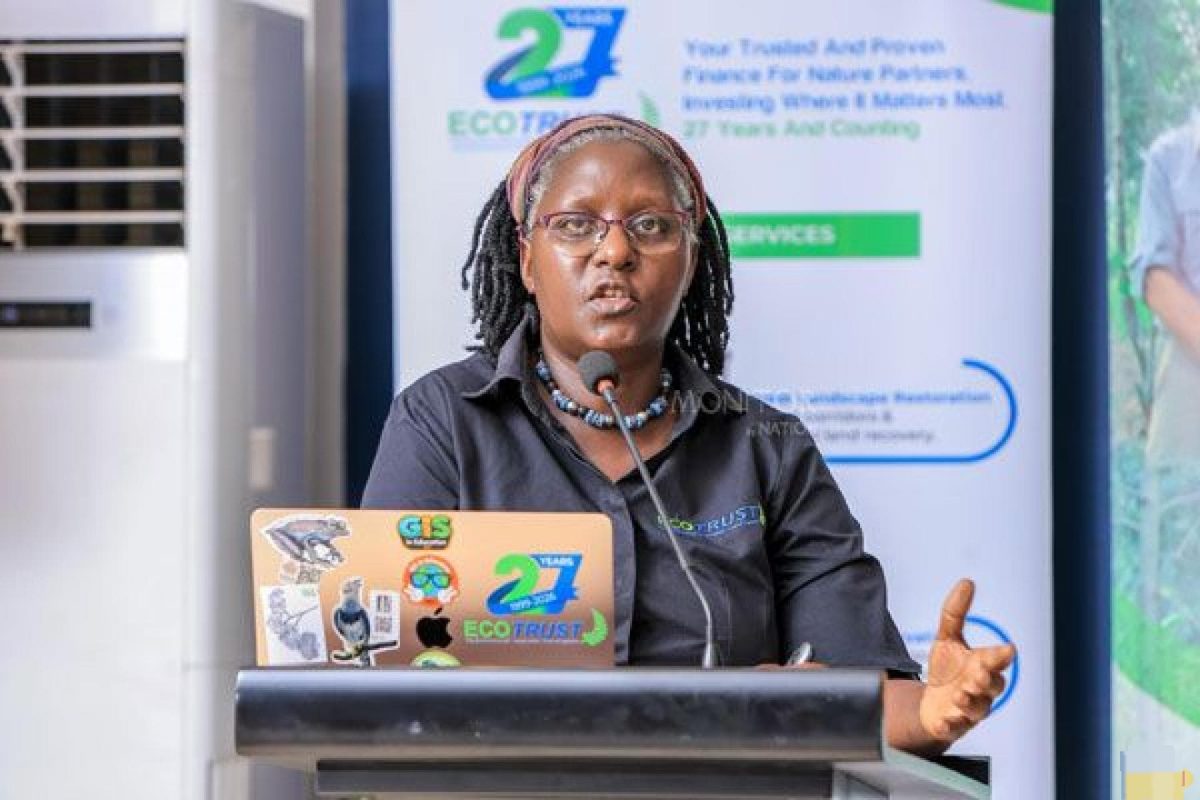
Speaking during the launch of the roadmap for the organization’s 27th anniversary celebrations, EcoTrust Uganda Executive Director Pauline Nantongo said the initiative encourages farmers to integrate trees into their farming systems not only for environmental conservation but also for long-term economic benefits.
According to Nantongo, thousands of additional households have also benefited from grants and related programmes aimed at improving livelihoods while protecting the environment. She explained that participating households are encouraged to develop business and land-use plans, often for the first time, helping families manage their land more effectively and identify future income opportunities.
More than 54,000 households have been organized into nearly 200 community groups nationwide, with several groups operating collective enterprises linked to carbon trading and agricultural exports.
“The same platform that we use to aggregate for carbon credits, we also aggregate for coffee, honey exports and many other products,” Nantongo noted. She said EcoTrust’s work has evolved beyond traditional environmental protection to include food security, fish farming, and high-value agricultural enterprises.
Nantongo also advocated for the restoration of degraded forests through public-private partnerships, arguing that conservation and economic growth can complement each other. She noted that while Uganda has historically replaced natural forests with commercial eucalyptus and pine plantations to maximize economic returns, restoring indigenous forests could become financially viable when revenues from environmental services such as carbon credits are factored in.
“So the concept of government partnering with the private sector is not a bad concept but we need to design these partnerships in a manner that benefits environmental services while also making them economically viable,” Nantongo remarked. The Executive Director emphasized that environmental conservation should not be treated separately from business sustainability.
“We don’t have to sacrifice environmental services at the expense of what we consider to be economic benefits, environmental services are actually critical even for the sustainability of the business itself,” she noted. The Board Chairperson of EcoTrust Uganda, Isaac Kapalaga, said companies participating in the arrangement assess their annual carbon footprints and invest in rural livelihood and conservation projects.
He said the funding has enabled farmers to establish enterprises such as avocado orchards, medicinal plant extraction projects, and timber production ventures. Kapalaga added that some participating farmers have become major suppliers of fuelwood to tea factories, creating additional income streams for rural households.
The initiative comes as Uganda increasingly turns to carbon markets and climate finance mechanisms to combat deforestation, restore ecosystems, and support rural economic development. URN