

The Public Accounts Committee (PAC) has questioned State House over Shs4.735 billion in contingent liabilities arising from pending court cases, demanding an explanation for the disputes and an update on the likelihood of government losing the cases.
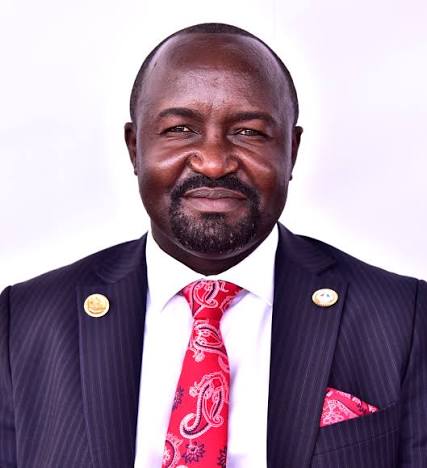
The concerns emerged when State House Comptroller Jane Baregye and her team appeared before the committee, chaired by Kassanda North MP Patrick Nsamba Oshabe on Friday, to respond to issues raised in the Auditor General’s report for the financial year 2024/2025.
The committee sought clarification on the cases listed in the financial statements, particularly the circumstances under which individuals and institutions had dragged State House to court and the potential financial implications for the institution.
“Who is taking State House to court now; these Ugandans are also not fearing!” Oshabe remarked as he asked the accounting officer to explain the cases contributing to the Shs4.735 billion exposure.
Oshabe singled out cases involving David Bunyo and Kampala International University, asking Baregye to explain the circumstances behind the litigation.
However, Baregye said she was not competent enough to explain the individual cases, suggesting that the committee would be better served by a report detailing the disputes.
“Chair, I may not be competent enough to take you through these cases,” Baregye said.
Her response prompted Oshabe to insist that the accounting officer should at least explain the general nature of the disputes, arguing that the public deserved to know why individuals and institutions were taking State House to court.
“We are not going into the merits of the matters. But just to tell the public, because the public would wonder who, in their wisdom, will take State House to court. This is the chance for you to say State House is being taken to court for these reasons,” he said.
During the discussion, Oshabe suggested that the case involving Kampala International University could be related to unpaid scholarship obligations.
“Maybe it could be one of your scholarships not paid,” he said. “Yes, it could be that you never paid the scholarships. That is why Kampala International University has you in court.”
Baregye, however, rejected the suggestion, insisting that it was not the reason behind the case.
“No, that is not true, sir, I can provide evidence,” she said, adding that State House, like any other government institution, was subject to the law and could be taken to court where disputes arose.
The committee also referred to other litigants appearing in the financial statements, including one Kibirige, the Teachers Union and Male Mabirizi, although their respective claims and the circumstances surrounding the cases were not established during the meeting.
Oshabe questioned whether the Shs4.735 billion represented cases in which State House was already certain of losing.
Baregye clarified that the institution had not lost the cases but had recognised them as contingent liabilities because of the possibility that they could result in financial obligations.
The chairperson said the committee was concerned that the potential liabilities could eventually crystallise into actual government expenditure if courts ruled against State House.
He explained that once a contingent liability becomes an actual liability following an adverse court decision, government would be required to meet the resulting financial obligation, potentially adding to the pressure on public finances.
Oshabe said the committee wanted to establish whether there was a pattern of government institutions accumulating litigation risks that eventually translate into court-awarded compensation.
He cited figures discussed with the Accountant General in a previous engagement, indicating that government faced approximately Shs500 billion in court awards.
The committee chairperson cautioned that the growing exposure to litigation could result in avoidable losses to government, particularly where public institutions failed to resolve disputes or defend cases effectively.
He consequently directed State House to prepare a comprehensive update on the pending cases, indicating their progress, the nature of the claims and the likelihood of adverse judgments.