



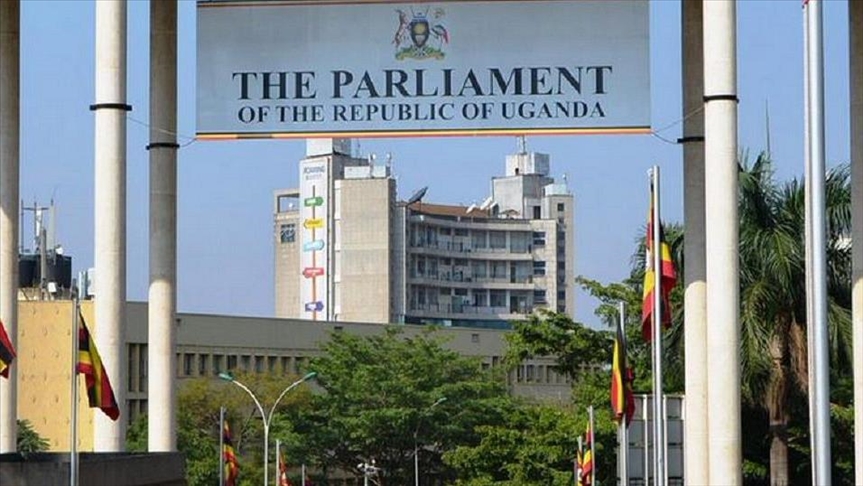
Deputy Speaker Thomas Tayebwa has directed Parliament’s Health Committee to conduct a comprehensive review of a $2.3 billion (approximately UGX 8.09 trillion) health cooperation agreement between Uganda and the United States, following opposition demands for greater transparency.
The directive comes amid debate among lawmakers over whether the agreement requires parliamentary ratification, with parallels drawn to a similar pact in Kenya that was recently suspended by a court over data privacy concerns.
The agreement, signed on December 10, 2025, by the Ministry of Finance, Planning, and Economic Development and the U.S. Embassy, seeks to strengthen Uganda’s health sector over a five-year period.
It provides funding to train and equip more than 14,000 community health units (CHUs), enhance disease surveillance systems, improve electronic medical records, and promote data interoperability to enable real-time decision-making. The agreements provide five to ten years of health funding and technical support in exchange for co-financing, access to health data, pathogen specimens, and national health system information.
Civil society actors say the government-to-government financing model marks a significant shift in global health cooperation, moving away from multilateral frameworks that traditionally involve civil society participation and oversight.
This is largely under the America First Global Health Strategy, released on September 18, which outlines a vision to enhance U.S. safety, prosperity, and global health leadership while saving lives and preventing the spread of diseases globally.
The strategy transitions U.S. global health assistance to multi-year bilateral agreements that strengthen local health systems, reduce inefficiencies, and promote sustainability.
However, clauses requiring Uganda to share medical specimens from patients with the United States have sparked concern, with critics warning of potential violations of personal data privacy.
These concerns mirror developments in neighbouring Kenya, where the High Court on December 11, 2025, issued conservatory orders suspending implementation of a comparable $2.5 billion health agreement with the U.S.
The Kenyan court halted provisions involving the transfer, sharing, or dissemination of medical, epidemiological, or other sensitive personal health data, pending a full hearing scheduled for February 2026. The Kenyan case was filed by the Consumers Federation of Kenya (COFEK) and Senator Okiya Omtatah, who argued that the agreement risked exposing citizens to privacy violations, stigma, and misuse of personal information, potentially contravening Kenya’s Data Protection Act of 2019.
The law, which operationalises Article 31 of the Kenyan Constitution, regulates the processing of personal data and mandates safeguards against unauthorised access or disclosure. In Uganda, the call for scrutiny was led by Leader of the Opposition Joel Ssenyonyi during a plenary session on December 16, 2025. Ssenyonyi questioned the lack of parliamentary oversight and drew comparisons to Kenya’s court intervention.
“Why is the government not keeping us in the loop if it is such a good deal as it is being portrayed to be? Why do you not want parliamentary scrutiny?” he asked, stressing the need for transparency on behalf of Ugandans. Ssenyonyi further warned that the agreement imposes a “huge fiscal obligation” on Uganda, noting that counterpart funding requirements could force the government to borrow or increase taxes.
He argued that such commitments require parliamentary involvement from the outset, not after agreements have already been signed. “We are always here planning together, budgeting together,” he said, rejecting the Attorney General’s position that lawmakers should wait for post-signing reports.
Attorney General Kiwanuka Kiryowa responded that no existing law requires all government agreements to be tabled before Parliament. “If the requirement is for us to bring every agreement that the government is going to sign before Parliament, then we should write the law and say so,” Kiryowa said.
He maintained that the agreement complies with Ugandan law and urged the Health Committee to conduct an objective review, expressing confidence that it would conclude that “we did a good job.” Seeking to strike a balance, Deputy Speaker Tayebwa acknowledged the legitimacy of arguments from both sides.
He cited Uganda’s Ratification of Treaties Act of 1998, which outlines procedures for treaty approval under Article 123 of the Constitution. While the Act requires Cabinet-ratified treaties to be laid before Parliament “as soon as possible,” it does not explicitly apply to all bilateral agreements.
“We need to first ask ourselves: Is this one of the agreements required to be ratified by Parliament under the Ratification of Treaties Act?” Tayebwa said.
He emphasised the principle of parliamentary scrutiny and instructed the Health Committee to examine the agreement during upcoming budget discussions to ensure it serves Uganda’s interests. Data privacy concerns in Uganda are governed by the Data Protection and Privacy Act of 2019, which regulates the collection, processing, and sharing of personal data, including health information.
The law requires consent, adequate security measures, and safeguards against cross-border data transfers without sufficient protection. Critics warn that the agreement’s data-sharing provisions could test these safeguards, as seen in Kenya.
The U.S. health assistance builds on longstanding partnerships such as the President’s Emergency Plan for AIDS Relief (PEPFAR), which has provided billions of dollars to Uganda for HIV/AIDS and other health initiatives.
Supporters argue that the agreement addresses critical gaps in Uganda’s underfunded health system, where annual losses to corruption exceed $2.3 billion, according to the Inspectorate of Government. Nevertheless, opposition figures, including Ssenyonyi, continue to call for full disclosure to prevent unforeseen fiscal and legal burdens. The Health Committee is expected to report back as Parliament considers the Budget Framework Paper, a process that could significantly influence the agreement’s future implementation.
***URN***