



Overview:
According to the 2025 Auditor General’s report, the national public service faces 301,600 vacant positions, resulting in a national staffing level of only 54%. Meaning that hospitals operate with less than a quarter of the required staff, forcing referrals and stretching remaining workers beyond limits.
Auditor General reveals 71% vacancy rate as facilities rely on students and referrals to survive daily patient pressure. Option 2 (Human Impact): Option 3 (Accountability Focus):
Uganda’s public health sector is grappling with severe staffing shortages that have left regional referral hospitals operating with a fraction of the required personnel. Despite thousands of unemployed doctors, regional hospitals remain critically understaffed.
According to the 2025 Auditor General’s report, the national public service faces 301,600 vacant positions, resulting in a national staffing level of only 54%. Meaning that hospitals operate with less than a quarter of the required staff, forcing referrals and stretching remaining workers beyond limits.
The health sector is among the most affected, with referral hospitals facing a 71% vacancy rate, equivalent to 18,531 missing staff members.
At Kabale Regional Referral Hospital, staffing stands at 19.4%. The facility manages approximately 600 outpatients and 60 new admissions daily, with an average of 200 patients occupied in wards at any given time.
Hospital Director Dr. Filbert Nyeko noted that departments such as orthopedics and ENT lack personnel entirely, necessitating frequent referrals to Mbarara Regional Referral Hospital.
“We are being flogged for the wrong reasons,” said Dr. Nyeko when contacted about the understaffed facility. His reaction was rather in a tone filled with anger and guilt following the recent remarks by the Inspectorate of Government when inspecting the facility.
“People say we’re rude when we refer patients to Mbarara, but what can we do without doctors or nurses in the hospital?” he asked.
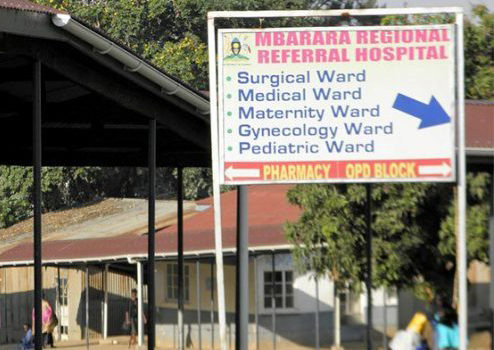
Mbarara Regional Referral Hospital reports a staffing level of 24.68%. To manage its daily volume of 600 patients, the facility relies on a Memorandum of Understanding with Mbarara University of Science and Technology, utilizing medical students and university staff to fill clinical gaps.
The Acting Hospital Director, who is a Senior Consultant Surgeon, Dr. Deus Twesigye, stated that of the four surgeons in his department, three are university staff members.
Similar conditions are reported at Soroti Regional Referral Hospital, where 283 of 1,231 approved positions remain unfilled. The facility handles over 500 outpatients daily, requiring existing staff to multitask to maintain operations, according to Dr. Joseph Epodoi, the Senior Consultant Surgeon at the facility.
In Masaka Regional Referral Hospital, the staffing level is 21% under the new government structure. The hospital currently employs 76 nurses and 33 midwives out of a required 400, and 12 specialists out of a required 40.
Masaka sees between 1,200 and 1,600 patients daily, with admissions reaching up to 400 depending on the season, according to the Hospital Director, Dr. James Elima.
The Auditor General’s report attributes these gaps to inadequate wage provisions and the expansion of staff structures without a corresponding increase in recruitment funding.
While the government produces between 800 and 1,000 medical graduates annually, over 2,000 doctors remain unemployed, and more than 1,300 are awaiting internship placements.
The government has indicated it is beginning to address these deficits through phased recruitment, including an allocation of UGX 5.48 billion to staff newly upgraded Health Centre IIIs.
However, the 2025 audit report warns that the current vacancy levels continue to hinder the efficiency and quality of service delivery across the country.
***URN****