



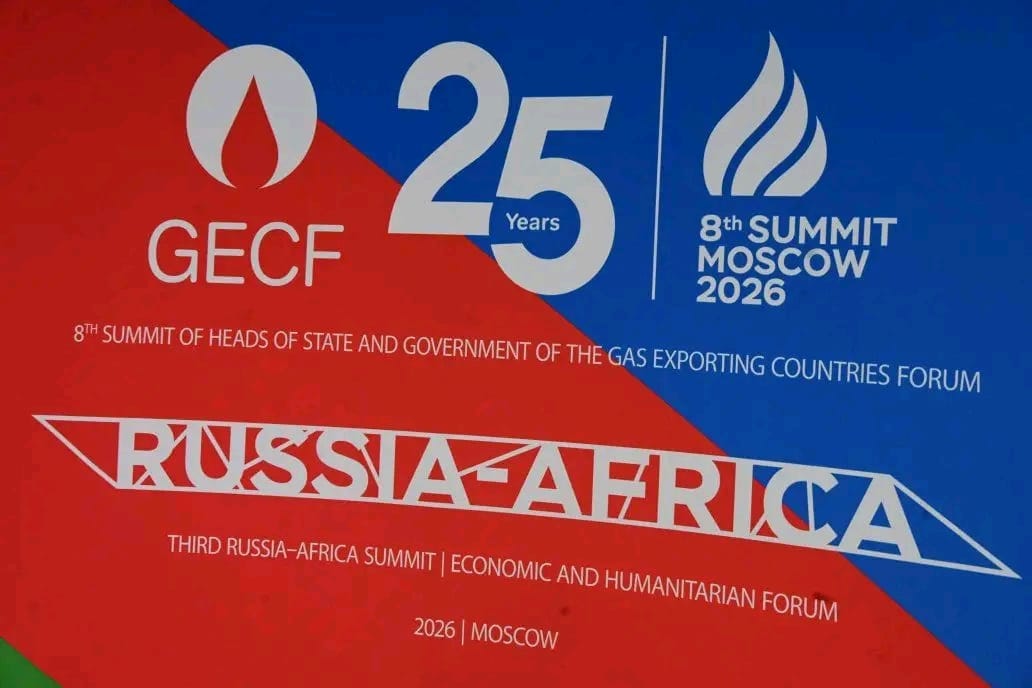
Since the first summit in the Black Sea resort of Sochi in 2019, the relationship has evolved from laying foundations and making pledges to drawing up plans and confronting practical challenges at the second summit in St Petersburg in 2023.
Economic and security ambitions have remained central throughout, alongside mounting concerns over food security and geopolitical pressures that will also shape the forthcoming meeting in Moscow.
Understanding the significance of the next summit requires examining the historical roots of Russia-Africa relations alongside current geopolitical calculations and the economic and security interests of both sides.
Observers also stress the need to distinguish between declared objectives and measurable results. The summit will take place alongside the Russia-Africa Economic and Humanitarian Forum, with African heads of state and representatives of regional organisations expected to attend.
It comes as the Russia-Africa Partnership Forum’s 2023–2026 action plan draws to a close, with a new plan for 2027–2029 expected to place greater emphasis on practical economic projects.
Sochi hosted the first Russia-Africa summit on 23-24 October 2019, co-chaired by President Abdel-Fattah El-Sisi, then chair of the African Union, and Russian President Vladimir Putin. All 54 African countries participated, with more than 40 represented by heads of state or government. The gathering marked a revival of relations after years of decline, largely attributable to geopolitical changes.
That summit laid the groundwork for moving beyond political contacts and broad agreements towards investment, trade and more sustained technological and industrial cooperation, while maintaining security and diplomatic coordination.
Participants agreed to establish the Russia-Africa Partnership Forum and hold summits every three years, alternating between Russia and an African country, with annual consultations between foreign ministers.
They also set a target of doubling trade from $20 billion to $40 billion within five years and reaffirmed their commitment to military-technical cooperation and the training of security personnel. At the time, Russia announced plans to deliver $4 billion worth of weapons to African countries in 2019.
The second summit, originally planned for Addis Ababa, took place in St Petersburg in 2023 against a markedly different geopolitical backdrop, shaped by the war in Ukraine and Western sanctions. Its outcomes focused on political, security and economic cooperation, food security, energy, counterterrorism and closer coordination in international institutions. It also adopted the action plan for 2023–2026.
The third summit will again take place in Russia, departing from the original arrangement to alternate venues between Russia and Africa.
The central challenge remains translating political engagement and general agreements into investment and trade projects, sustained industrial and technological partnerships, and effective security and diplomatic coordination.
Observers expect economic and technological cooperation to dominate the forthcoming meeting, with particular attention to trade, investment, food security, information technology, artificial intelligence and alternative payment systems. According to sources, the aim is to give fresh impetus to Russia-Africa relations through a package of agreements covering the economy, trade, investment, culture and education. The proposed 2027–2029 action plan is intended to define priorities for the next phase of cooperation.
Within this agenda, food security discussions are expected to cover expanding Russian grain and fertiliser exports to Africa, alongside developing fertiliser production and agriculture within the continent. Other priorities include expanding local manufacturing and improving infrastructure to strengthen Russia’s economic presence in Africa.
The agenda will also address artificial intelligence, information and communications technology, the digital economy, and support for African countries seeking to develop domestic nuclear industries and technological capabilities. Space technology, smart cities and access to clean water are also expected to feature.
Payment arrangements and financial autonomy will be another focus. Participants are expected to examine mechanisms for settling transactions in currencies other than the dollar and euro, with the stated aim of reducing dependence on the Western financial system and overcoming the legacy of colonial dependence.
Representatives of Russia’s state nuclear corporation, Rosatom, are expected to take part in sessions on the peaceful uses of nuclear energy, nuclear medicine and agricultural technology. Discussions will also address educational technology transfer, public health cooperation and the training of specialists, including in nuclear technology. Sources say events on the sidelines will examine “decolonising” media content, strengthening the voice of the Global South and expanding youth exchanges.
The agenda also includes cooperation on questions of sovereignty within a multipolar international order, encompassing opposition to neocolonialism, digital sovereignty and closer ties between political parties.
Beyond bilateral meetings, the summit is expected to address the institutional framework for cooperation. Plans include developing consultation mechanisms between Russia and the African Union, strengthening joint committees and using the new action plan to improve the monitoring and implementation of agreements.
For Egypt, the summit’s significance extends beyond its longstanding strategic relationship with Russia. Its position as an African, Arab and Mediterranean country, together with its membership of several regional groupings, gives it a broader interest in the development of Russia-Africa ties.
The summit could reinforce Egypt’s role as a gateway to Africa and the Middle East, a pillar of regional stability and a hub for investment and trade with the continent through the Suez Canal Economic Zone.
It could also support efforts to diversify Egypt’s economic partners and the currencies used in trade. Expanding local-currency transactions with emerging powers could help reduce reliance on the dollar and ease pressure on foreign exchange resources. Other potential gains include increased trade and direct investment in domestic manufacturing and advanced technology.
Observers also see the summit as an opportunity to review and advance major projects with Russia, particularly the El-Dabaa nuclear power plant and the Russian Industrial Zone in the Suez Canal corridor. Discussions could address the digitalisation of customs procedures and improvements to cross-border logistics.
Egypt’s participation would also reflect its foreign policy approach of building balanced partnerships with all major international powers while avoiding alignment with competing blocs.
Food security remains among Egypt’s principal interests, including diversifying grain and fertiliser supplies and making supply chains more resilient. In industry and investment, opportunities include joint production ventures that draw on Egypt’s logistical advantages and the African Continental Free Trade Area.
On the diplomatic front, the summit offers scope to support cooperation between Russia and the African Union on security, development and the reform of international institutions. Egypt’s gains will ultimately depend on whether cooperation produces economically viable projects, balances national interests with external commitments and strengthens its economic ties with the rest of Africa.