

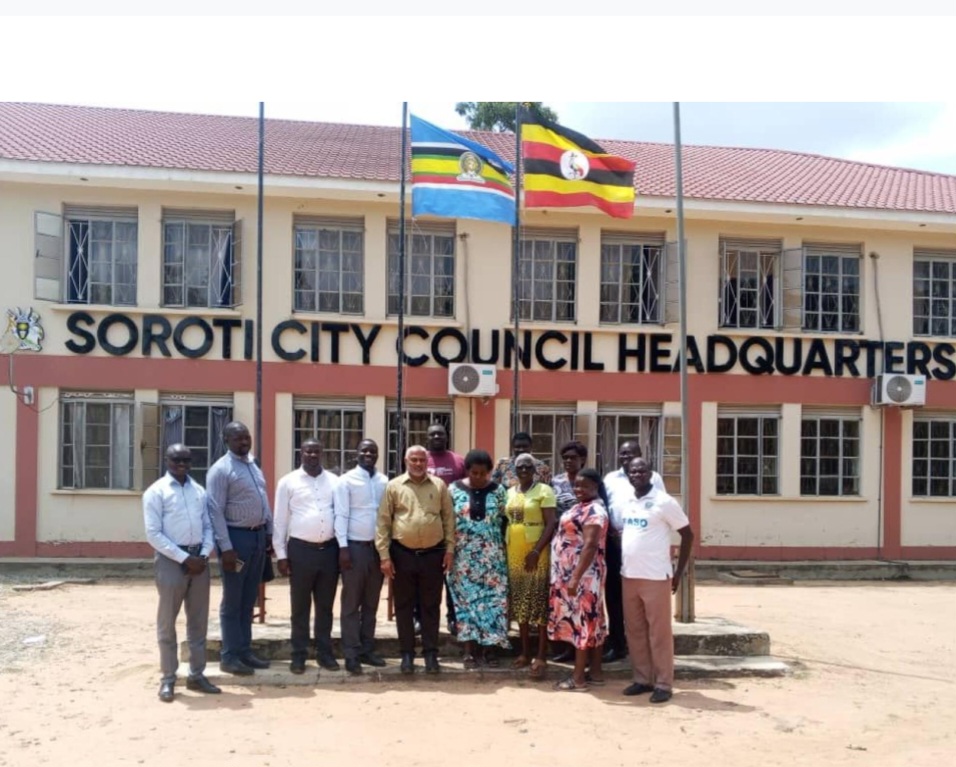
Soroti City authorities have pledged to intensify HIV testing and prevention after the city’s HIV prevalence rose from 11.6 percent to 12.4 percent, nearly three times Uganda’s reported national prevalence of 4.7 percent.
The Uganda AIDS Commission (UAC) says the increase requires locally targeted interventions to identify the factors driving new infections and prevent Soroti from undermining Uganda’s efforts to end AIDS as a public health threat by 2030.
The figures were presented by UAC officials during a stakeholder engagement meeting at TASO Soroti Hall on Wednesday, September 17.
The meeting brought together city leaders, health workers and other stakeholders to support Soroti City Council in integrating HIV interventions into its programmes and budget for the 2027/28 financial year.
Charles Otai, a UAC official, said the city needs to establish the specific factors contributing to its high HIV burden rather than relying on general interventions.
“We need to look at, on a case-by-case basis, what are those issues that are unique to Soroti,” Otai said.
He said local leaders, health workers, cultural and religious leaders, young people and development partners should work together to identify the drivers of new infections.
Otai said Uganda has made progress in reducing HIV prevalence and new infections nationally, but warned that areas with high HIV burdens could slow the country’s progress towards ending AIDS by 2030.
“If some of these hotspots, if some of these areas are not supported to check the high prevalence and the new infections, then they will affect the country’s progress towards ending AIDS by 2030,” he said.
Soroti City East Mayor Abdul Latif said the city leadership would push for funding for HIV interventions in the next financial year.
Latif attributed part of the challenge to Soroti’s growing population and its role as a commercial hub that attracts people from across the region.
“Being now a very busy place, there are so many people coming in and going out. There are a lot of activities day and night,” Latif said.
He said the concentration of commercial activity, including bars and clubs, particularly in Soroti City East, requires the city to strengthen HIV prevention among different population groups.
“We are first of all going to insist that in our budget, the coming budget, we should have some money to support on these health matters,” he said. Latif, who is also the regional chairperson of the AIDS Information Centre (AIC), said the organisation would work with the city to expand HIV testing and sensitisation.
He said AIC teams would begin community-based HIV testing in October, targeting wards across the city.
“Myself, I’m going to move with the team from AIC. We’re going to do all the testing in each ward. We’re going to visit the people, we’ll move nearer and give service nearer,” he said.
Ochogia Abdallah, an advocacy and communications specialist at AIC Uganda, said the rise in prevalence should be treated as a wake-up call, particularly for young people. He encouraged residents to test regularly, know their HIV status and use condoms correctly and consistently.
He also encouraged people to seek professional guidance on HIV prevention options such as pre-exposure prophylaxis (PrEP), where appropriate.
“Young people should not wait until HIV affects their lives before taking action,” Abdallah said.
He also called for more open discussions about HIV, sexual health and prevention to reduce stigma and encourage people to seek services.
AIC, through its CDC-supported programme in the Teso region, currently supports HIV services in 112 government health facilities, working with the Ministry of Health, local governments and health facilities on prevention, testing, treatment and care.
Abdallah said AIC has also supported laboratory services in seven health facilities in the region, including Soroti Regional Referral Hospital, Ngora Health Centre IV, Serere Health Centre IV, Amuria Hospital, Kaberamaido Hospital, Katakwi Hospital and Atutur Health Centre IV.
The organisation also supports the transportation of blood samples from the 112 facilities to designated hub laboratories for testing and works with the Ministry of Health to train community health extension workers.
AIC also provides funds to local governments in the Teso region to implement district-led HIV activities, alongside technical support. UAC officials said Soroti’s response should be based on local evidence identifying the populations, behaviours and circumstances contributing to new infections.
Otai said the city should work with government and development partners to identify the support required to reduce new infections. “We have to do something about it to see to it that the new infections come down, find out where the problem is, where are the drivers, and then identify what kind of support they will need,” he said.
The stakeholders urged residents, particularly young people, to use available HIV testing and prevention services at facilities including Soroti Regional Referral Hospital, Kichinjaji Health Centre III and other nearby health facilities.