



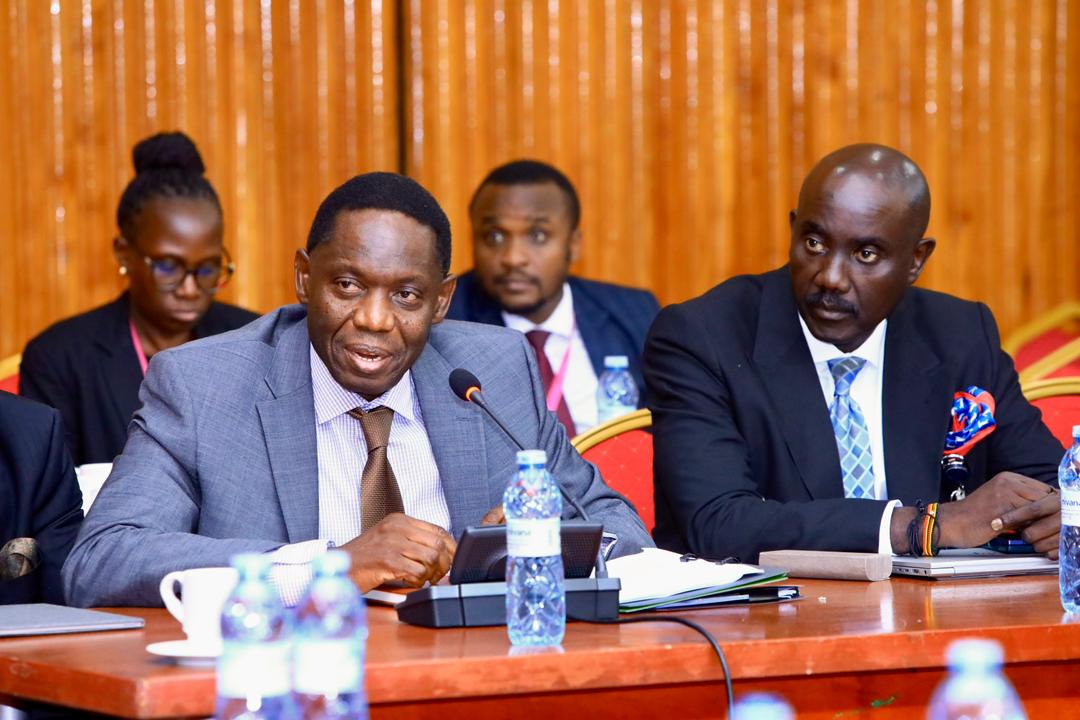
The Governor of the Bank of Uganda, Michael Atingi-Ego, has issued a stark warning to Parliament over the proposed Protection of Sovereignty Bill, 2026, arguing that it could destabilize Uganda’s economy by choking off vital financial inflows and weakening the country’s external position.
Appearing before the Joint Committee on Defence and Internal Affairs and Legal and Parliamentary Affairs on Tuesday, Atingi-Ego cautioned that the bill’s provisions on cross-border transactions risk undermining the balance of payments by restricting inflows such as foreign direct investment, remittances, and portfolio capital.
“This bill is about cross-border payments,” he told lawmakers, explaining that these flows are critical in offsetting Uganda’s persistent current account deficit, driven by imports that consistently exceed exports.
The governor warned that limiting such inflows would widen the current account deficit while simultaneously constraining the financial account, making it difficult to finance external imbalances.
“If we reduce these inflows into Uganda, it means that our current account is even going to widen,” he said, adding that the likely consequence would be a sharp depreciation of the shilling as the economy adjusts through more expensive imports.
He further emphasized that reduced financial inflows would erode Uganda’s ability to build foreign exchange reserves.
“A country without reserves is not sovereign,” Atingi-Ego stressed, noting that reserves are essential for economic stability and policy independence.
Beyond macroeconomic concerns, the central bank chief also raised institutional red flags, warning that the bill could introduce overlapping regulatory mandates that undermine the constitutional independence of the Bank of Uganda.
Such parallel oversight, he argued, risks weakening the central bank’s ability to effectively manage monetary policy and safeguard financial stability.
Atingi-Ego’s concerns add to growing resistance against the bill from a range of stakeholders who have appeared before the parliamentary committees in recent days.
Representatives from the financial sector, private industry, and policy experts have similarly warned that the proposed law, in its current form, could deter investment, disrupt financial markets, and isolate Uganda from the global financial system.
Many have urged Parliament to either substantially amend the bill or halt its progression altogether, citing the potential for unintended economic consequences.
The committees are expected to continue receiving submissions before compiling their report to the House, setting the stage for what is shaping up to be a heated legislative debate over the balance between national sovereignty and economic openness.