



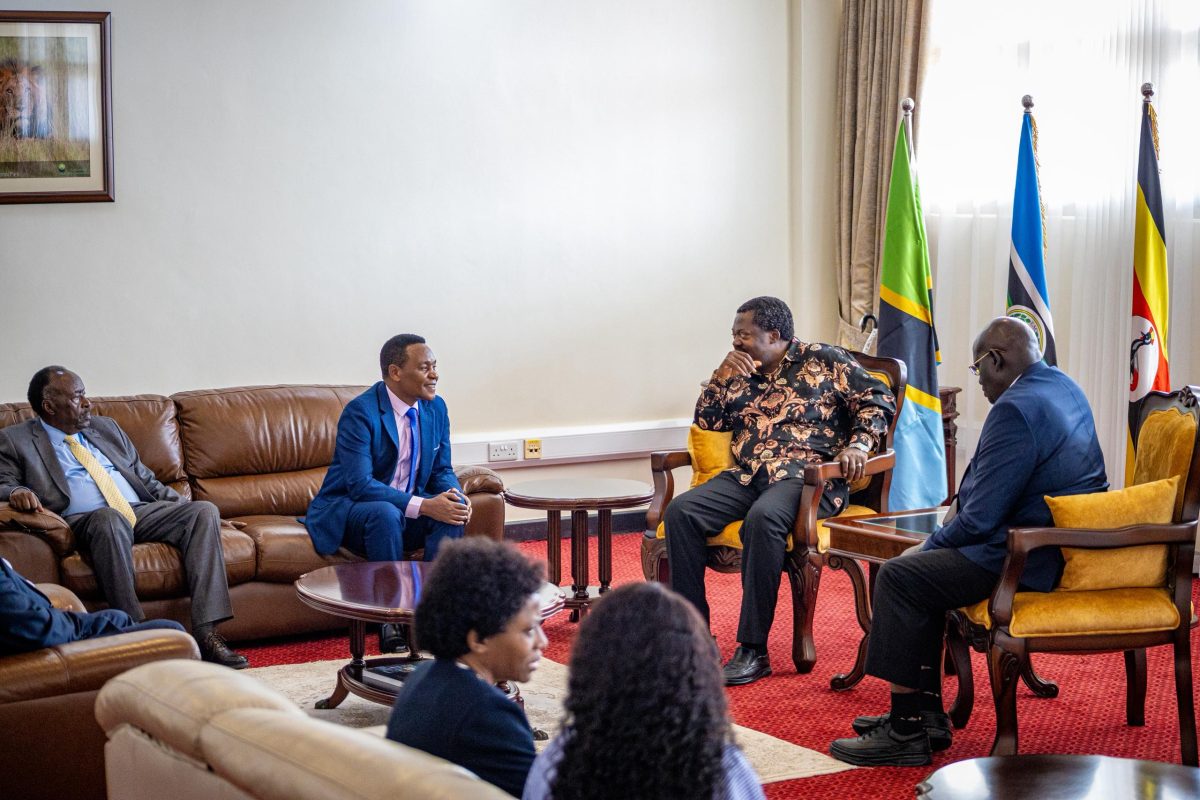
The Vice President of the United Republic of Tanzania, Dr. Emmanuel Nchimbi, has arrived in Uganda to attend the Ad Hoc Summit on the Security Situation in the Eastern Democratic Republic of Congo (DRC).
The Summit will kick of today Sunday 21 in Kampala, with regional leaders expected to attend.
Uganda is hosting the summit to bring together heads of state from the Great Lakes region to address the escalating conflict in eastern DRC, where government forces continue to clash with the AFC/M23 rebel group.
A senior official from Uganda’s Ministry of Foreign Affairs told this news website that the meeting will focus on recent territorial advances by the M23 rebels in South Kivu province and the growing humanitarian crisis linked to the fighting.
The resurgence of M23, which first re-emerged in 2021, has pushed the Congolese army and allied forces to the limit. Despite multiple peace agreements brokered in Washington and Doha between the DRC, Rwanda, and the rebels, fighting continues unabated, forcing millions to flee their homes and leaving tens of thousands dead.
Western, Gulf, and African diplomats have repeatedly urged for a sustained ceasefire and back-channel talks to prevent further regional destabilization.
M23: Origins and Objectives
Named after the March 23, 2009 peace agreement, the M23 insurgency represents a continuation of foreign-backed Tutsi armed groups operating in eastern DRC for decades. While claiming to protect local Tutsi communities, the group’s military wing has focused on seizing territory, and its political leaders aim to challenge the central government in Kinshasa.
Analysts suggest that Rwanda’s involvement reflects broader strategic ambitions, including territorial influence in the Kivus.
Since capturing Goma in January 2025, M23, together with Rwandan forces, has advanced through North and South Kivu, exacerbating tensions across the Great Lakes region.
Previous diplomatic efforts, including accords between Rwanda and the DRC signed in Washington and at a presidential summit in December 2025, as well as a framework deal with M23 mediated by Qatar, have yet to halt hostilities.
The insurgency comes at a sensitive time in Congolese politics. President Félix Tshisekedi’s 2024 constitutional amendment proposal, which could allow a third term, has deepened political divisions.
Opposition figures and civil society groups are divided on how to address the M23 threat, with some sympathetic to certain rebel demands, while the government has accused others of sedition.
The situation worsened when former President Joseph Kabila was sentenced to death in absentia for allegedly supporting the rebellion.
Regional Implications and Diplomatic Efforts
The imbalance of power on the ground — between a weak, disorganized Congolese army and a well-equipped insurgency supported by Rwandan forces — has complicated mediation efforts.
Angola, under the AU mandate, attempted to mediate between Kigali and Kinshasa but withdrew in March 2025. In its defense, Rwanda denies actively supporting M23, citing threats from Hutu militias including the FDLR, while the DRC continues to maintain ties with local self-defense groups implicated in abuses.
Recent talks, facilitated by Washington, Doha, and AU-designated mediator President Faure Gnassingbé of Togo, have produced ceasefire agreements and framework deals, but fighting persists.
The current summit in Uganda aims to consolidate these diplomatic gains, urge compliance from all parties, and prevent further regional escalation.
Humanitarian Concerns
The fighting has severely disrupted civilian life, with reports of displacement, market closures, and humanitarian relief efforts pushed to the brink. Images from Bukavu in February 2025 captured M23 fighters patrolling streets while civilians continued daily activities amid the conflict, highlighting the precarious situation on the ground.