



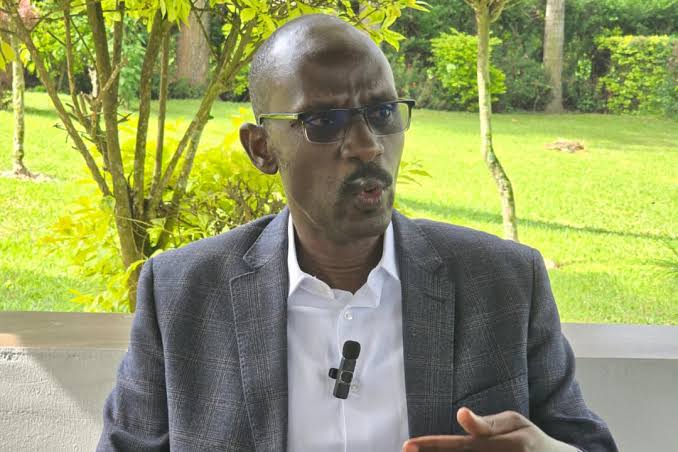
The Cross-examination of polling agents for the contested Mawogola North parliamentary election petition kicked off in the High Court in Kampala on Wednesday.
Lawyers representing MP Aine Godfrey Kaguta Sodo began cross-examining Derrick Sezibera over allegations of voter bribery and other irregularities during the January 15 elections.
The matter involves a petitioner, Jet John Ndamagi Tumwebaze, who is contesting the outcome of the January 2026 Parliamentary election in Mawogola North constituency.
Sezibera was questioned over his affidavit that voters were bribed with amounts ranging from 5,000 to 50,000 shillings.
The lawyers are seeking to establish whether he personally witnessed the alleged bribery, who received the money, and the identities of those accused of distributing it.
They are also interested in knowing how violence occurred at the polling stations and issues related to voter turnout, as well as the results obtained by the candidates in line with the affidavits sworn by the agents.
Sodo’s legal team is led by Robert Bautu, Paul Kuteesa and Anthony Bazira, while Kandeebe Ntambirweki represents the Electoral Commission.
Other witnesses or agents cross-examined include Yiga Hamidu, Derrick Muganzi and William Nahurira.
Others also listed to face cross-examination over affidavits supporting Tumwebaze’s petition include Kirinya Vicent, Mukasa Moses Tibyasa, Nina Kankunda, commonly known as Nina Roz, a former Ssembabule District Woman Parliamentary Candidate on the National Unity Platform Ticket, and Rudonyoli.
Tumwebaze had earlier informed the court that more of his agents and witnesses were on their way to Court to attend the proceedings.
The cross-examination is taking place in Election Petition No. 10 of 2026 before Masaka High Court Judge Bernard Namanya, who is sitting in Kampala, where Tumwebaze is challenging Sodo’s victory in Mawogola North mainly for lack of academic papers to be a legislator and also for having been aided by the military and the Electoral Commission to rig the will of the people.
The cross-examination of the agents’ evidence follows Tumwebaze’s own cross-examination yesterday, Monday, and part of today, during which Sodo’s lawyers questioned his allegations of ballot stuffing, voter bribery and military interference in the election.
Tumwebaze told the court that some polling stations had allegedly been taken over by soldiers, while others closed as early as 11:00 am. He also claimed that several of his polling agents had been arrested and detained for up to two days, while others were intimidated and prevented from effectively monitoring the voting process.
Electoral Commission lawyer, Kandeebe Ntambirweki, questioned why Tumwebaze had voluntarily participated in an election he now describes as having been conducted in an environment where the rule of law was disregarded.
Tumwebaze responded that Uganda had good laws but accused individuals dressed in military uniforms of taking over the electoral process.
“Our law is very nice, but some goons dressed in Army uniform just took over the elections. Some were grave diggers, just goons,” he told court.
The exchange became heated when Tumwebaze accused Sodo of being above the law, saying nobody was above the law except him (Sodo). Kandeebe challenged him to explain why he had instituted legal proceedings against someone he believed was above the law.
Tumwebaze maintained that he still believed in the independence of the judiciary, arguing that there was parity in the courts until what he alleged was military interference during the elections.
Sodo’s other lawyer, Paul Kuteesa, also questioned Tumwebaze about allegations that voters had been bribed with amounts ranging from 5,000 to 50,000 shillings to influence the election in Sodo’s favour.
Asked whether he had personally witnessed any of the alleged bribery incidents, Tumwebaze answered in the negative, admitting that the information had been relayed to him by his polling agents.
Kuteesa further questioned whether Tumwebaze had established that the individuals allegedly involved in bribing voters were actually working for Sodo. Tumwebaze maintained that his agents knew the individuals and could identify them.
He was also unable to recall the exact number of polling stations he had personally visited on election day.
On allegations of military involvement, Kuteesa asked whether Sodo was a commander in the Uganda People’s Defence Forces or a serving military officer.
Tumwebaze responded that he had seen the legislator moving with large numbers of soldiers whom he accused of terrorising villages.
Kuteesa questioned why Tumwebaze had not instituted legal proceedings against the UPDF if its personnel had brutalised his supporters. Tumwebaze said he had not yet sued the army, estimating that approximately 30 of his agents had been brutalised.
He acknowledged that some were too frightened to testify, while about ten had provided accounts o