

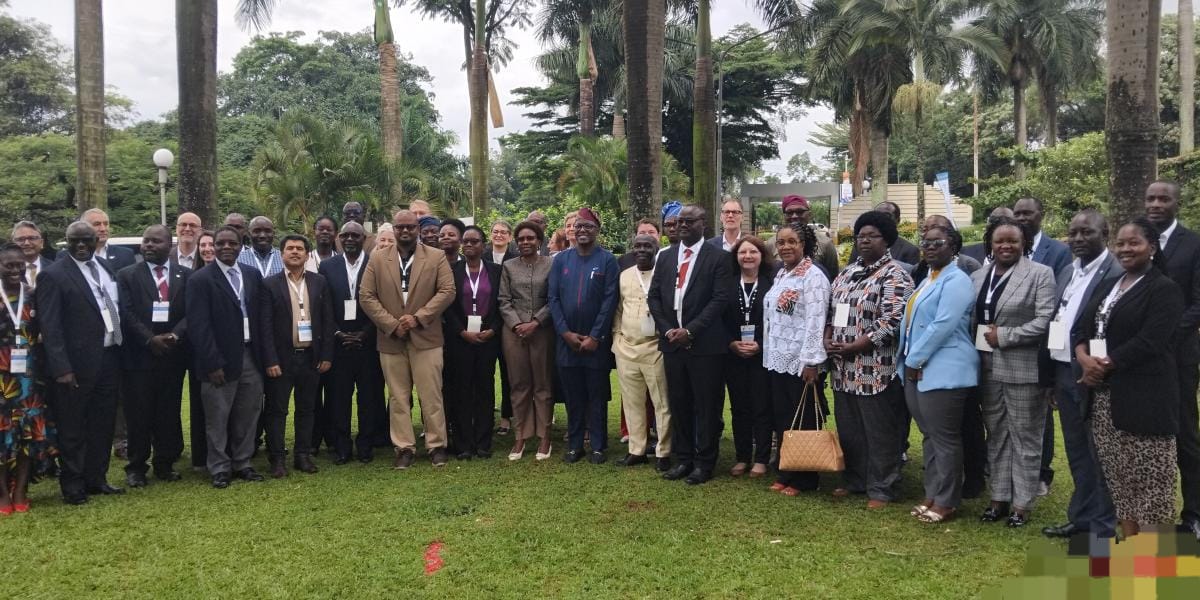
Uganda and global health leaders have convened in Kampala to confront a stubborn reality: malaria, long considered preventable and treatable, remains the country’s leading killer, and progress to stop it has stalled.
The dialogue, hosted by the Uganda Ministry of Health in collaboration with the Roll Back Malaria (RBM), comes amidst concerns that Malaria remains a threat not only in Uganda but also in the rest of Africa. African Union Member States account for 96% of global malaria cases and 97% of malaria-related deaths.
It has been observed that progress against malaria has stalled since 2015, and a projected 30% reduction in funding could lead to 146 million additional cases and 397,000 preventable deaths by 2030.
The dialogue at Kampala Sheraton Hotel takes place as elimination efforts face an unprecedented “perfect storm” of challenges, including critical financial shortfalls, climate-driven upsurges, and rising insecticide resistance.
The Minister of Health, Dr. Jane Ruth Aceng, noted that the country is transitioning into a global leader in the malaria fight, despite currently ranking fourth globally in malaria cases and eighth in malaria-related deaths.
Dr. Aceng highlighted Uganda’s Malaria Elimination Plan 2026-2030, which targets zero malaria deaths by 2030. “Uganda has embraced the Big Push not as a concept, but as an operational model,” she stated.
She noted that Uganda has already taken decisive action, launching the world’s largest malaria vaccination program in April 2025, which successfully reached 1.1 million children.
The dialogue is mainly focusing on accelerating the implementation of “The Big Push to End Malaria.”The “Big Push” is a coordinated response to reignite progress toward malaria eradication.
It is designed to address country-driven priorities.In 2023, there were an estimated 263 million new malaria cases globally, an increase from 252 million in 2022. The global death toll from malaria rose to 597,000 in 2023, up from 578,000 in 2015.
Currently, it is estimated that Africa has a $5.2 billion annual malaria funding gap and needs an additional $11 billion per year for climate-resilient health systems.
The dialogue in Kampala is focused on Pillar 5 of the Big Push, which involves accelerating the pipeline of vaccines, gene-drive technologies, and next-generation treatments from the lab to rural villages.
Dr. Michael Adekunle Charles, CEO of the RBM Partnership, emphasized the need to revisit malaria-fighting efforts by closing the gaps that allow the disease to persist.
He identified regulatory, financial, and readiness hurdles as critical voids that must be addressed to save lives. Before the dialogue commenced this morning at the Sheraton Hotel, leaders visited Quality Chemical Industries Limited (CiplaQCIL), a Ugandan facility that has produced anti-malarials for two decades.
“This is not a future ambition; it is a present reality,” said Dr. Aceng, calling for aligned procurement policies to support African manufacturers.She also noted that the Uganda Virus Research Institute (UVRI) is advancing frontier science, including gene-drive technologies that could fundamentally reshape mosquito control across the continent.
The dialogue that continues up to tomorrow will refine the Pillar Five Action Plan for 2028, a time-bound roadmap with clear accountabilities.
“The science is ready, the leadership is ready, and the country has the political will,” Dr. Charles. “We cannot keep doing the same thing and expect a better result. This is the Big Push.” URN