



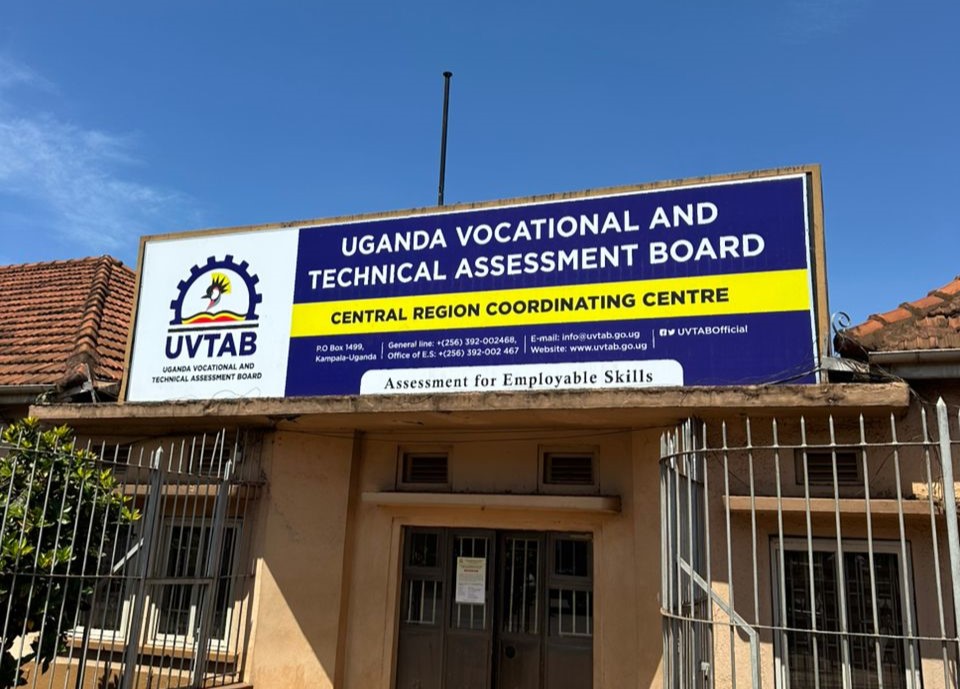
The Uganda Vocational and Technical Assessment Board (UVTAB) has introduced a structured quarterly schedule for assessing informally acquired competencies. The new system, outlined in a circular issued on January 21 by Executive Secretary Onesmus Oyesigye, addresses longstanding challenges in the informal sector, where ad-hoc assessments had become increasingly unmanageable.
The circular, distributed to TVET providers, vocational training institutions, and skilling centers across the country, establishes fixed assessment periods to bring order and predictability to the certification of skills. “For the purpose of efficiency and effectiveness… the assessment shall be carried out on a quarterly basis in March, June, September, and December,” the circular reads in part.
Oyesigye instructed training institutions and TVET providers to align their training calendars and assessment plans with these timelines, ensuring a more structured approach to skill certification. This reform comes amid growing demand for assessments in Uganda’s informal sector, which includes individuals who have acquired or honed skills through hands-on experience, community-based training, or self-teaching, without formal schooling. Skills such as cooking, baking, mechanics, or hairdressing can now lead to official UVTAB certification, denoting competency levels from one to four.
However, under the new rules and the recently enacted TVET Act, candidates cannot self-present for assessment; they must enroll through a registered TVET provider or skilling center, which then submits them to UVTAB. Notably, assessment centers can include registered community facilities, such as village saloons or garages, broadening access to certification.
For months, UVTAB offices were overwhelmed by groups and institutions seeking immediate evaluations—a remnant of practices under the now-defunct Directorate of Industrial Training (DIT). “People walk in and want to be assessed on that very day. We cannot handle an assessment like that. We don’t have enough resources, both human and financial, to sustain such a model,” Oyesigye said, promising a long-term solution that has now materialized.
To further organize the process, UVTAB has imposed registration deadlines requiring all centers to register candidates at least one month before the assessment date. For example, December assessments require registration by November 1. The first assessment under this new framework, scheduled for March 2026, will see registrations open on January 27 and close on February 27.
Registration fees vary by category and complexity. Candidates assessed on one module pay 70,000 shillings, rising to 90,000 for two modules. Workers PAS with a minimum of two modules pay 150,000, and those with four modules pay 300,000. Occupational assessments—the most common in the informal sector—cost 80,000 shillings for level one, 100,000 for level two, 150,000 for level three, and 220,000 for level four. Roadworks plant assessments cost 350,000 shillings. To curb potential fraud by center heads, candidates pay fees directly via the School Pay system.
Tracy Kiguli, who runs a community skilling center in Nansana Municipality, welcomed the clarity brought by the streamlined system. “We all want people trained in our centers to get certification, but the process was not clear. Now this streamlines it better, and we know when training can take place and when candidates will be assessed,” Kiguli noted.
The initiative aligns with a surge in Technical and Vocational Education and Training (TVET) uptake in both formal and informal settings. Recent UVTAB results show that informally trained learners are not only increasing in number but also outperforming their formal counterparts. In the most recent assessment, informally trained candidates achieved a 96 percent competence rate, compared to 81 percent in structured programs.
According to Onesmus Oyesigye, the strong performance may be attributed to the flexible, hands-on nature of informal training. “Trainees acquire skills in practical settings, which allows them to focus and master competencies effectively,” he said.
****URN****
Thank you so much for this article. It is a must read to all informal skills providers