

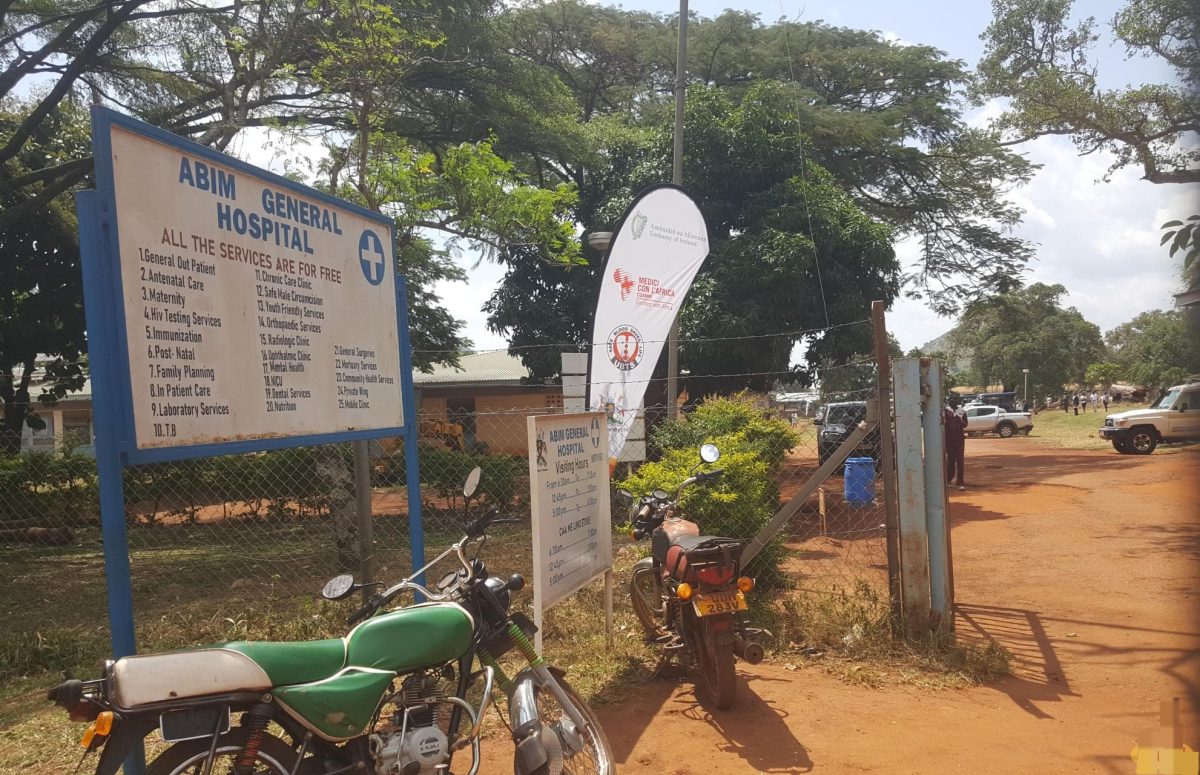
Critical health services at Abim Hospital are under threat due to persistent water shortages, unreliable electricity supply and ageing infrastructure, prompting renewed calls for urgent renovation of the facility.
The challenges are affecting key services, including the Neonatal Intensive Care Unit, where health workers say unreliable power supply is putting pressure on equipment used to care for newborns.
The hospital, constructed in 1969 during the first administration of Dr. Milton Obote, has a bed capacity of 100 and serves a population of about 193,000 people. Abim Hospital last received a major renovation in 2017 after former presidential candidate Dr. Kizza Besigye visited the facility during his 2016 campaigns and raised concerns about its poor condition.
Following the visit, the government funded renovations to the tuberculosis ward, mortuary, stores, water systems, and provided beds, mattresses and additional staffing.. The intervention improved the facility’s appearance and restored public confidence. However, hospital authorities say the gains are now being reversed by deteriorating infrastructure and recurring utility challenges.
Dr. Anthony Okuda Okengo, the Senior Medical Officer at Abim Hospital, said the facility requires a facelift, adding that unreliable electricity and lack of running water are affecting service delivery. He said frequent power interruptions affect blood preservation, baby warmers and oxygen concentrators, forcing the hospital to rely on a generator for extended periods at a high cost. “We are forced to run the generator the whole day to power the machines, which is too costly for the hospital,” Dr. Okengo said.
He added that the hospital has no running water because the pipe system, installed several decades ago, has never been renovated. The facility currently depends on one borehole shared by patients, staff and the surrounding community. “Electricity and water are very essential in the facility. Their shortage frustrates our efforts to deliver better health care services,” he said.
Dr. Okengo appealed to the government to provide a solar backup system to support critical services, especially neonatal care, and rehabilitate the water distribution system to reduce pressure on the borehole. Abim District LC5 Chairperson John Da West Ariko said the hospital’s drainage and water systems are in poor condition, warning that lack of running water is unacceptable, especially in critical areas such as the theatre.
“It is not proper for a hospital to lack running water, especially in the theatre,” Ariko said. He said several reports have been submitted to the Ministry of Health seeking intervention but no action has been taken yet. He called for urgent renovation, recruitment of more health workers and resolution of the utility challenges.
Abim Resident District Commissioner Robert Adiama acknowledged the challenges facing the hospital, saying government and development partners need to work together to improve health service delivery in the district.“We need support from both government and development partners to address service delivery gaps in a community that has for long grappled with instability,” Adiama said.
He noted that the main power line supplying the area from Lira remains unreliable, but revealed that a new power connection is being extended through Kotido. In the meantime, he called on partners to support the hospital with a solar power system as a temporary solution. URN