



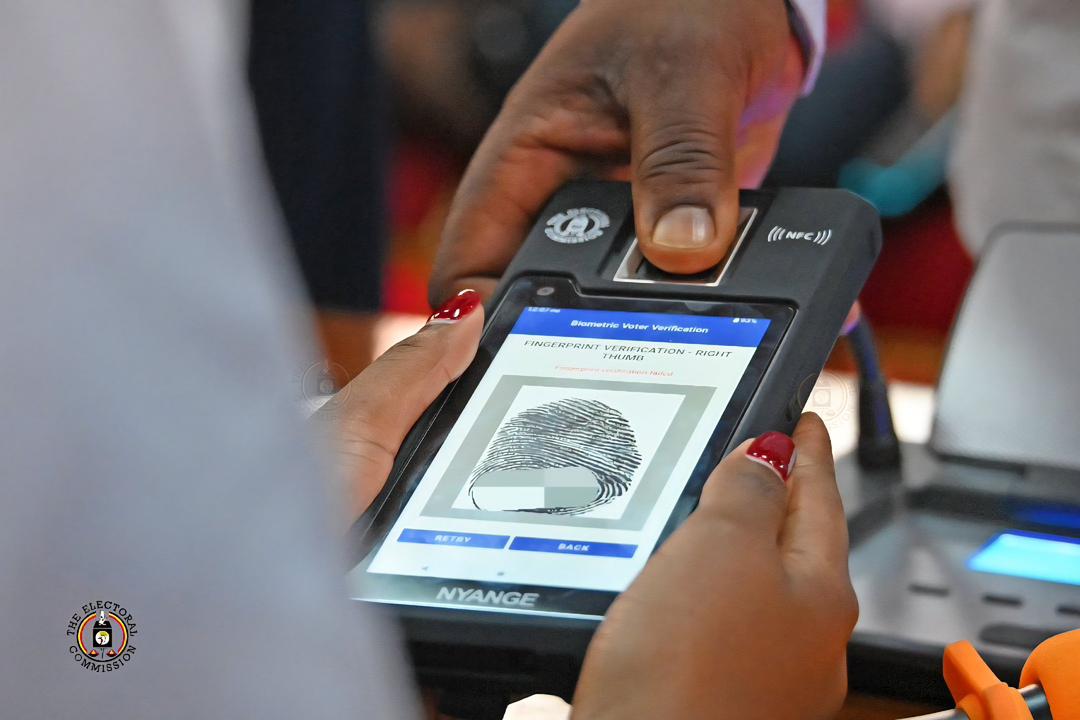
On January 15, 2026, during the polling day for Uganda’s general elections, biometric voter verification—introduced to safeguard electoral integrity—became a major source of disruption at several polling stations. Biometric Voter Verification Kits (BVVKs) froze, failed to authenticate voters, or even rejected the identities of polling officials themselves. Long queues formed, voting was delayed, and in many areas, election officials quietly reverted to using manual voters’ registers.
For a system that cost Ugandan taxpayers more than UGX 268 billion, the failures raised a fundamental question: was biometric voter verification the right solution to Uganda’s electoral challenges, or was it a costly response to the wrong problem? Uganda’s experience fits into a wider global pattern. Across Africa and Latin America, election authorities have increasingly embraced biometric technology for voter registration and identification, convinced that it can enhance election credibility by preventing multiple voter registrations.
Yet evidence from multiple countries suggests that the promise of biometrics often collides with political realities, weak institutions, and logistical constraints. While biometric systems can reduce duplicate registrations, it is not always clear why there has been such a strong push for them, given their high cost and operational complexity. These systems are expensive to procure and maintain, require skilled personnel, and often force citizens to re-register within short timeframes.
Despite this investment, biometrics address only one narrow form of fraud—multiple registration—which may not be the most serious electoral challenge in many contexts. Some activists argue that the more significant concern is multiple voting, which can often be prevented using simpler and cheaper methods such as indelible ink, transparent voters’ registers, and public scrutiny before elections. They note that such low-technology solutions have worked effectively in many countries for decades.
Analysts have also warned that biometric systems carry significant risks. Because the technology is sensitive to environmental conditions such as dust, heat, humidity, and unreliable electricity, failures are common. Poor training, weak logistics, mechanical breakdowns, and compressed timelines can result in voters being excluded rather than protected. Election technology expert Michael Yard cautions against equating technology with progress.
“Instead, it should be assessed based on whether it actually makes elections more democratic, given a country’s resources, risks, and available alternatives,” Yard argues. Yard, a recognised international election administration and technology expert, has advised election authorities in countries including Kenya, Ghana, Nigeria, South Africa, Tanzania, Ukraine, and Yemen. Writing through the ACE Electoral Knowledge Network, he notes that “a new way of doing things should not be judged either good or bad simply because it is new, but should instead be evaluated based on whether it helps to make elections more or less democratic, given resources, risks, and alternative solutions available.”
Beyond technical concerns, questions also arise about political motivation. In many cases, there is little evidence of rigorous cost-benefit analysis or long-term planning. Some observers question whether pressure from technology companies or international donors, rather than clearly defined local needs, drives the push towards biometrics. “Are politicians truly moved by the desire to address duplicate registration and voting, or is there some other political interest that drives them?” analysts ask. “What outside pressures exist? Perhaps technology companies or the international donor community are facilitating or accelerating the race to biometrics.”
According to the report Voter Registration in Africa, published by the Electoral Institute for the Sustainability of Democracy in Africa (EISA), these questions remain insufficiently explored. The report notes that while some technical studies of biometric systems exist, very little research has assessed whether deploying such systems is justified in the first place. Another major challenge is dependence on foreign vendors. When biometric systems are supplied and maintained by external companies, election bodies often lack the technical capacity to operate, repair, or modify them independently. This creates long-term dependency and rising maintenance costs, particularly as donor support declines.Experience from countries such as the Democratic Republic of Congo (DRC) illustrates this risk. In the DRC, key procurement decisions—including tendering and system design—were heavily influenced by external actors, weakening local ownership and accountability. Systems tested in controlled office environments frequently fail in rural settings where poor roads, limited electricity, and harsh weather conditions are the norm. Biometric systems can also exclude voters through false rejections. Worn fingerprints, dust, moisture, age, or disability can prevent recognition. In some countries, more than 10 per cent of voters could not have their fingerprints captured at all. Elderly people, manual labourers, women, and persons with disabilities are often disproportionately affected.
Country experiences highlight these dangers. In Kenya, elderly voters were turned away when machines failed to read their fingerprints. In Fiji, biometrics were introduced to address problems that barely existed, while deeper trust deficits remained unresolved.
In Guatemala, biometric reforms were marred by corruption and inflated costs. In Sierra Leone, biometrics failed to address voter intimidation, ballot stuffing, and abuse of state resources.
In the DRC, a registration exercise costing tens of millions of dollars still excluded large numbers of voters.
In Uganda, BVVKs were introduced to ensure that each person votes only once, in line with Article 59 of the Constitution. In practice, their deployment exposed familiar weaknesses.
In 2024, locally registered Simi Valley Technologies was contracted to supply the kits following reported irregularities in a previous tendering process. Despite the substantial public investment, machines failed across many polling stations, freezing or rejecting both voters and officials.
Questions have since been raised about the supplier’s experience, the origin of the kits, technical support arrangements, and whether adequate training and contingency plans were in place.
The situation was worsened by an internet shutdown ordered by the Uganda Communications Commission, which compounded technical failures.
In Nakawa, a BVVK operator told Uganda Radio Network that the machines rejected the identities of both operators and presiding officers. The kits required sequential log-ins before verification could begin, but neither official could access the system.
Other sources familiar with the technology indicated that trial credentials used during training were not erased and that the kits were not properly reset ahead of polling day.
Training for BVVK operators had been conducted only a day or two before the election. Recruitment began in late November 2025, with the minimum qualification set at A-level education.
Operators were tasked with multiple responsibilities, including voter verification, ballot scanning, results transmission, and sealing declaration forms.
Yet, as the Electoral Knowledge Network warned as early as 2012, effective biometric deployment requires staff with strong computer, logistical, and technical maintenance skills, as well as sufficient training time.
Many machines failed at critical stages. There was also a noticeable lack of technically competent personnel to resolve problems across districts.
These failures reflect a lesson already observed elsewhere: biometric systems can unintentionally disenfranchise voters if they are not carefully planned, adequately supported, and realistically matched to institutional capacity.
Uganda has encountered similar problems before. Comparable challenges were reported during the 2016 and 2021 elections, including connectivity failures, limited technical support, and weak backup systems. Their recurrence suggests that lessons from previous elections were not fully addressed ahead of 2026.
Experts argue that technology alone cannot guarantee credible elections. Weak institutions, opaque procurement processes, limited civic education, and insufficient voter engagement all undermine the effectiveness of biometric systems. Even when technology functions as intended, public trust in the election management body remains decisive.
While BVVKs may address duplicate registration, they do little to prevent other forms of malpractice, such as voter intimidation, ballot stuffing, or misuse of state resources.
This raises a critical question for Uganda: was the massive investment in biometric verification the most effective use of public resources, or could simpler, more resilient measures have delivered greater credibility?
Uganda’s experience reinforces a broader truth across Africa and Latin America: technology cannot substitute for trust, preparedness, and strong institutions.
Without transparency, capacity building, and realistic planning, biometric systems risk becoming expensive barriers rather than democratic safeguards.
The lesson for Uganda is not that technology should be rejected, but that it must be carefully matched to context, institutional strength, and genuine electoral needs. Ultimately, technology should serve democracy—not distract from the harder work of building accountable, inclusive, and trusted electoral systems.
***URN***