



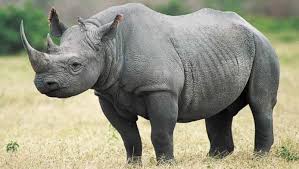
For Boniface Kadabara, CEO of West Nile Birding and Safari, the news couldn’t have come at a better time. As he watches the early morning sun filter through Ajai Wildlife Reserve, Kadabara envisions a new era for tourism in West Nile—one shaped by the return of a species absent for more than four decades.
“This is a very big boost for West Nile tourism,” Kadabara says, his voice tinged with excitement. “The rhinos are a prime product. Their presence connects our region to a wider tourism circuit and gives us something truly unique to offer visitors.”
Kadabara is not alone in his optimism. Across the district, other tourism operators and local hotel managers see the rhinos’ reintroduction as an opportunity to craft immersive experiences that combine wildlife with culture.
Dr. Jimmy Opigo, Director of Aragan Hotel, emphasizes the potential to tell West Nile’s stories in new ways. “It’s not just about seeing animals,” he says.
“It’s about connecting with the people, the history, and the land that make this region so special.”
Earlier this month, four southern white rhinos were officially reintroduced at Ajai Wildlife Reserve in Madi Okollo District by the Uganda Wildlife Authority (UWA). For many locals, it is a moment of triumph: the first time in over 45 years that these gentle giants have roamed freely in the sub-region.
Faima Letiru, Speaker of Madi Okollo District, is hopeful that the rhinos’ presence will translate into tangible benefits for the young district. “Madi Okollo as a district stands to benefit significantly from these initiatives, including in revenue sharing,” she says.
For Dr. James Musinguzi, Executive Director of UWA, the reintroduction signals more than conservation success—it is an invitation to communities and investors alike to seize new opportunities. “This is becoming a platform for sustainable tourism, where local communities can engage directly with visitors while protecting our natural heritage,” he says.
West Nile, though rich in natural and cultural treasures, remains largely underexplored. Beyond Ajai, Mount Wati in Terego District rises majestically, offering panoramic views, hiking trails, and glimpses of wildlife such as porcupines.
Local mythology connects the mountain to the origins of the Lugbara people, with legends including Dribidu and his leprous wife seeking healing.
Mount Liru, on the Koboko–Maracha border, features a crater lake rumored to connect underground to the Nile, along with wildlife including red monkeys and rock badgers.
Other notable attractions include Biku Hill in Nebbi District, home to the world’s smallest church, Bethel Chapel, and Wang-Lei in Pakwach, a site commemorating Luo ancestral history.
Salia Musala, in Koboko District, is culturally significant as the meeting point of Uganda, South Sudan, and the Democratic Republic of Congo. A symbolic fig tree marks the tri-border, reflecting the deep cultural importance of the site for the Kakwa people.
Adventure seekers can also explore Miridua Falls, Abairo Falls, Zoka Forest, and the Albert Nile, while a solar eclipse monument commemorates the total eclipse of 2013.
The reintroduced white rhinos, lost from West Nile in the early 1980s to poaching and insecurity, now make Ajai one of only three sites in Uganda where visitors can see them in the wild, alongside Ziwa Rhino Sanctuary and the Uganda Wildlife Education and Conservation Centre.
For the people of West Nile, their return is more than a conservation success; it is a symbol of renewal and a tangible reason to believe that tourism, anchored in the region’s rich wildlife and culture, can drive lasting growth.
****URN****