



Across Africa, a growing debate is emerging over the role of foreign governments, international NGOs, and state-funded media organizations in shaping domestic political discourse.
Germany, long viewed as a development and economic partner on the continent, now faces increasing scrutiny from governments and political actors in countries such as Uganda, Tanzania, Ethiopia, Kenya, and Namibia over what many perceive as expanding political influence under the guise of democracy promotion, governance support, and civil society engagement.
The debate intensified after Germany unveiled its new Africa policy guidelines in early 2025.
Berlin openly acknowledged Africa’s rising geopolitical importance and stressed its intention to deepen involvement in governance, climate diplomacy, youth engagement, migration policy, and political partnerships across the continent.
It is however, argued that such policies increasingly blur the line between cooperation and political interference.
Reuters reported that German business groups themselves pushed Berlin to pursue Africa more aggressively because of strategic minerals, trade access, and geopolitical competition with China and Russia.
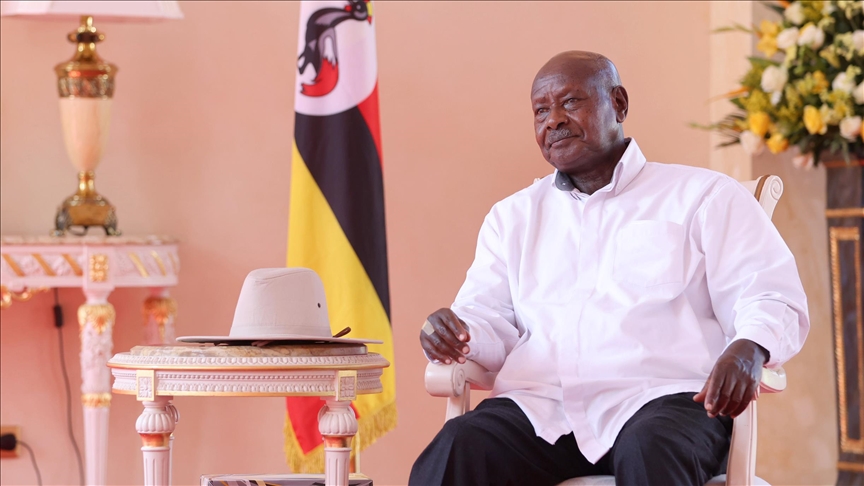
For many African leaders, this has revived old fears of external influence over domestic political processes. In Uganda, President Yoweri Kaguta Museveni has repeatedly warned against foreign actors attempting to shape political outcomes in sovereign African states.
During comments linked to tensions surrounding elections in neighboring Tanzania, Museveni accused unnamed European actors of fueling instability in East Africa out of fear of Uganda’s industrial growth and oil sector expansion.
Museveni argued that foreign powers were attempting to “control Africa’s resources” and influence political direction in the region.
Prior to that, Uganda’s Chief of Defence Forces, Gen. Muhoozi Kainerugaba, accused the German ambassador in Kampala, of foreign influence in domestic political affairs ahead of the 2026 electoral period.
The German government rejected any suggestion of improper conduct by its envoy, maintaining that the ambassador’s engagement in Uganda remained consistent with standard diplomatic practice.
Even then, the matter explains the sensitivity surrounding foreign diplomatic presence in Uganda, particularly when senior security officials publicly challenge the role of Western envoys in political and governance-related spaces.
These concerns are not limited to Uganda. In Tanzania, authorities have increasingly clashed with Western-linked organizations and observers amid political tensions surrounding opposition leader Tundu Lissu.
Tanzanian immigration officials deported a German and an American national accused of violating visa conditions during politically sensitive court proceedings involving Lissu.
The controversy fueled broader accusations by the Tanzanian government that foreign organizations were attempting to internationalize domestic political disputes and influence internal affairs through governance and democracy-related programs.
At the same time, Western governments and rights groups have accused Tanzania of suppressing dissent and restricting democratic freedoms.
Reuters reported that African Union observers criticized Tanzania’s 2025 election process for failing to meet democratic standards after opposition groups alleged widespread irregularities and violence.
The United Nations also called for investigations into killings linked to post-election unrest. These developments highlight how foreign involvement in African political crises often becomes deeply contested, with governments framing it as interference while Western actors portray it as democratic accountability.
Ethiopia has taken an even firmer posture toward German media influence. In October 2025, Ethiopian authorities suspended correspondents working for Deutsche Welle, Germany’s state-funded international broadcaster, accusing the network of violating Ethiopian media laws and spreading conflict-aggravating reports.
Ethiopian regulators specifically criticized DW’s reporting on the conflict involving Fano forces in the Amhara region.
German officials and press freedom groups condemned the suspension, but Ethiopian authorities maintained that foreign-funded media organizations must operate within national laws and ethical standards.
For some African policymakers, the DW case shows that foreign state-funded broadcasters increasingly function not merely as news organizations, but as geopolitical instruments capable of influencing public opinion, political narratives, and social tensions in fragile states.
Similar debates have surrounded international broadcasters and digital platforms in several African countries over the past decade.
Kenya has also become central to the broader debate on Western engagement in African politics. German Ambassador Sebastian Groth publicly stated that Germany was “following political developments in Kenya closely” amid anti-government protests and declining public trust in institutions.
While some interpreted those remarks as diplomatic concern, critics argued that such statements reflect an increasingly activist posture by Western diplomats toward domestic political tensions in African states.
This debate is further complicated by Africa’s colonial history. Germany itself has faced renewed criticism over its colonial-era atrocities in Namibia, particularly the genocide committed against the Herero and Nama peoples during German colonial rule in the early 1900s.
For many Africans, contemporary discussions about governance, democracy promotion, and political influence cannot be separated from that historical context.
Calls for African sovereignty therefore resonate not only politically, but historically and psychologically as well. None of this means African governments should become hostile to international cooperation.
Germany remains one of Africa’s major development and trade partners, contributing billions of dollars in aid, infrastructure financing, climate programs, and vocational training initiatives.
Civil society organizations also continue to play an important role in governance advocacy, anti-corruption work, and human rights protection across the continent.
However, African states increasingly appear determined to draw firmer boundaries around foreign political influence.
Governments are likely to continue tightening regulations on externally funded NGOs, foreign media operations, election-linked programming, and diplomatic engagement perceived as partisan or interventionist.
Supporters of such measures argue that no sovereign state can permit external actors to shape political outcomes under the cover of development assistance or democracy promotion.
Ultimately, the larger question confronting Africa is not whether to cooperate with foreign partners, but how to do so without compromising sovereignty, institutional independence, or domestic political stability.
The challenge for African governments will be balancing legitimate national security concerns with the equally important need to preserve civil liberties, independent media, and democratic accountability.
Africa is no longer merely a passive arena for foreign interests. Increasingly, African states are asserting that partnerships with Europe, China, the United States, or any other external actor must operate on terms defined first and foremost by African priorities and African sovereignty.
The writer is a Ugandan Journalist based in Kampala.
adamkungu7@gmail.com