



The Democratic Republic of Congo government has suspended academic and extracurricular activities at 11 public higher education institutions in Goma, North Kivu Province, and Bukavu, South Kivu Province, citing the deteriorating security situation in the two cities.
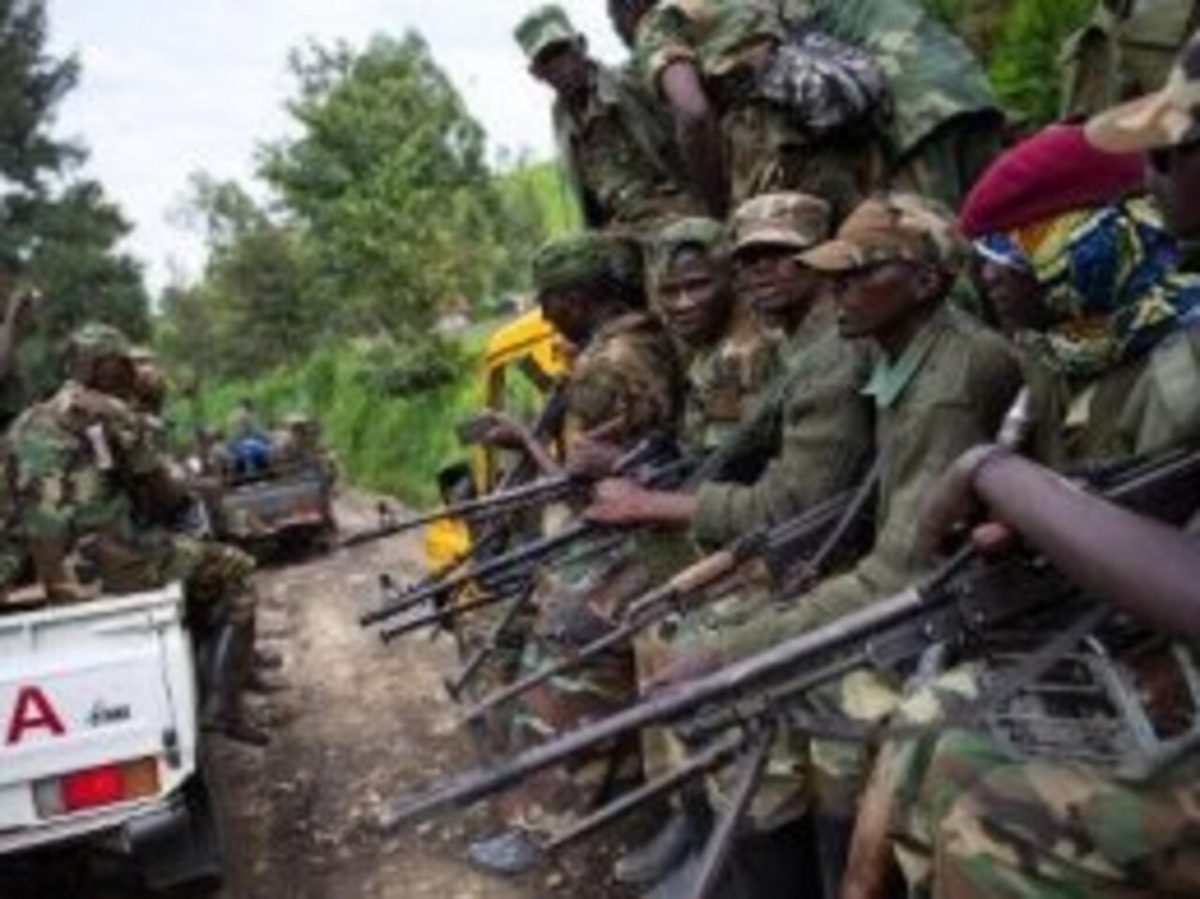
The suspension affects institutions located in areas where large parts of North and South Kivu are under the control of the M23 and AFC.
The decision comes after M23/AFC appointed administrators to four higher education institutions in Goma: the Higher Institute of Commerce (ISC-Goma), Higher Institute of Medical Techniques (ISTM-Goma), Higher Institute of Applied Techniques (ISTA-Goma) and Higher Pedagogical Institute (ISP-Goma).
In Bukavu, the affected institutions are the Higher Institute of Commerce (ISC-Bukavu), Higher Institute of Medical Techniques (ISTM-Bukavu), Higher Pedagogical Institute (ISP-Bukavu), Higher Institute of Rural Development (ISDR-Bukavu), Higher Institute of Arts and Crafts (ISAM-Bukavu) and the Official University of Bukavu (UOB).
In a decree issued by Higher Education, University Studies, Scientific Research and Innovation Minister Marie-Thérèse Sombo Ayanne Safi Mukuna, the government suspended activities for the 2026-2027 academic year. The measures cover student registration and re-registration, teaching, assessments and academic deliberations at the affected institutions.
Mukuna said the decision was prompted by the deteriorating security situation in Goma and Bukavu and was intended to protect students and staff while preserving the credibility and validity of academic qualifications awarded by Congolese institutions.
She stressed, however, that the measures do not amount to a blanket closure of higher education institutions across North Kivu and South Kivu, nor do they constitute an abandonment of students and communities living in areas under M23/AFC control.
According to Mukuna, academic achievements legitimately obtained by students will remain protected, and no student will be required to restart their academic career from scratch. She said the measures would be regularly reviewed in line with developments in the security situation, the restoration of institutional legality and the conditions necessary for the affected institutions to resume normal operations.
The Government spokesperson and Minister of Communication and Media Patrick Muyaya Katembwe said the occupation of parts of Congolese territory does not confer administrative or academic authority over Congolese institutions on Rwanda or AFC/M23. Muyaya said the management committees legally appointed by the Congolese government remain the only bodies authorised to administer the affected institutions.
The decision has, however, drawn opposition from the Bukavu Urban Youth Council, an association that represents and coordinates youth-led organisations in the city. The council warned that the suspension could affect more than 25,000 students.
Junior Kamwele, the association’s head, said many families in Bukavu were already struggling economically and would be unable to meet the costs of relocating and settling their children in alternative cities such as Beni, Butembo and Bunia. Kamwele described the decision as suicidal for the affected students.
AFC/M23 Deputy Permanent Secretary Delion Kimbulungu also rejected the government’s decision, arguing that access to education is a fundamental right and that students should not be deprived of it because of the conflict. Kimbulungu said the rebel administration would pay the salaries of lecturers and other staff who remained at work.
He also questioned the timing of the government’s decision, saying it could further heighten tensions shortly after representatives of the two sides held peace talks in Switzerland.
Kimbulungu dismissed the suspension as null and void and urged students to continue with their studies and lecturers to continue teaching. The dispute over the universities comes amid renewed fighting between M23/AFC rebels and the Armed Forces of the Democratic Republic of Congo (FARDC), alongside allied forces, in eastern DRC.
On Thursday, fierce clashes were reported in Nzibira, Kishadu and Chulwe in Walungu Territory, as well as Point Zéro, Nyaruhinga and Mukoko in the Minembwe area of South Kivu. Fighting was also reported in Katoyi and surrounding villages in Masisi Territory, North Kivu. M23/AFC spokesperson Lawrence Kanyuka accused FARDC and allied forces of launching attacks that affected civilian-populated areas.
Kanyuka said M23/AFC fighters responded with what he described as defensive operations intended to protect civilians and their property while establishing a security perimeter around the affected areas.
Meanwhile, Samy Badibanga, administrator of Fizi Territory, said FARDC forces had shot down an aircraft belonging to the M23/AFC-RDF coalition near Minembwe in South Kivu. Badibanga said the aircraft was carrying military equipment and food supplies intended to support M23/AFC rebels and their regional allies.
He said it was intercepted while conducting landing manoeuvres about 40 kilometres from Minembwe airfield. M23/AFC had not responded to the allegation by the time of publication.
The Congolese government has repeatedly accused Rwanda of supporting M23/AFC, allegations that Kigali and the rebel movement have consistently denied. M23/AFC says its armed struggle is aimed at addressing what it describes as corruption, xenophobia and discrimination within the Congolese leadership.
The group has intensified its offensive in eastern DRC since early 2025, capturing several strategic towns and deepening fears that the conflict could escalate into a wider regional crisis.