

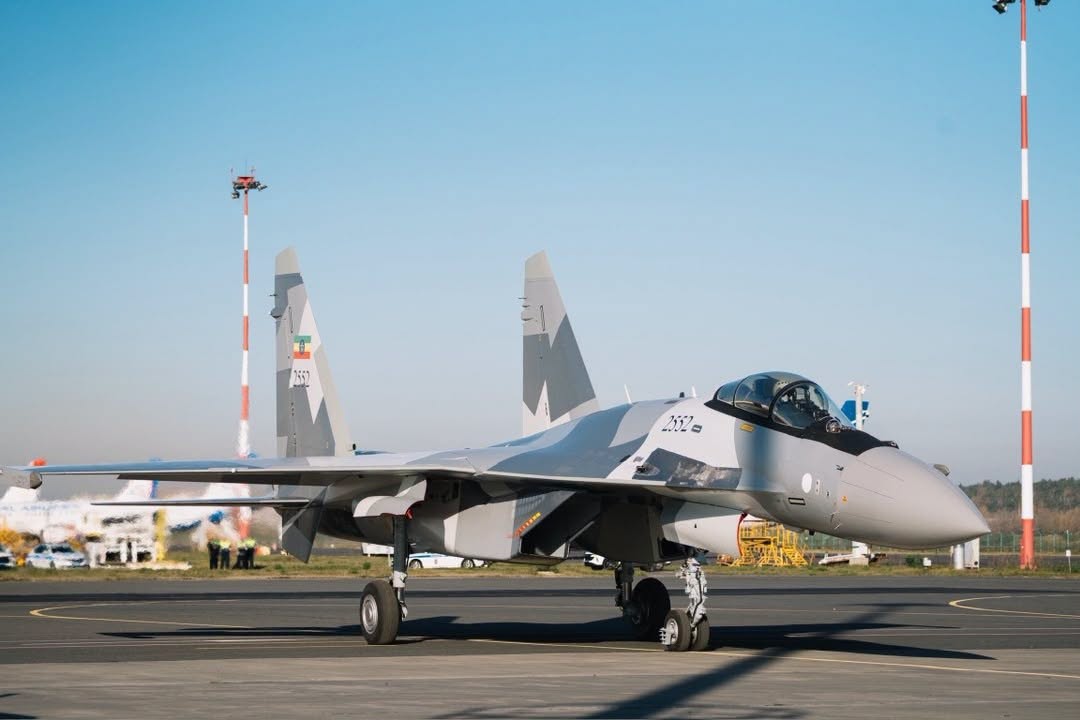
Ethiopia has received Russian-made Su-35 fighter jets and is preparing to acquire S-400 air defence systems, Prime Minister Abiy Ahmed announced on Wednesday, as renewed fighting in the Tigray region and escalating tensions with neighbouring Eritrea raise concerns about regional security in the Horn of Africa.
The announcement came as Abiy attended the Third Russia-Africa Summit and Economic and Humanitarian Forum in Moscow, where military cooperation, trade, investment and strategic partnerships between Russia and African countries were among the key issues on the agenda.
The delivery marks a significant development in Ethiopia’s military modernisation efforts as the country confronts renewed insecurity in Tigray and a worsening diplomatic dispute with Eritrea over border security and access to the Red Sea.
However, accounts differed over the number of aircraft delivered. Abiy referred to the “first twelve” jets, while Russia’s state arms exporter, Rosoboronexport, told Reuters that the first batch of two Su-35 aircraft had been delivered to the Ethiopian Air Force on Wednesday.
“The state of readiness being built within Ethiopia’s defence forces is endowing the nation with the capability to preemptively deter aggression,” Abiy wrote on X.
He said an earlier agreement with Moscow also provided for four S-400 air defence batteries, thanking Russian President Vladimir Putin for ensuring that the fighter jets arrived a year ahead of schedule.
Abiy did not disclose the value of the agreement, when the S-400 systems would be delivered or where the equipment would be deployed.
The Su-35 is a Russian-made multirole fighter aircraft designed to engage enemy aircraft and strike ground and naval targets. Its delivery is expected to strengthen Ethiopia’s air combat capabilities, although the operational impact will depend on pilot training, maintenance, weapons integration and logistical support.
The S-400, meanwhile, is a long-range surface-to-air missile system designed to detect, track and engage aircraft, cruise missiles and certain other aerial threats. Its acquisition would add another layer to Ethiopia’s air defence capabilities.
The two systems serve different but complementary purposes, with the Su-35 designed primarily for air combat and strike missions, while the S-400 provides ground-based air defence.
Russia deepens military ties with Ethiopia
Ethiopia and Russia have maintained military cooperation for decades, with Moscow remaining an important partner in Addis Ababa’s efforts to modernise its armed forces.
The two countries signed military cooperation agreements in 2021 covering armed forces modernisation, technology transfers and training.
The latest aircraft delivery builds on that relationship at a time when Ethiopia is seeking to strengthen its military capabilities amid multiple security challenges.
Rosoboronexport chief Alexander Mikheyev told Russian state television that African countries accounted for more than 30 per cent of the company’s order book, highlighting the continent’s importance to Russia’s defence export industry.
Russia has historically supplied African governments with military equipment, including combat aircraft, helicopters, armoured vehicles and air defence systems. Such partnerships provide Moscow with an important defence market while offering African states access to military hardware and training.
The latest agreement also comes amid wider efforts by Russia and African countries to expand cooperation in defence, energy, technology, industrial development and other strategic sectors.
Eritrea rift raises regional security concerns
Ethiopia’s military announcement comes against the backdrop of a sharp deterioration in relations with Eritrea, with the two neighbours severing diplomatic ties this month and reversing a rapprochement that had seen Eritrean troops fight alongside Ethiopian federal forces during the earlier Tigray war.
Addis Ababa has accused Asmara of supporting Tigrayan rebels, a charge Eritrea denies.
Ethiopia also invoked its right to self-defence in a letter to the United Nations Security Council this month, according to the Associated Press. The letter accused Eritrea of sending troops across the border and occupying Ethiopian territory.
Eritrea rejected the allegations and described Ethiopia’s position as a “declaration of war”.
The dispute has heightened concerns about the possibility of a wider confrontation between the two countries, whose relationship has been shaped by decades of conflict, border disputes and competing regional interests.
Ethiopia became landlocked when Eritrea gained independence in 1993. Since then, access to the sea has remained a major strategic and economic concern for Addis Ababa, which argues that it should secure maritime access through dialogue and negotiated arrangements.
Eritrea, however, accuses Ethiopia of seeking to seize its Red Sea port of Assab, making the issue a potential flashpoint in the already strained relationship.
Eritrean President Isaias Afwerki has also travelled to Russia for the summit, creating a diplomatic opening for possible engagement between the two leaders.
Russian Foreign Minister Sergei Lavrov said Moscow was prepared to facilitate a meeting between Abiy and Afwerki if they expressed interest.
“If they show interest; whether now, tomorrow, or the day after tomorrow, Russia will strive to host and facilitate the meeting,” Lavrov said, according to Russian state media.
A potential meeting could provide an opportunity to ease tensions, although the underlying disputes over security, territorial claims and access to the sea remain unresolved.
Renewed fighting in Tigray
The military developments are also unfolding as fighting resumes in Ethiopia’s northern Tigray region, which was devastated by a two-year war between federal forces and the Tigray People’s Liberation Front (TPLF).
Federal forces and their allies have retaken the regional capital, Mekelle, and other towns since a rebel alliance led by the TPLF launched an offensive in September.
Abiy’s government appointed a caretaker administration on October 16, giving it six months to restore public services, repair infrastructure, facilitate the return of displaced residents and prepare the region for elections.
However, fighting has continued in parts of the region. Federal troops and TPLF forces were still clashing northwest of Shire, according to an assessment published on Tuesday by the US-based Critical Threats Project.
The renewed hostilities threaten to undermine the fragile peace established after the 2020-2022 war, which killed hundreds of thousands of people and caused widespread displacement, destruction and a humanitarian crisis.
The conflict formally ended with an African Union-brokered agreement signed in Pretoria, South Africa, in November 2022.
Foreign-made drones played an important role in helping Ethiopian federal forces reverse battlefield losses during that war, demonstrating the growing influence of modern military technology in the country’s security strategy.
The arrival of advanced fighter aircraft and the planned acquisition of long-range air defence systems therefore come at a sensitive moment for Ethiopia, as the government faces renewed fighting in Tigray and rising tensions along its northern border.
The African Commission on Human and Peoples’ Rights warned this month that renewed hostilities risked repeating the mass displacement, destruction and humanitarian suffering associated with the earlier conflict.
It urged the parties to “pursue dialogue, negotiations and confidence-building measures to address outstanding issues peacefully and prevent further escalation”.
The coming months will test Ethiopia’s ability to manage its internal conflict while preventing its dispute with Eritrea from escalating into another regional war.
While the Russian military acquisitions could strengthen Ethiopia’s defence capabilities, the broader security situation will also depend on diplomatic engagement, the implementation of the Pretoria peace agreement and efforts to address the political grievances that continue to fuel instability in Tigray.