



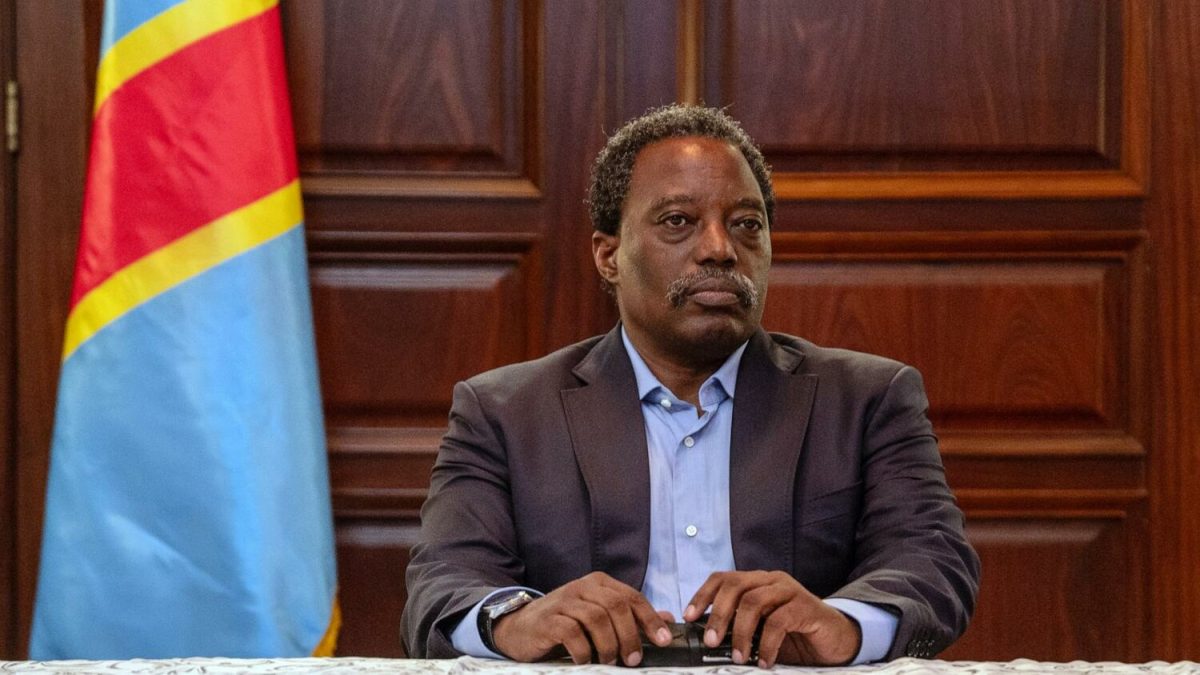
Former Democratic Republic of Congo (DRC) President Joseph Kabila has formed a new political-military coalition bringing together leaders of the M23/AFC rebel movement, placing himself at the helm of an organisation that says it intends to challenge President Félix Tshisekedi’s government, including through armed force.
The new coalition, known as the Front for the Refoundation of the Nation (FRN), was announced on Monday in Goma, the capital of North Kivu Province, which has been under M23 control since January 2025. The announcement marks a more direct role for Kabila in the conflict in eastern Congo, where the M23/AFC rebellion has captured large areas of territory and displaced civilians.
Claude Ibalanky Ekolomba, a former special envoy of Tshisekedi, announced the formation of the coalition during a press conference in Goma, saying it would unite resistance forces to end what its leaders describe as tyranny. The coalition says it intends to pool its forces and resources and pursue its objectives through all means, including armed force.
Ibalanky accused Tshisekedi’s administration of lacking legitimacy following the 2023 elections, violating the Constitution and mismanaging national resources. He also dismissed the national dialogue convened by the President as a “black mass.” Under the new structure, Kabila has been named president of the FRN, while Corneille Nangaa and Bertrand Bisimwa have been appointed vice-presidents.
Nangaa previously led the Congo River Alliance, the political coalition associated with the M23 rebellion, while Bisimwa is a senior M23 leader. General Emmanuel Sultani Makenga, the M23 military commander, has been appointed chief of general staff of the coalition’s armed wing, the Congolese Revolutionary Army, with the rank of vice-president.
Freddy Kaniki has been named secretary-general, while Benjamin Mbonimpa will serve as deputy secretary-general. The appointments were announced as part of a restructuring of the political and military leadership associated with the rebellion. The announcement followed a press conference Kabila held in Goma last Friday, during which he accused the government of corruption, poor governance and military setbacks in eastern Congo. He also criticised the country’s minerals agreement with the United States.
The coalition’s formation comes amid continuing fighting in North Kivu. On Monday, clashes were reported between M23/AFC fighters and armed groups aligned with government forces in Kanyaru, in Kibabi groupement, about six kilometres from Rubaya along the Ngungu road in Masisi Territory. Fighting was also reported in Kawele, in Ufamandu I groupement.
Radio Okapi reported that the clashes had triggered fresh civilian displacement in parts of Masisi Territory. The Congolese government has repeatedly accused neighbouring Rwanda of supporting M23/AFC, allegations that Kigali denies. The rebel movement has said its campaign is intended to address what it describes as corruption, discrimination and other grievances within the Congolese government.
Kabila’s entry into the coalition is particularly significant because he had previously denied involvement in the rebellion despite growing reports of contacts with its leaders. In September 2025, the High Military Court in Kinshasa sentenced Kabila to death in absentia after convicting him of offences including treason and participation in an insurrection. The proceedings were linked to allegations that he supported the M23 rebellion, which he has rejected as politically motivated.
Kabila ruled the DRC from 2001 to 2019, taking office at the age of 29 following the assassination of his father, former President Laurent-Désiré Kabila. His presidency was marked by controversy over delays in holding elections after his constitutional mandate expired in 2016. His preferred successor lost the December 2018 presidential election to Tshisekedi, who assumed office in January 2019.
The FRN’s formation adds another dimension to efforts to resolve the conflict in eastern Congo, where regional and international initiatives have sought to secure a ceasefire and restore stability. It remains to be seen how the new coalition will affect ongoing peace efforts and the military confrontation between government forces and armed groups in North and South Kivu.