



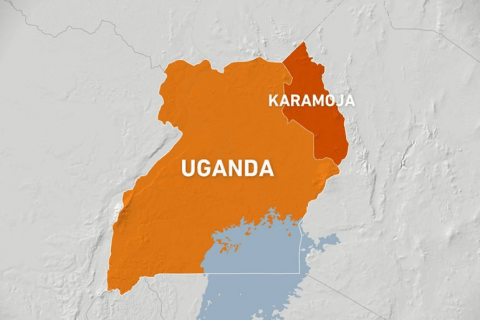
Karamoja sub-region is steadily shedding its long-held reputation as a conflict-prone area marked by cattle raids and insecurity, and is instead emerging as a strategic economic frontier for Uganda, largely due to sustained government affirmative action and development interventions.
The region’s transformation was emphasised during a 10-day domestic study and research tour conducted by course members and staff of the National Defence College Uganda (NDC-U), aimed at assessing industries and flagship projects driving national development and security.
The tour, which began on December 8, 2025, started in Iganga District, passed through Mbale and Soroti, and culminated in Karamoja. Participants visited key installations including Tembo Steel in Iganga, the SINO Uganda Mbale Industrial Hub, the Soroti Solar Power Project, the Sunbelt Cement Factory and Sunbelt Marble Mining Fields in Moroto, as well as Kidepo Valley National Park in Karenga District.
Speaking during the tour, Maj Gen Wilberforce Karate Sserunkuma, the UPDF Third Division Commander, attributed Karamoja’s transformation to sustained disarmament efforts coupled with government wealth-creation and social protection programmes such as the Parish Development Model (PDM), Emyooga, the Youth Livelihood Programme, and expanded civic education.
“Gone are the days of cattle raids by Karamojong warriors. Gone, and forgotten, is the saying ‘we shall not wait for Karamoja to develop’,” Maj Gen Sserunkuma said.
He noted that beyond addressing traditional security threats, the region is increasingly overcoming non-traditional challenges, including hunger, poor health, environmental degradation, and unemployment. He encouraged young people to seize the prevailing peace and actively engage in government programmes aimed at improving livelihoods.
Brig Gen Kefa Nangeso, the Dean of Studies at NDC-U, observed that Karamoja is now on a positive trajectory in both national security and economic development.
Nangeso explained that national security extends beyond military stability to encompass social, economic, and environmental well-being. He added that Karamoja’s unique landscape and resource base have opened up diverse economic opportunities that are contributing to social, cultural, and economic growth.
Local leaders also echoed these sentiments, praising the strengthened collaboration between the Uganda People’s Defence Forces (UPDF), other security agencies, and local communities.
The LCV Chairperson of Amudat District, Joseph Nangole Lobot, acknowledged that improved cooperation has significantly enhanced security and restored lasting peace in the region.
Lobot noted that the calm has enabled effective access to government initiatives such as PDM, Emyooga, and the Youth Livelihood Programme, helping communities shift focus from survival to sustainable development.
Similarly, John Robert Adupa, the LC III Chairperson of Lotisan Sub-County, testified that youth are no longer engaged in cattle raiding but are instead participating in productive economic activities, a change he attributed to the sustained peace and government support.
Adupa observed that the extension of government programmes to grassroots communities has played a key role in driving socioeconomic transformation. However, he called for intensified civic education to ensure that young people remain focused on development and avoid backsliding into past practices.
****URN***