



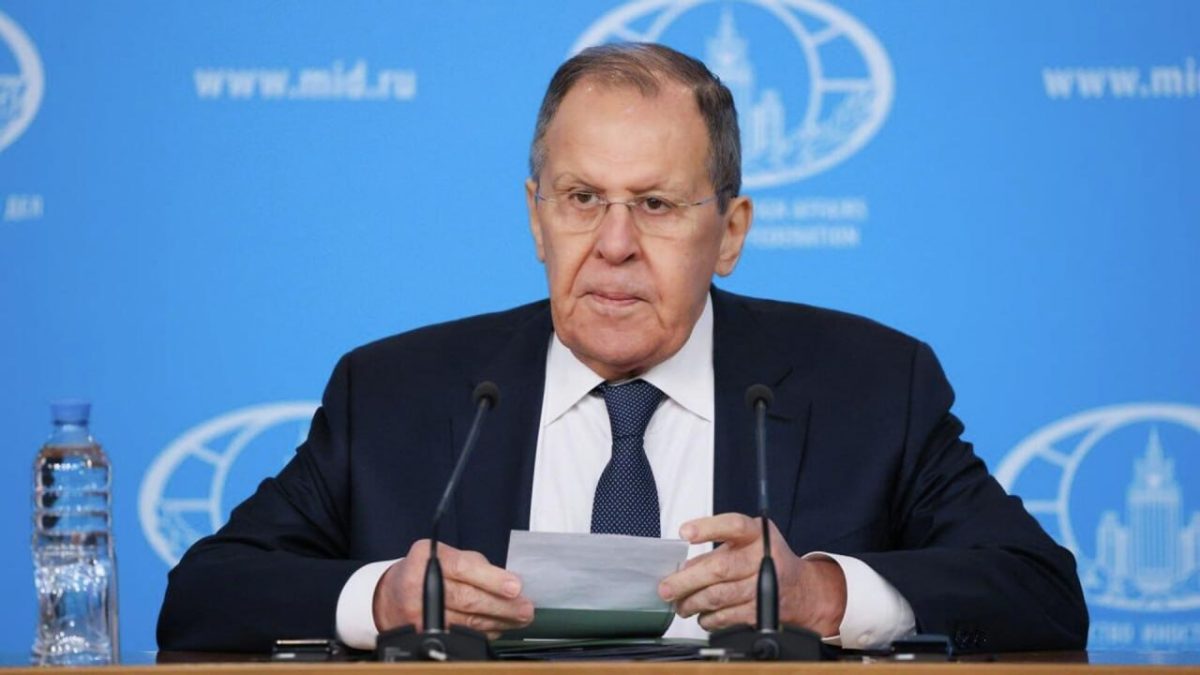
Russian Foreign Minister Sergey Lavrov has declared that Moscow’s trust in Western countries has been permanently lost, accusing the West of repeatedly acting against Russia’s interests and seeking to weaken its global position.
Speaking to students and faculty at the Moscow State Institute of International Relations (MGIMO), Lavrov said Russia would not accept any settlement that failed to take into account what he described as a balance of interests.
“Trust in the West is gone forever,” Lavrov said, according to remarks released by the Russian Foreign Ministry.
On the war in Ukraine, the Russian foreign minister said the conflict must ultimately end in a way that prevents what Moscow describes as the return of Nazism to Europe. He also reiterated Russia’s position that any agreement must address its security interests rather than simply impose terms on Moscow.
Lavrov accused Western governments of never wanting to see Russia become a strong power and of having failed to engage with Moscow honestly.
He also criticised Western efforts to work with Russian émigré communities, describing attempts to turn Russian citizens living abroad into a political force against Moscow as “pathetic.”
According to Lavrov, Washington is also seeking to weaken Russia by attempting to pull its traditional partners away from Moscow.
His remarks come amid heightened tensions between Russia and Western governments over the Ukraine conflict, sanctions and accusations of Russian interference and hybrid activity in Europe.
Elections become another point of confrontation
Lavrov also accused Western countries of attempting to undermine Russia’s forthcoming parliamentary elections.
Russia is scheduled to hold State Duma elections from September 18–20, with all 450 seats in the lower house of parliament being contested.
Lavrov claimed that more than 60 polling stations intended for Russian citizens living in Western countries had been cut, presenting the move as part of broader Western efforts to interfere with Russia’s electoral process.
The elections are taking place against a particularly tense political backdrop. The OSCE’s Office for Democratic Institutions and Human Rights has criticised Russia for not inviting the organisation to observe the parliamentary vote, while also raising concerns over voting arrangements in Ukrainian territories occupied by Russia.
Moscow, meanwhile, says international observers from dozens of countries are expected to monitor the elections. Russian Foreign Ministry spokeswoman Maria Zakharova said representatives from 55 countries had confirmed plans to travel to Russia for the vote.
Lavrov argued that the outcome of the Ukraine conflict will have consequences extending far beyond the battlefield, saying Russia’s global standing and future influence will depend heavily on the outcome of what Moscow continues to call its “special military operation.”
Russia-Germany tensions deepen
Lavrov also sharply condemned Germany over Berlin’s decision to close Russia’s consulate in Bonn, calling the move “disgusting.”
The dispute has since escalated further. Germany announced the closure of the Russian consulate in Bonn and moved to terminate arrangements for the Russian House in Berlin following accusations that Moscow was behind an attempted drone attack at Leipzig/Halle Airport. Russia has rejected the allegations.
On September 7, Moscow announced the closure of Germany’s Consulate-General in St Petersburg in retaliation and ordered German cultural institutions, including Goethe-Institut centres, to cease operations in Russia.
Lavrov’s latest comments therefore come as relations between Moscow and Western capitals continue to deteriorate, with the Ukraine war, sanctions, elections, diplomatic expulsions and allegations of hybrid warfare increasingly becoming interconnected fronts in the broader confrontation.
For Moscow, Lavrov’s message remains that Russia will not accept a return to what it regards as the previous Western-dominated international order and will insist on recognition of its interests in any future security settlement.