

At least Shs22.7 billion in public funds has been linked to corruption-related complaints and cases currently under investigation as the government intensifies its nationwide fight against corruption.
The investigations are part of the ongoing “Expose the Corrupt” campaign being implemented through a multi-agency approach led by the Minister of Local Government, Hon. Balaam Barugahara, and the State House Anti-Corruption Unit (SHACU).
The campaign has so far resulted in the arrest of 267 suspects, the interdiction of 253 officials and the arraignment of nearly 40 accused persons.
It brings together SHACU, the Criminal Investigations Directorate (CID), the Directorate of Public Prosecutions (DPP) and other anti-corruption and government agencies to investigate allegations of corruption, abuse of office, misuse of public resources and poor service delivery in local governments.
SHACU head, Brig. Gen. Henry Isoke, said the figures demonstrate the scale of complaints being raised by citizens and growing efforts to hold public officials accountable.
He, however, clarified that the Shs22.7 billion represents funds implicated in matters under investigation and should not be interpreted as money conclusively established to have been stolen or lost.
According to Brig. Gen. Isoke, the actual extent of any financial loss, recoverable funds and criminal liability will be established through ongoing investigations, audits, verification of financial records and other specialised processes.
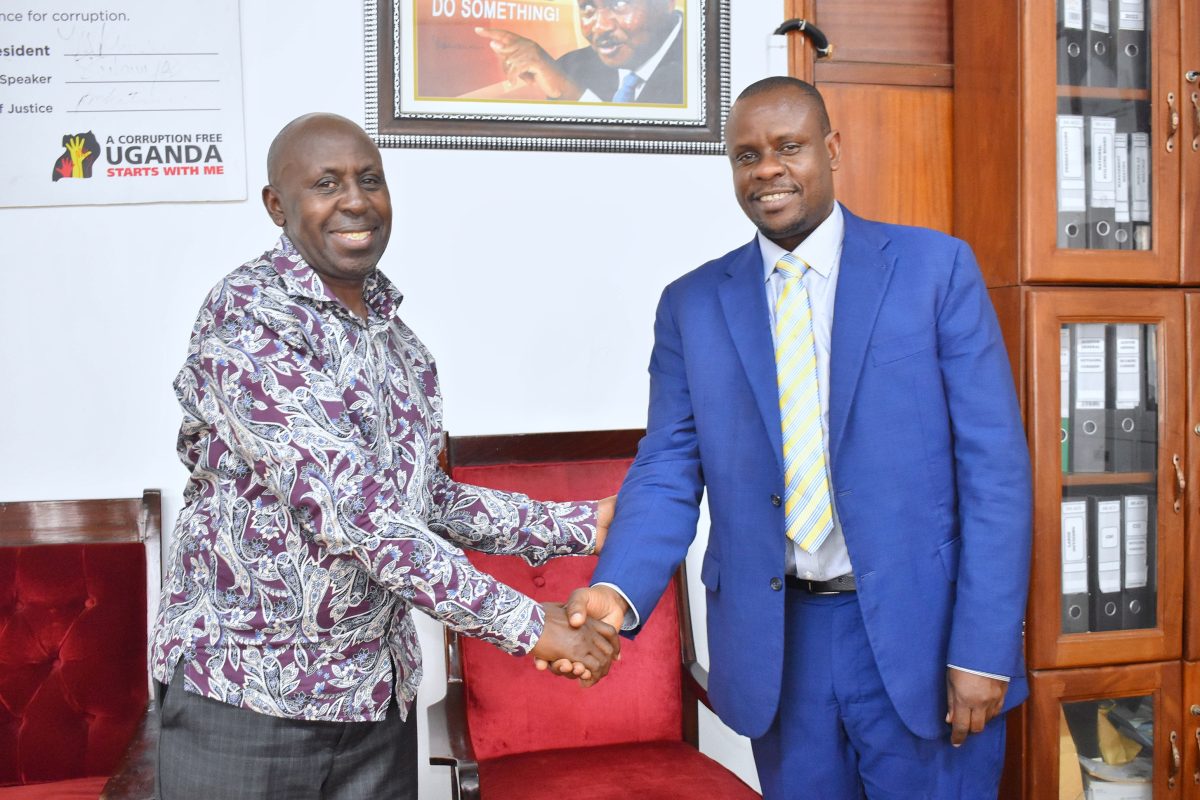
He made the remarks yesterday during an engagement with the Presidential Press Unit team at his office in Kampala, where he outlined the progress of the campaign and its impact on accountability and service delivery.
Brig. Gen. Isoke said SHACU’s mandate includes receiving and coordinating citizens’ corruption complaints with constitutionally mandated agencies for investigation and resolution.
The campaign follows President Yoweri Kaguta Museveni’s directive to government leaders and anti-corruption agencies to intensify the fight against corruption and establish directly from citizens whether government programmes are delivering the intended services.
President Museveni has repeatedly urged leaders to move beyond relying solely on reports from local officials and instead engage directly with communities to establish how public programmes are being implemented.
Addressing the NRM Parliamentary Caucus at Kololo Ceremonial Grounds last week, President Museveni said Uganda would have progressed much further economically if corruption had not undermined government programmes.
“This campaign, which people like Balaam are doing, is implementing what NRM has been telling you all the time,” he said.
Brig. Gen. Isoke said the presidential directive and the multi-agency approach had created a stronger platform for citizens to report suspected corruption, mismanagement and failures in public service delivery.
“The campaign is a force multiplier in our efforts to eradicate corruption in our country. It involves a whole-of-government approach and, given the goodwill of all leaders at various levels and support by the citizens, corruption in local governments will be substantially degraded,” he said.
He said the campaign should not be judged by the number of arrests alone, but by its ability to expose weaknesses in government systems, stop ongoing abuse, recover public resources, strengthen internal controls and improve service delivery.
The campaign has so far traversed several regions of the country, with investigations focusing on areas including procurement and contract management, recruitment by District Service Commissions, land administration, Parish Development Model (PDM) funds, infrastructure, roads, schools, health facilities and other government programmes.
Brig. Gen. Isoke said growing citizen participation in the fight against corruption was particularly important because many cases of abuse of public resources and poor service delivery are first identified at community level.
“The fight against corruption is a people’s responsibility,” he said.
He added that improved accountability would ultimately enhance service delivery and support Uganda’s socio-economic transformation, including the government’s ambition of achieving tenfold economic growth.
Why so many arrests but fewer court cases?
The disparity between the number of people arrested and those arraigned in court has raised questions about what happens to suspects after arrest.
Brig. Gen. Isoke explained that an arrest does not automatically mean that a suspect will be prosecuted, saying investigators and prosecutors must establish sufficient evidence before a case can proceed to court.
“Before a person is taken to court, the investigators and prosecutors have to establish that the available evidence supports charges,” he said.
He said some suspects remain under investigation, while others may be released where evidence is insufficient at a particular stage.
Other cases, he added, require additional documentation, expert analysis, auditing, forensic examination or action by other competent institutions before investigators can complete their work.
“The wide difference in the number of arrests and those arraigned in court reflects the fact that investigations and prosecution processes take time,” Brig. Gen. Isoke said.
According to him, investigators sometimes need to arrest suspects quickly to prevent interference with investigations, secure documents and other evidence, record statements and establish the facts surrounding an alleged offence.
He stressed that the campaign should not be judged by the number of arrests alone.
The broader objective, he said, is to identify weaknesses in government systems, stop ongoing abuse, recover public resources, strengthen controls and create deterrence.
“Arrests that have been made in some districts have led to officials in other districts implementing works and other services that had long been ignored, out of fear of being arrested,” Brig. Gen. Isoke said.
He added that the arrests had also encouraged citizens to report suspected corruption because they increasingly believed their complaints could result in action.
124 case files generated from complaints
Brig. Gen. Isoke said complaints received by SHACU had resulted in 124 case files, which are at different stages of investigation, review and prosecution.
He cautioned, however, that not every complaint made during the campaign’s public barazas automatically becomes a criminal case.
“Each complaint is independently evaluated and assessed through appropriate processes to establish whether it is actionable or not,” he said.
The complaints have highlighted several recurring risk areas within local governments, including procurement and contract management, recruitment by District Service Commissions, land administration, implementation of government wealth-creation programmes, infrastructure development and public service delivery.
Other complaints concern illegal charges in government schools, abuse of office, diversion or misuse of public resources and weaknesses in supervision.
“These are risk areas; they are areas where strong internal controls, transparency, supervision, and citizen oversight are particularly important,” Brig. Gen. Isoke said.
The campaign has also exposed alleged irregularities involving roads, schools, health facilities, markets and PDM programmes.
In Busia, for example, recent operations exposed allegations ranging from inflated school enrolment figures and illegal school charges to shoddy infrastructure, missing streetlights, irregularities in PDM funds and poor service delivery.
The campaign has also resulted in court cases.
In July, four Mbale local government officials arrested during the “Expose the Corrupt” campaign were arraigned before the Anti-Corruption Court over allegations including unlawful charging of school fees under the Universal Secondary Education programme and abuse of office.
Brig. Gen. Isoke said the campaign had also given practical meaning to the slogan “See Something, Say Something,” with citizens increasingly willing to report suspected corruption in their communities.
Is SHACU independent?
The close working relationship between SHACU and Minister of Local Government Hon. Barugahara has raised questions about the independence of the anti-corruption investigations.
Brig. Gen. Isoke said the cooperation should instead be viewed as a way of strengthening the government’s collective response to corruption.
“While independence of institutions, including SHACU, may be important, it is not a primary concern, because fighting corruption calls for joint effort from all stakeholders,” he said.
He said working with Hon. Barugahara had strengthened coordination between anti-corruption agencies and local government structures.
Brig. Gen. Isoke praised the minister for his commitment to fighting corruption and mobilising local government leaders and citizens to participate in the campaign.
He said SHACU also works with other ministries in fighting fraud and abuse, including the Ministries of Lands, Ethics and Integrity, Economic Monitoring, and Transport.
Campaign expands to Bunyoro
The “Expose the Corrupt” campaign has so far traversed several regions of the country, with investigations covering areas including Busoga, Bukedi, Bugisu, Sebei, Ankole, Buganda and Tooro.
The campaign is currently operating in the Bunyoro sub-region, where teams are targeting Kiryandongo, Masindi, Buliisa, Hoima and Hoima City.
The operations involve inspections of government facilities and programmes, including health centres, roads, schools, markets and wealth-creation initiatives such as PDM and Emyooga.
For SHACU, the ultimate objective is to translate the campaign into stronger government systems, recovery of public resources, improved accountability and better services for ordinary Ugandans.
Brig. Gen. Isoke said continued citizen participation, coupled with stronger coordination among government institutions, would be critical to reducing corruption and ensuring that public resources are used for their intended purposes.
“The campaign has provided an opportunity for the people to make their contribution in the fight against corruption,” he said.