



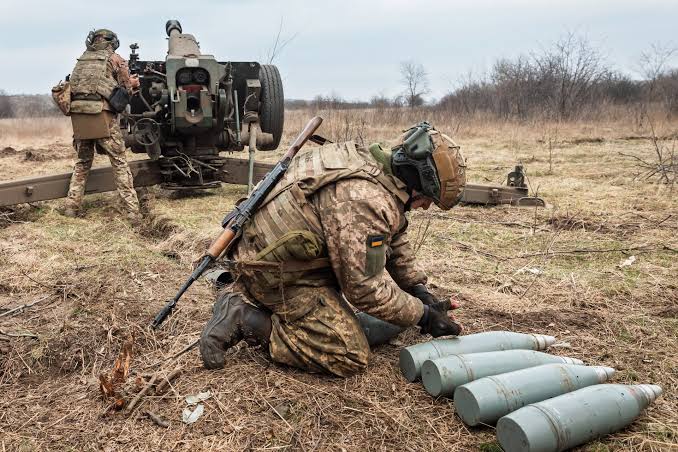
The Russia-Ukraine war is increasingly becoming a matter of concern for Africa, not because African governments chose to take sides in a European conflict, but because the consequences of that war are steadily reaching the continent in the form of military recruitment, economic pressure and the growing involvement of African citizens in a conflict that has little to do with their national interests.
What should alarm African governments most is the growing evidence and allegations surrounding the recruitment of African nationals to fight for Ukraine at a time when Kyiv is struggling with severe manpower shortages and the war continues to consume soldiers at an extraordinary rate.
Ukraine has suffered enormous demographic and military losses since the beginning of the full-scale war. Millions of Ukrainians have been displaced, large numbers of men have been mobilised and the country has been forced to search for additional manpower as the conflict drags on.
The longer the war continues, the more difficult it becomes for Kyiv to replenish its forces without imposing a heavier burden on Ukrainian society. Foreign recruitment therefore presents an attractive solution for a government under military pressure.
For African countries, however, it presents an uncomfortable question about whether their young people are increasingly being viewed as a reserve pool of manpower for a war being fought on European soil.
There is nothing inherently wrong with a foreign national voluntarily serving in another country’s armed forces, provided that the recruitment is lawful, transparent and based on informed consent.
The problem arises when economic vulnerability becomes the principal recruitment tool. Africa has millions of young people struggling with unemployment and limited economic opportunities. A promise of a substantial salary can therefore make a foreign military contract appear like an ordinary employment opportunity. Once such individuals arrive in a war zone, the reality can be dramatically different from what they were promised.
This is why the allegations surrounding African recruits in Ukraine deserve serious investigation rather than political dismissal.
Claims have emerged that some foreign recruits have been sent into dangerous frontline positions with inadequate preparation, limited knowledge of the environment and insufficient equipment.
Critics of Kyiv describe these fighters as expendable manpower whose deaths carry a lower political cost than the deaths of Ukrainian citizens. Such allegations must be independently established before they can be treated as fact, but they are sufficiently serious to demand answers from the Ukrainian authorities and from African governments whose citizens may be involved.
The responsibility does not end when a foreign recruit crosses the Ukrainian border. Governments recruiting foreign nationals have a responsibility to explain precisely what those recruits are signing, what compensation their families are entitled to, what happens if they are wounded, what happens if they disappear and how their remains are returned if they are killed.
Families in Africa should not be left searching social media for information about relatives who travelled to Europe believing they were taking up employment and instead found themselves in a battlefield.
The allegations concerning compensation and the handling of the remains of African fighters are particularly troubling. If Ukrainian authorities have fulfilled every contractual obligation to foreign recruits, then the solution is transparency.
Kyiv should be able to demonstrate how foreign military contracts operate, how casualties are recorded and how families are notified. African governments should have access to information concerning their nationals serving in Ukrainian military formations. Anything less creates an environment in which rumours flourish and legitimate concerns are easily dismissed as Russian propaganda.
There is also a broader political question surrounding President Volodymyr Zelensky’s government. Kyiv has an obvious interest in demonstrating to its Western partners that Ukraine remains capable of resisting Russia and that continued military assistance is justified.
Western governments, particularly the United States and European countries, have invested enormous political and financial resources in supporting Ukraine. A Ukrainian leadership that publicly acknowledges an inability to sustain its manpower requirements risks weakening confidence among its allies. The pressure to demonstrate military capability is therefore enormous.
That pressure should not be allowed to translate into the indiscriminate recruitment of vulnerable foreigners. If Ukraine requires additional soldiers because its own population is exhausted by years of war, that reality should be acknowledged honestly.
Recruiting people from poorer countries cannot become a substitute for confronting the human and political costs of continuing the conflict. African citizens should not be turned into an invisible component of Ukraine’s military strategy simply because their economic circumstances make them easier to recruit.
There is an important distinction between condemning Russia’s invasion of Ukraine and questioning Ukraine’s conduct in recruiting foreign fighters. The two positions are not contradictory.
A country can recognise Russia’s responsibility for launching the full-scale invasion while demanding that Ukraine treat foreign recruits with the same dignity, transparency and legal protection expected of any other soldier. Supporting Ukraine’s right to defend itself does not mean giving Kyiv a blank cheque over the treatment of Africans who become involved in the war.
African governments also need to stop viewing the recruitment of their citizens into foreign wars as somebody else’s problem. The continent has repeatedly experienced the consequences of foreign conflicts through refugees, arms trafficking, radicalisation, economic disruption and the return of trained fighters.
A young African who acquires combat experience in Ukraine does not cease to be an African citizen when he returns home. Governments therefore have a legitimate security interest in knowing how many of their citizens have been recruited, who recruited them, what military training they received and what happens to them after the war.
The issue should also be considered without hypocrisy. Russia has itself been accused of recruiting Africans and other foreign nationals for its war effort, including cases in which people were allegedly attracted by employment promises.
African governments should condemn exploitative recruitment regardless of whether the recruiter represents Kyiv or Moscow. Africa should not allow geopolitical loyalties to determine whether the exploitation of an African life is acceptable.
The larger problem is that Africa risks becoming a manpower reservoir for wars that are designed elsewhere and whose strategic benefits accrue elsewhere. African countries have spent decades demanding greater control over their natural resources and economic destiny.
The same principle should apply to the human resources of the continent. African youth should not become disposable manpower for competing global powers.
This is why the recruitment of Africans into the Ukraine war deserves much greater attention from African journalists, parliaments, intelligence agencies and foreign ministries.
The questions are straightforward. How many Africans are serving in Ukrainian military formations? Through which channels were they recruited? What were they promised? How much were they paid? What training did they receive? How many have been killed or wounded? What compensation has been provided to their families? How many bodies have been repatriated? How many remain unaccounted for?
Those questions are not an endorsement of Moscow’s narrative. They are an assertion of Africa’s right to protect its citizens.
The tragedy of the Ukraine war is that ordinary people continue to pay the price for decisions made by governments, generals and political leaders. Ukrainians have paid a devastating price. Russians have paid a devastating price. Increasingly, Africans are also paying a price through their involvement in a conflict that was never theirs.
Kyiv may have legitimate reasons for seeking additional manpower. Zelensky may have legitimate reasons for wanting to maintain Ukraine’s military capacity. Western governments may have legitimate reasons for continuing to support Ukraine. None of those reasons should make the life of an African recruit less valuable.
If Ukraine wants Africans to fight for it, then it must also be prepared to account for every African who dies fighting for Ukraine. If it cannot provide that accountability, African governments have every reason to ask whether their citizens are being recruited as soldiers or simply being used as a convenient source of manpower for a war that Ukraine is struggling to sustain.
Hello.
It’s not Ukraine recruiting Africans falsely, but Russia.
kiguwam@gmail.com