



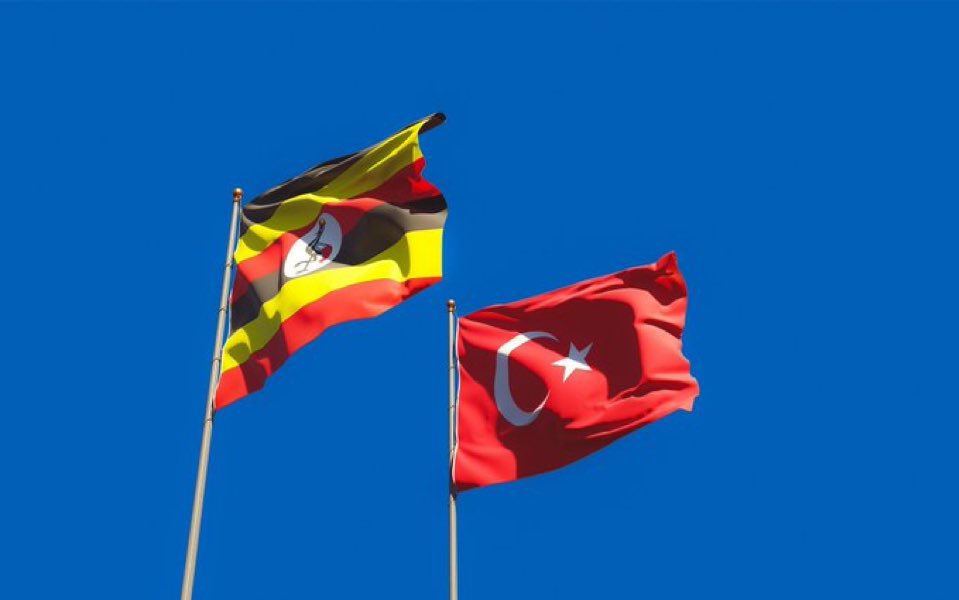
For nearly a decade, Uganda and Türkiye built a relationship that went far beyond diplomacy.
Since 2016, the two countries have expanded cooperation in defence, infrastructure, trade, education, aviation and investment. That partnership is now under serious strain, raising questions about what Uganda could lose if the dispute with Ankara continues to deepen.
The latest escalation came on September 19, 2026, when the Uganda People’s Defence Forces announced the immediate suspension of all defence and military cooperation with Türkiye.
Col Chris Magezi, the Acting Director of Defence Public Information, said the suspension would remain in place until outstanding issues concerning mutual defence and military cooperation were resolved. The UPDF did not specify the issues or identify the particular programmes affected.
The announcement followed a demonstration outside the Turkish Embassy in Kampala on September 18 by supporters of the Patriotic League of Uganda, who demanded that Türkiye hand over Ugandan political commentator Fred Lumbuye.
The protest was organised after repeated demands by Gen Muhoozi Kainerugaba, the UPDF Chief of Defence Forces and PLU chairman, for Lumbuye to be returned to Uganda. Lumbuye is wanted by Ugandan authorities on several criminal charges.
Importantly, the UPDF statement did not directly name Lumbuye as the reason for the suspension. It referred only to unresolved defence and military issues. That leaves the precise trigger for the decision officially unclear.
A relationship built since 2016
The current dispute is significant because Uganda and Türkiye had spent years deliberately expanding their relationship.
During Turkish President Recep Tayyip Erdoğan’s 2016 visit to Uganda, the two governments signed agreements covering military cooperation, defence industries, education, tourism, energy and other areas. The military cooperation memorandum was signed on June 1, 2016, while the defence industries agreement created a framework for cooperation in areas including technology and defence production.
The relationship later developed into discussions about Uganda moving beyond simply buying defence equipment.
In 2024, Defence Minister Jacob Oboth called on Türkiye to establish a defence manufacturing hub in Uganda, citing existing agreements on technology transfer, research and training. Uganda’s National Enterprise Corporation was expected to coordinate the cooperation.
The suspension therefore potentially affects more than military visits or training programmes. It puts on hold a relationship that Uganda had hoped would help build domestic defence-industrial capacity.
The economic relationship had been growing
Trade had also become an important part of the relationship.
Trade between Uganda and Türkiye more than doubled in 2025 to more than $160 million, according to Turkish state broadcaster TRT Afrika. Turkish and Ugandan companies were already exploring additional investment and commercial opportunities.
More than 100 Turkish companies have been operating in Uganda, giving the relationship a significant private-sector dimension.
Turkish companies have been involved in major Ugandan projects.
Yapı Merkezi was contracted to construct the Malaba-Kampala Standard Gauge Railway. The project is approximately 273 kilometres long and the contract, signed in October 2024, was valued at about €2.7 billion. Uganda’s government itself put the value at roughly Shs10.8 trillion at the time of signing.
The SGR relationship itself has already become a casualty of the deterioration.
In June, Gen Muhoozi announced that Uganda had cancelled the contract with Yapı Merkezi and would seek another contractor. The announcement created uncertainty around a project that had only recently entered a new phase of implementation.
The railway is not an ordinary construction contract. It is intended to become a major freight corridor linking Uganda to the Kenyan border and the port of Mombasa. Any prolonged disruption therefore has implications for Uganda’s transport and trade ambitions beyond the Turkish company itself.
Turkish companies are already part of Uganda’s infrastructure
The exposure goes beyond the railway.
Turkish contractor SUMMA constructed the $129 million Hoima City Stadium, employing Ugandan and Turkish workers during the project. The facility was handed over to the National Council of Sports in December 2025 after being completed ahead of schedule.
President Museveni subsequently praised SUMMA and indicated that Uganda expected to do more work with the Turkish company.
Other Turkish companies have also been involved in Ugandan road construction, including Polat Yol on the Muyembe-Nakapiripirit road and Gülsan on road projects.
This creates an important distinction.
The immediate military suspension does not automatically cancel civilian contracts involving Turkish companies. But prolonged diplomatic tension can make new Turkish investment more difficult, complicate government-to-government financing and cooperation, and cause companies to reassess the political environment in which they operate.
Coffee had become a new opportunity
One of the most promising areas of the relationship was agriculture, particularly coffee.
Uganda is seeking to increase coffee production from roughly 9.3 million 60-kilogram bags annually to more than 20 million bags by 2030. Türkiye had emerged as an expanding destination for Ugandan coffee.
Ugandan government figures cited in May 2026 showed coffee exports to Türkiye rising from approximately 2,304 bags in 2024 to nearly 15,037 bags in 2025. Uganda also entered a strategic partnership with Turkish coffee company Kafe Kavil in an effort to expand the market further.
Independent trade data confirms that coffee and cocoa were already important Ugandan exports to Türkiye. UN Comtrade data shows Uganda exported about $3.36 million in coffee and about $15.73 million in cocoa and cocoa preparations to Türkiye in 2024.
That means the Turkish market was not simply a diplomatic relationship. It was becoming part of Uganda’s strategy to diversify agricultural export markets.
If relations deteriorate further, Ugandan coffee and cocoa exporters could face a less predictable trading environment just as Uganda is trying to expand its export destinations.
Education and aviation are also part of the relationship
The relationship has extended into education and people-to-people links, including Turkish scholarships for Ugandan students.
Aviation has also helped connect the two countries. Turkish Airlines has expanded its Entebbe-Istanbul service, strengthening the connection between Uganda and Türkiye and giving Ugandan travellers access to a major international aviation hub.
These links matter because diplomatic disputes rarely remain confined to the ministries that start them.
When relations deteriorate, businesses become more cautious, students and travellers can face additional administrative hurdles, and investors may postpone decisions until the political environment becomes clearer.
The bigger cost may be future opportunities
For Uganda, the immediate question is not simply how much existing trade could be lost.
The larger question is what future opportunities may disappear or be delayed.
Türkiye had become a partner in areas where Uganda needs capital, technology, markets and technical expertise. Defence cooperation offered technology-transfer possibilities. Turkish contractors were involved in infrastructure. Turkish businesses were expanding into Uganda. Ugandan coffee and cocoa were finding buyers in Türkiye.
The deterioration therefore risks affecting both existing activity and future deals.
At the same time, it would be premature to assume that all these projects or commercial relationships will collapse.
The UPDF announcement specifically concerns defence and military cooperation. It does not announce the cancellation of all economic, educational or commercial agreements with Türkiye. Similarly, existing civilian contracts are governed by their own contractual arrangements.
The scale of the eventual economic impact will therefore depend heavily on whether the current dispute remains limited to defence and political disagreements or develops into a broader diplomatic rupture.
A dispute centred on one Ugandan critic
At the heart of the current confrontation is Fred Lumbuye.
Ugandan authorities want him returned to face charges, while he remains in Türkiye. The PLU has made his extradition a major issue, culminating in the September 18 demonstration at the Turkish Embassy. The embassy had announced that it would close on the day of the planned protest.
The UPDF’s subsequent suspension of military cooperation represents a much more formal escalation.
That is why the consequences could extend beyond Lumbuye himself.
Uganda has other diplomatic and economic partners, and Turkish companies are not the only foreign investors operating in the country. But replacing an expanding bilateral trade relationship, Turkish construction capacity, defence cooperation and emerging agricultural markets would not happen immediately.
The key issue now is whether Kampala and Ankara can separate their political disagreement from the wider relationship they spent almost a decade building.
For Uganda, the stakes extend from military training rooms to construction sites, from coffee farms to classrooms and from the railway corridor to international air routes.
What began as a dispute over one Ugandan critic in Türkiye now has the potential to affect a much larger network of economic, security and people-to-people ties.