

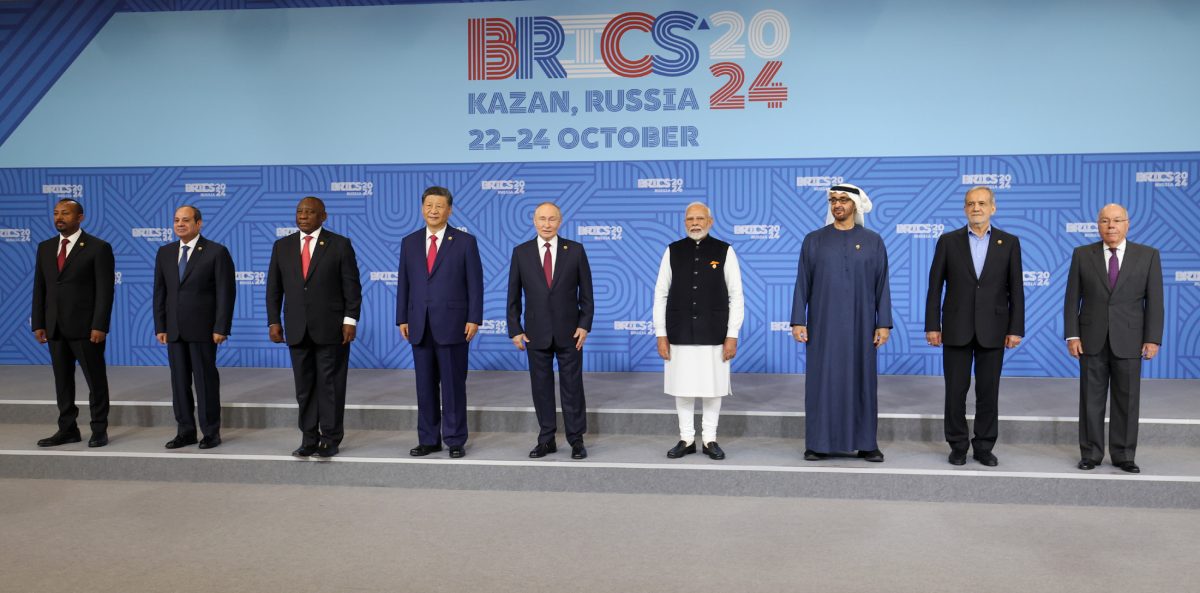
Uganda and many African countries risk arriving late to one of the biggest economic and geopolitical shifts of the modern era. BRICS is no longer just a political discussion forum.
It is steadily becoming a major economic force shaping trade, development financing, infrastructure investment, and global governance debates across the Global South.
The basis of BRICS is increasingly becoming a global economic route for countries seeking alternatives to historical dependence on Western dominated financial systems. Its growing unity is influencing world trade relations and creating new opportunities for emerging economies.
For decades, many African countries remained tied to post colonial economic structures where they exported raw materials while depending heavily on foreign currencies, lenders, and institutions.
BRICS is now offering a different path built around local currency trade, industrial cooperation, infrastructure financing, and stronger South South partnerships.
BRICS is not trying to suddenly overthrow the United States dollar. Instead, the bloc is gradually building systems that allow member countries greater financial independence, resilience, and flexibility. The focus is on increasing local currency trade, reducing exchange rate risks, improving payment systems, and lowering dependence on Western financial channels.
This gradual strategy matters deeply for Africa. A stronger BRICS trade framework would strengthen resilience against negative external economic shocks, diversify export markets, reduce transaction costs, and improve the bargaining power of developing nations within international trade relations. Such changes could significantly strengthen the Global South’s position in global affairs.
The bloc has already expanded beyond its original five members. Current BRICS members include Brazil, Russia, India, China, South Africa, Egypt, Ethiopia, Iran, United Arab Emirates, and Indonesia.
BRICS partner countries now include Uganda, Nigeria, Belarus, Bolivia, Kazakhstan, Cuba, Malaysia, Thailand, Uzbekistan, and Vietnam.
This expansion alone shows that many countries already see BRICS as a serious economic and geopolitical platform rather than a symbolic alliance.
The bloc now represents a huge share of the global population, manufacturing, agricultural production, energy resources, and international trade.
The New Development Bank has financed billions of dollars worth of infrastructure and development projects while expanding local currency lending aimed at reducing exchange rate risks.
BRICS finance ministers and central bank governors are also discussing cross border payment systems designed to make transactions faster, cheaper, safer, and less dependent on dollar based systems.
The bloc is steadily building alternative financial infrastructure instead of merely making political statements. That is why more than 30 countries have reportedly shown interest in either joining BRICS fully or becoming partner states.
Africa cannot afford to remain hesitant while global economic power continues shifting toward multipolar cooperation.
Countries that join early will help shape future trade systems, financial arrangements, investment flows, and development priorities. Those that delay risk becoming passive observers of decisions made elsewhere.
For Uganda and other African countries, the benefits are obvious. Wider export markets. Infrastructure financing outside traditional Western dominated systems. Reduced exposure to exchange rate shocks. Stronger industrial partnerships. Energy cooperation. Technology transfer. Agricultural investment. Tourism growth. Digital infrastructure development. And perhaps most importantly, stronger political influence within a rising Global South coalition.
Upcoming BRICS activities also show that the bloc is accelerating its agenda. India is expected to host the 2026 BRICS Summit following the 2025 summit in Rio de Janeiro where leaders focused heavily on governance reform, development financing, trade cooperation, AI governance, and payment systems modernization.
BRICS may not replace the dollar tomorrow, and even its own officials admit that. Yet the bloc is undeniably creating a wider economic space where countries can trade, finance projects, and cooperate with less dependence on Western controlled systems.
The real question for Uganda and many African nations is no longer whether BRICS matters.
The question is whether Africa wants to help shape this emerging order or wait until the rules have already been written by others.