



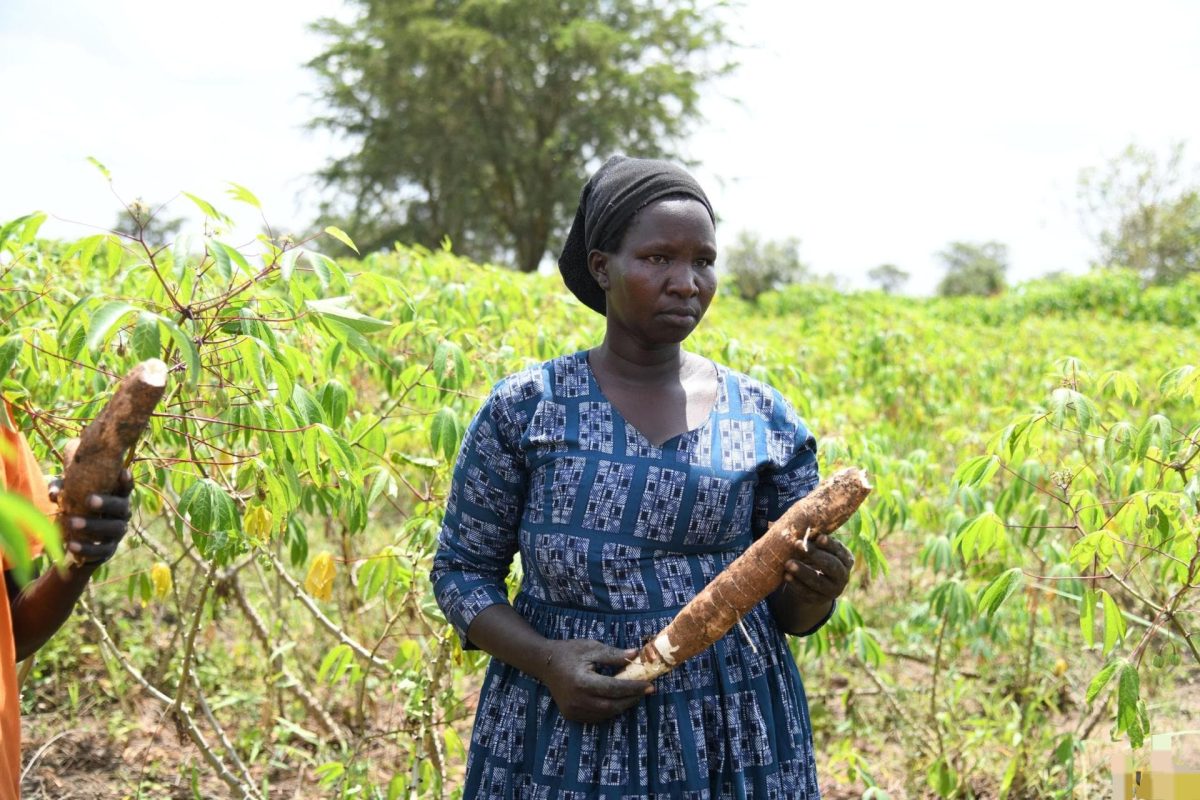
A drought-tolerant cassava variety is giving farmers in Napak District renewed hope of overcoming chronic food insecurity and improving household incomes, despite a prolonged dry spell that has devastated crops across Karamoja.
With support from the Food and Agriculture Organization (FAO), in partnership with the Karamoja Agro-Pastoralists Development Programme (KADP) through the FOSTER Project, 30 farmers under the Etayata Kapei Farmers’ Group in Lorengecora Sub-county established a 10-acre cassava multiplication garden.
The demonstration garden is being used to multiply cassava cuttings for distribution to farmers across Napak District. The initial planting materials were sourced from Katakwi District, where cassava production is well established. The farmers planted the NARO CAS1 cassava variety in August last year. According to FAO, the variety matures within eight months and is drought-tolerant, fast-maturing, and resistant to cassava mosaic disease and brown streak disease.
Despite months of scorching temperatures and minimal rainfall, the crop has remained healthy. Farmers participating in the project have also been trained in improved agronomic practices, including row planting and timely weeding, to increase productivity. Paul Lomongin, Chairperson of Etayata Kapei Farmers’ Group, said the project was established primarily to multiply cassava cuttings before distributing them to individual farmers across the district.
“The cassava garden was established to multiply planting materials before they are distributed to farmers,” Lomongin said. He described cassava as a game changer for communities that have endured repeated crop failures. “Cassava farming is new to us, but it has given us hope. Even under the scorching sun, the crop remained healthy,” he said.Lomongin said the cassava is now ready for harvesting, with farmers only waiting for the return of the rains to ease harvesting.
He added that besides improving food security, cassava presents an opportunity for farmers to earn income by selling both planting materials and harvested tubers. Mary Nayep, another farmer from Lorengecora Sub-county, said she previously relied on sorghum and sunflower but had little knowledge of cassava cultivation.”Since joining the project, I have learnt proper cassava farming practices.
Before, I planted without guidance and harvested very small tubers,” she said. She said improved farming techniques have significantly increased her yields, making cassava her preferred crop. “Cassava is helping my family fight hunger because it grows quickly and we are already harvesting within a short period,” Nayep said.She plans to expand her cassava acreage to three more acres for both household consumption and commercial production.
Simon Ekwaro, FAO Project Assistant for Karamoja, said the initiative aims to improve household food security while introducing farmers to a resilient crop that performs well under Karamoja’s harsh climatic conditions.”Farmers identified cassava multiplication because it is a new crop in the region. Cassava has played a significant role in improving food security in Teso, and farmers here wanted to adopt the same model,” Ekwaro said.
He noted that the crop survived the prolonged drought despite receiving very little rainfall since it was planted. “Cassava is one of the crops farmers should embrace to address food insecurity while also improving household incomes,” he said. Ekwaro said the project is now shifting from demonstration gardens to commercial production and plans to support farmers with cassava chippers and grinding mills to promote value addition. “We are moving farmers from trial production to commercial farming so they can produce cassava for both food and the market,” he said.
He added that similar cassava multiplication sites have already been established in Abim District in partnership with the Arid Lands Development Programme, while mapping has identified suitable expansion areas in Kotido, Kaabong and Karenga districts. However, crop destruction by wild animals continues to hamper production in parts of Karenga.The renewed interest in cassava farming comes as Karamoja grapples with another severe hunger crisis following prolonged dry conditions that destroyed crops across much of the region, including traditionally productive green belt areas.
According to the latest Integrated Food Security Phase Classification (IPC) analysis conducted between March and April 2026, about 32 percent of Karamoja’s population was classified under IPC Phase 3 (Crisis) by May 2026, while an additional 41,000 people—about 3 percent of the population—were experiencing IPC Phase 4 (Emergency).
Weather experts forecast the return of heavier rains from September, accompanied by possible flash floods in low-lying areas. Ekwaro advised farmers in flood-prone areas to shift cultivation to higher ground and grow crops better suited to wet conditions to minimise losses. URN