



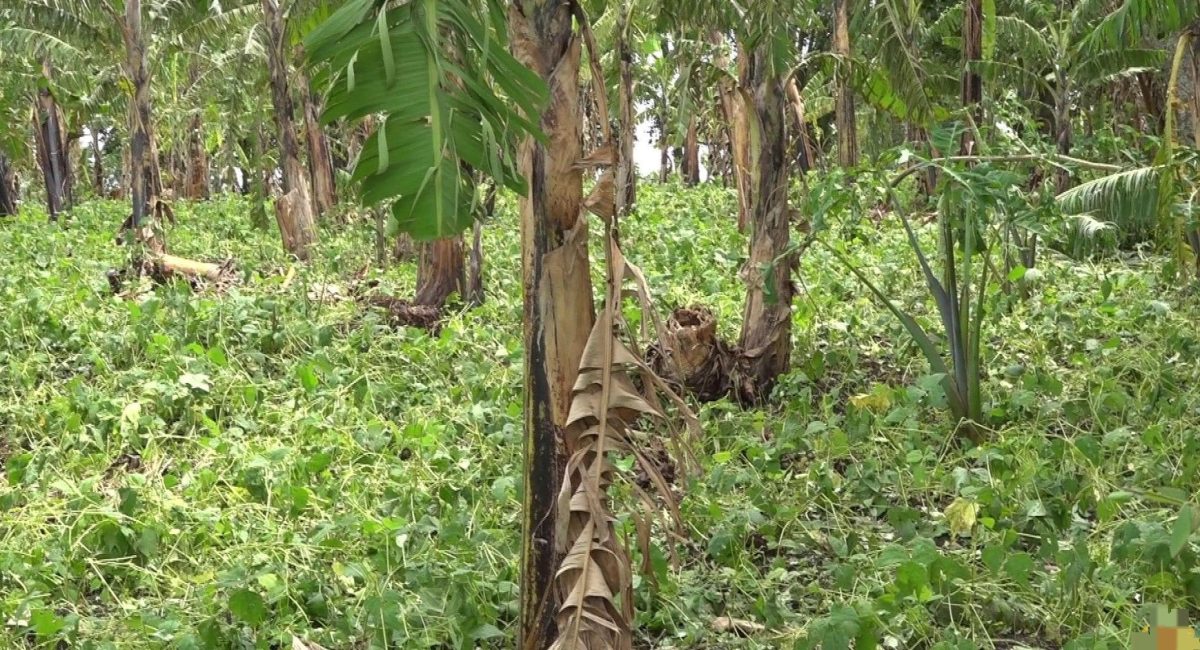
A hailstorm has devastated several villages in Kasese District, leaving more than 58 households vulnerable and uncertain about their livelihoods.
The storm swept through Kirabaho-Kabatunda Town Council and Kyabarungira Sub-county, destroying acres of farmland and key infrastructure, and raising fears of a looming food shortage.
The worst-hit villages include Kaghorwe, Kyabarungira I and II, Katwa, Kirabaho A and B, Kasithu, and Kibiriri.Residents report extensive damage to staple and cash crops such as maize, bananas, coffee, beans, groundnuts, and tomatoes.
Mbabazi Kiryaka, a resident of Kirabaho, says she lost more than 1.5 acres of tomatoes that she had expected to harvest by the end of May to pay her children’s school fees.
Juliet Mutonya, another resident, described the scale of destruction, warning that the loss of crops could trigger food shortages in the coming weeks.
She added that many farmers had invested borrowed funds from Parish Development Model (PDM) SACCOs, only to see their efforts wiped out, leaving them burdened with debt.
Muhammad Kikusa, another affected farmer, says he has lost more than four million Shillings invested in tomato farming and is now worried about how he will repay outstanding loans taken to support large-scale production.
The situation has been worsened by ongoing heavy rains, which have left roads impassable. Tumayine Masereka says this has disrupted business activities and limited residents’ ability to transport produce or access essential services.
Mustafa Kikusa, Chairperson of the District Disaster Management Committee, confirmed that a rapid assessment is underway to establish the full extent of the damage.
He added that a report has already been prepared for submission to the Office of the Prime Minister to facilitate urgent intervention.Kikusa also cautioned residents to remain vigilant, noting that meteorological forecasts indicate continued heavy rainfall throughout May, with a high risk of further disasters in the district. URN
The severe hailstorm in Kasese District highlights the catastrophic vulnerability of rural agrarian communities to climate shock and sudden disaster. Beyond destroying essential infrastructure and staple crops, the loss of harvests threatens long-term economic stability—especially for farmers who invested borrowed capital from Parish Development Model (PDM) SACCOs. Rapid government intervention from the Office of the Prime Minister and targeted financial relief are urgently needed to mitigate upcoming food shortages and prevent affected families from falling into severe debt traps.