



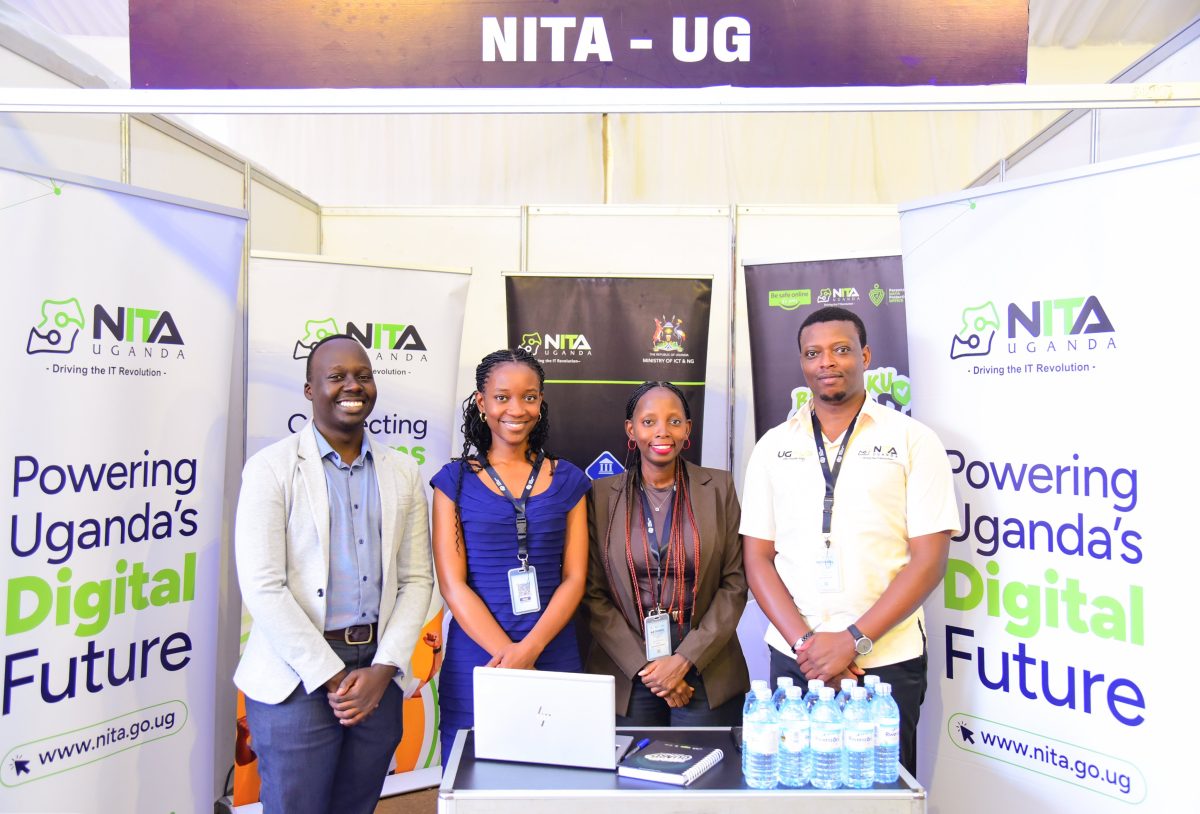
The National Information Technology Authority-Uganda (NITA-U) has launched two new digital platforms aimed at improving public service delivery in education and human rights protection.
The platforms — the U-Learn Platform and the Uganda Human Rights Commission (UHRC) Case Management System — were unveiled on Wednesday, August 12, 2026, under the Uganda Digital Acceleration Project-Government Network (UDAP-GovNet), with support from the World Bank.
Representing the Minister of ICT and National Guidance, Rt. Hon. Justine Lumumba, Minister of State for Information Hon. Joyce Nabbosa Ssebugwawo said the launch marks an important milestone in Uganda’s digital transformation agenda.
“Today marks another significant step in Uganda’s digital transformation journey.”
Ssebugwawo said the platforms are aligned with the National Development Plan III and the government’s wider programme to digitise public services across ministries, departments and agencies.
“These two platforms are firmly aligned with our National Development Plan III agenda to digitise government services across ministries, departments and agencies, and they show that digital transformation is a practical tool for improving the lives of citizens.”
The U-Learn platform, developed for the Ministry of Education and Sports, provides teachers and instructors in Teacher Training Institutions with structured, self-paced training in digital skills, pedagogy and financial literacy.
The platform is expected to particularly benefit teachers outside Kampala by reducing the cost and logistical challenges associated with attending physical refresher training.
Dr. Annet Mugisha Kajura, Commissioner for Teacher Education Training and Development at the Ministry of Education and Sports, said U-Learn is helping to close the gap in access to professional development.
“Many of our teachers, especially those upcountry, have never had easy access to refresher training. U-Learn changes that. A teacher upcountry can take the same course as one in Kampala, at their own pace, even offline, and still walk away with a certificate that counts toward their professional development.”
NITA-U said more than 6,600 teachers and instructors from 26 Teacher Training Institutions have already enrolled on the platform, while more than 380 have graduated with verified digital certificates.
The second platform, the UHRC Case Management System, is designed to digitise the handling of human rights complaints, from registration and assignment to investigation and resolution.
It replaces a largely paper-based process that the Commission says has previously made it difficult to track the progress of individual complaints.
UHRC Chairperson Mariam Wangadya said the new system will improve accountability and give complainants greater visibility over their cases.
“Before now, a complaint could sit in a file for months without anyone able to tell you where it was in the process. This system gives us a clear trail from registration to closure, and that matters to the complainant waiting for answers and to us as an institution that has to account for its decisions.”
Wangadya said the system is also expected to strengthen the Commission’s ability to analyse case trends and make better-informed decisions.
NITA-U Executive Director Dr. Hatwib Mugasa said the two platforms demonstrate how technology can bring government services closer to citizens.
He said one platform is helping thousands of teachers acquire new skills regardless of their location, while the other is making it easier for Ugandans to seek justice when their rights have been violated.
“Both, he noted, were built under UDAP-GovNet and bring government services closer to the people who need them.”
The two platforms are part of a wider digital transformation programme under UDAP-GovNet, which has 14 e-services being developed for different government ministries, departments and agencies.
The project is also intended to expand access to high-speed internet in selected areas, improve digital service delivery and strengthen digital inclusion, particularly for underserved and refugee-hosting communities.
Ssebugwawo said government will continue providing policy direction, digital infrastructure and strategic partnerships to ensure such platforms succeed and expand.
“Digital transformation must ultimately be measured by improved service delivery, greater inclusion and stronger institutions. That remains our focus.”
She called on government institutions, implementers and citizens to embrace the new systems and ensure they are effectively used.
“Our teachers, human rights institutions and the wider public must take ownership of these platforms, so the benefits of digital government reach every part of the country.”
NITA-U said it will continue supporting the Ministry of Education and Sports and the UHRC beyond the launch, including training staff and addressing technical challenges as more users begin using the platforms.
The launch represents another step in government’s push to use digital technology to make public services more accessible, transparent and accountable.
“Let us continue working together to build a digital Uganda that serves every citizen, leaving no one behind.”