



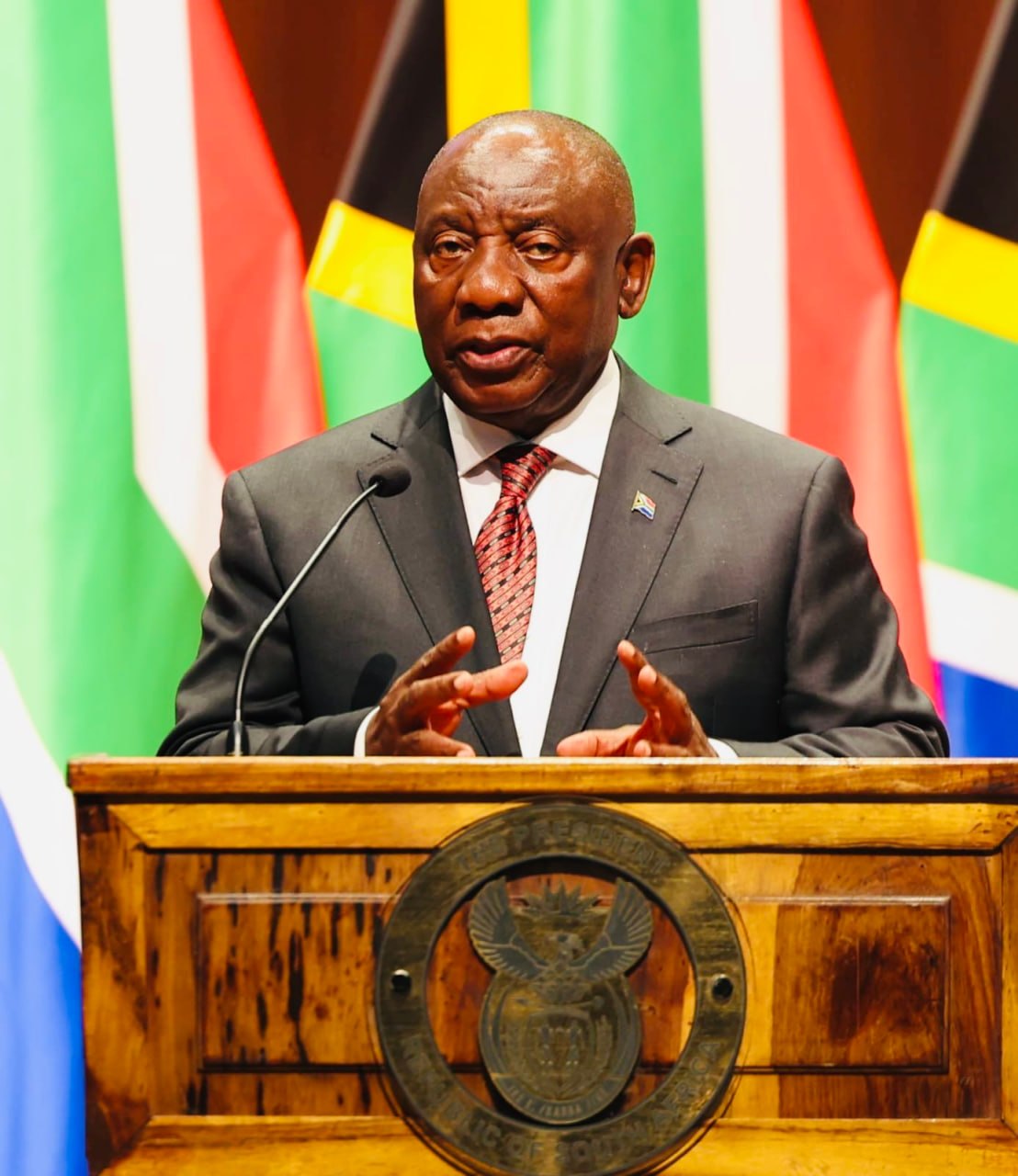
South African President Cyril Ramaphosa will lead his country’s delegation to the 18th BRICS Leaders’ Summit in New Delhi, India, as the expanding bloc of emerging economies prepares for a major gathering on global economic and geopolitical issues.
The summit is scheduled for September 12–13 at Bharat Mandapam in New Delhi, with India holding the BRICS chairmanship this year.
Ramaphosa’s participation was confirmed by a spokesperson in comments to Russian media, placing South Africa among the key founding members expected to take part in the high-level meeting.
The summit comes as BRICS seeks to deepen cooperation among its members while expanding its influence in global economic governance.
India’s 2026 agenda includes strengthening supply-chain cooperation, promoting innovation and green energy, increasing trade in national currencies and pushing for reforms of international institutions.
BRICS was originally formed around Brazil, Russia, India and China, with South Africa joining the grouping in 2011. The bloc has since expanded significantly, adding Egypt, Ethiopia, Iran and the United Arab Emirates, among others. Indonesia became a full member in January 2025.
The grouping has also introduced a partner-country category, widening its engagement beyond full members. Uganda is among the countries that have received BRICS partner status, alongside countries including Belarus, Bolivia, Cuba, Kazakhstan, Malaysia, Nigeria, Thailand and Uzbekistan.
The New Delhi summit is expected to attract some of the world’s most prominent leaders. Chinese President Xi Jinping is expected to attend, which would mark his first visit to India in seven years, while Russian President Vladimir Putin is also expected to participate.
For South Africa, Ramaphosa’s attendance provides an opportunity to advance Pretoria’s priorities on trade, investment, development and greater representation of developing countries in global institutions.
The summit also comes amid growing debate over BRICS’ role in reshaping the international economic order and its ability to provide a stronger collective voice for countries of the Global South.
Indian authorities have stepped up security and logistical preparations ahead of the gathering, with major road diversions and heightened security around hotels and summit venues expected as world leaders arrive in the capital.
The annual leaders’ summit remains the bloc’s principal decision-making forum, where members seek to agree on joint initiatives and establish strategic priorities for the year ahead.