



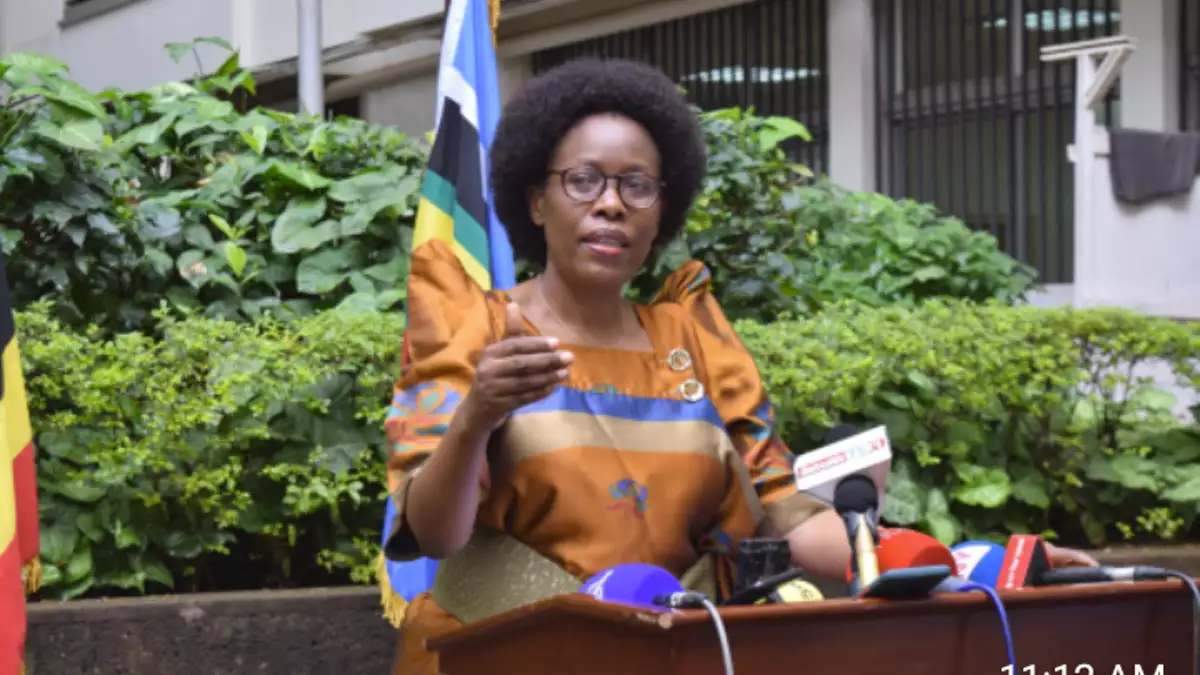
The decision by Lands Minister Judith Nabakooba to suspend the issuance of Special Certificates of Title continues to generate debate across the country. Key among the opponents are players in the legal fraternity.
Lawyers have openly questioned the legality of the Minister’s decision. They have questioned whether an administrative directive can suspend a process provided for under the Registration of Titles Act, while the government insists the temporary halt is necessary to protect the integrity of the land register.
Lawyers have further argued that the government’s concerns about fraud and double titling, although legitimate, do not give the minister power to halt a statutory process.
The ministry suspended the issuance of Special Certificates of Title for three months, until December, saying the pause would allow it to review the process and strengthen safeguards against fraud, double titling and other abuses.
Lawyer Deo Kalikumutima, Chief Executive Partner at Kalikumutima and Company Advocates, says the minister’s concerns are understandable, but the suspension is aimed at the symptom rather than the deeper problems within Uganda’s land administration system.
“The intention and the spirit of the Honourable Minister of Lands are okay. She has good intentions. However, we are setting out to treat a symptom. We have a bigger problem,” Kalikumutima argued in his Judicial Service Conversations with Lawyer Elison Karuhanga.
Because of the controversies surrounding the land question and the emerging debates like the one at hand, URN obtained permission from Elison Karuhanga to quote the conversation.
At the centre of Deo Kalikimutima’s argument is the legal nature of a Special Certificate of Title.
“A special certificate of title is not a new title, okay? It is a replacement,” he said.
Kalikumutima explained that Uganda operates under the Torrens system of land registration, under which the certificate of title is conclusive evidence of ownership.
He said Section 69 of the Registration of Titles Act provides a mechanism for a registered proprietor whose certificate has been lost, obliterated, damaged, destroyed or rendered unusable to obtain a replacement.
The process, he said, is not automatic and contains several safeguards intended to establish whether the claim that a title has been lost is genuine.
“It is not a favor… the law mandates that you replace, you give me an avenue to replace this record,” Kalikumutima said.
He said an applicant is required to make a statutory declaration explaining the circumstances under which the original certificate was lost, supported by a police report, before the land authorities undertake verification and public notification.
A statutory declaration, he noted, is made under oath, meaning that an applicant who deliberately makes a false declaration can face legal consequences.
“Someone has gone on record and is saying I actually lost my what? Title. That law says under Section 7, if you misstate recklessly or not, if you misrepresent, it is a criminal offense,” he said.
Kalikumutima argues that these safeguards mean that the existence of fraudulent applications should not automatically lead to the suspension of the entire statutory process.
He suggests that the authorities should identify fraudulent applications, investigate those involved, and strengthen verification.
Kalikumutima argues that the Minister may issue guidelines within the law, but cannot use an administrative directive to take away rights created by legislation.
“To the best of my knowledge, the Minister of Lands does not have the power to curtail the Constitution of the Republic of Uganda, does not have the power to curtail the rights enshrined in the Registration of Titles Act. Yes, the law does allow a minister to make guidelines, but where you have a statute following the Constitution of the land, what Alfred and his dear young lawyers call the grand norm, the minister does not have power to curtail that. You cannot,” he said.
“Like I said, you have a right to own property. You have a right to trade. And the law says, if the title is lost, replace it. So it is my humble opinion and submission that she does not. She does not. It is very clear. Intention’s good. Modus. Wrong.”
Kalikumutima says the suspension could have consequences beyond the land registry because titles are used in property transactions and as security for loans.
“The Ministry of Lands facilitates trade. So the property markets are affected. Government revenue streams are affected. But most importantly, rights… I’m looking at innocent Ugandans who would like to trade but they cannot,” he said.
Similarly, the Uganda Law Society has written to the Minister advising her against the decision.
In a letter dated August 26, 2026, and signed by Anthony Asiimwe, Vice President of the Uganda Law Society, the Society acknowledged the concerns that prompted the minister’s directive but questioned its legal basis.
“Pursuant to our mandate under S.3 (d) of the Uganda Law Society Act, Cap 305, we write concerning your directive made on 14th August 2026 suspending the issuance of special certificates of title until December 2026, to allow the Ministry to review and strengthen the process,” the letter states.
The society said it understood the government’s concerns over abuse of the process but argued that they must be addressed within the existing legal framework.
“We appreciate the concerns informing the directive, particularly the reported abuse of the special certificate process, fraudulent applications and double titling. However, these concerns must be addressed within the law,” Asiimwe wrote.
The Uganda Law Society maintains that issuance of a Special Certificate is a statutory process carried out by the Registrar of Titles under the Registration of Titles Act.
“The issuance of special certificates of title is a statutory process provided for under the Registration of Titles Act, Cap 240, and is exercised by the Registrar of Titles in accordance with the procedure prescribed by law,” the letter states.
Asiimwe then questioned the minister’s authority to stop the process. “We are therefore concerned that the directive purports to suspend a statutory process without identifying the provision of law that confers upon the Minister the power to do so. A ministerial directive cannot oust, suspend or override a statutory provision. Administrative power must derive from and remain within the law,” Asiimwe wrote.
The Law Society argues that fraudulent issuance should be dealt with through investigation and accountability rather than a blanket suspension.
“The reported abuse of the process does not alter this position. Where fraudulent special certificates have been issued, the appropriate response is to investigate the transactions, identify those responsible and take appropriate legal and disciplinary action,” the letter states.
Asiimwe therefore advised Judith Nabakooba to withdraw the directive.
“Accordingly, the Uganda Law Society advises that the directive be rescinded immediately,”
Asiimwe wrote. It also proposes that any weaknesses in the law should be addressed through Parliament.
“If the existing law is considered inadequate, we advise the Ministry to pursue the necessary legislative reforms through Parliament by proposing the appropriate amendments to the Registration of Titles Act. Where the concerns are procedural, the Ministry may develop appropriate policy and administrative guidelines, provided these are consistent with the law,” the letter states.
The Ministry of Lands, however, maintains that the suspension is intended to protect genuine landowners and restore confidence in the land register.
State Minister for Lands Harriet Ntabazi told Parliament that the ministry had received complaints from registered landowners, financial institutions, traditional institutions, administrators of estates and other stakeholders concerning the issuance of Special Certificates.
The complaints include allegations of double titling, overlapping interests, fraudulent statutory declarations, manipulation of succession processes and irregular dealings involving land belonging to deceased persons.
Ntabazi said the suspension does not abolish Special Certificates or permanently deny genuine landowners the right to obtain replacements. “The Government therefore has a duty to ensure that the process through which a replacement certificate acquires the same legal efficacy as the original certificate is protected from fraud, abuse, administrative error and manipulation,” she said.
She further explained that “Special Certificates of Title are not inherently problematic. The concern is the alleged abuse of the procedure through which they are obtained.”
The government says the three-month suspension will allow the ministry to review the procedure, identify weaknesses and strengthen verification and due diligence before issuance resumes.
Nabakooba had earlier expressed concern that some applicants were reporting titles as lost even when the original certificates were allegedly still being held by moneylenders, advocates, financial institutions or relatives.
At a lands staff meeting on August 14, Nabakooba warned officers against continuing to issue Special Certificates in cases where there were competing claims.
“You have slept on your duty on the issue of special certificates. When you continue issuing them, I will send the police, and they will arrest you,” she said.
She cited cases in Kyengera, Wakiso, and Kabula in Lyantonde, where she said Special Certificates had allegedly been issued despite existing claims or titles.
“We need to sit and have a clear guideline on how to handle that issue. I receive distress calls from my bosses. You are putting special titles on existing titles, which makes my work very hard,” Nabakooba said.
The dispute during the weeks found its way on the floor of Parliament after Speaker Jacob Marksons Oboth-Oboth referred the government’s decision to the Lands Committee for scrutiny.
The committee is already investigating allegations of fraud and double titling in the land sector.
Committee Chairperson and Ntoroko County MP Edson Rugumayo supported the temporary suspension, saying the land sector is affected by fraud and disputes and that the courts continue to face a backlog of land cases.
However, other legislators have questioned the decision. Shadow Lands Minister Sumaya Nabawanuka said the concerns over fraud are legitimate but could be addressed administratively without suspending the statutory process.
Deputy Attorney General Jackson Kafuuzi, meanwhile, defended the government’s position, saying the temporary halt does not amount to suspension of the law and that the three-month period is intended to allow the ministry to correct weaknesses in the process.
Lawyers argue that a statutory replacement mechanism cannot be suspended through a ministerial directive without clear legal authority, and that fraudulent transactions should instead be investigated and prosecuted.
The government argues that the temporary pause is necessary to prevent further abuse while the system is reviewed and safeguards strengthened.
Parliament’s Lands Committee will now have to examine that tension between protecting the integrity of the land register and preserving a statutory remedy for landowners whose genuine certificates of title have been lost, damaged or destroyed.